The Stock Market Will Drop Sharply If History Repeats. Warren Buffett Explains Why.
Uncategorized
The Stock Market Will Drop Sharply If History Repeats. Warren Buffett Explains Why.
09 mins
The U.S. stock market is charging higher at an astonishing pace. Since March, the S&P 500(SNPINDEX: ^GSPC) had advanced 16%, while closing higher in nine straight weeks. And the Nasdaq Composite(NASDAQINDEX: ^IXIC) has advanced 25%, its largest two-month return since 2002.
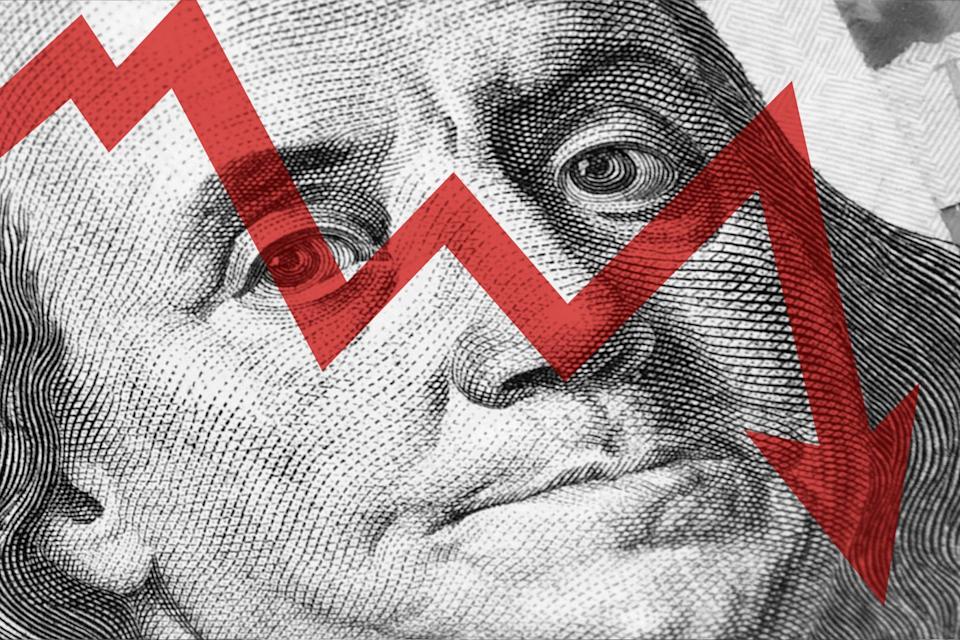
Yet the stock market is vulnerable. Treasury yields spiked in May as high inflation strengthened the case for interest rate increases. History says elevated Treasury yields could sink the stock market.
Missed Nvidia in 2009? This Rare Signal Is Flashing Again.In 2009, a “Double Down” signal flashed for a little-known chipmaker called Nvidia. For the first time in years, that same “Total Conviction” signal is flashing for a company 1/100th the size of Nvidia. Continue »
Here’s what investors need to know.
Image source: Getty Images.
Investors expect the Federal Reserve to raise interest rates in the next year
Oil prices retreated last month over reports that the U.S. and Iran have reached a preliminary agreement for an extended ceasefire. Yet, Brent crude futures (an international benchmark) still trade above $90 per barrel, up more than 50% since the year started, and consumers are paying the price.
The Consumer Price Index (CPI) increased 3.8% year-on-year in April, the hottest inflation reading since May 2023. More concerning, core CPI inflation (which excludes volatile food and energy prices) also accelerated, a sign that elevated energy prices are spreading to other areas of the economy by raising manufacturing and transportation costs.
Unfortunately, inflationary pressure is unlikely to relent for several months even if the U.S. and Iran resolve their differences tomorrow. Oil infrastructure in the Persian Gulf has been damaged and will take time to repair. In addition, restarting oil wells is more complex than turning on a faucet; it could take weeks or even months for oil flows to reach pre-war levels.
In the meantime, the Federal Reserve may fight inflation by raising interest rates. Investors expect rates to increase at least 25 basis points in the next year, per CME Group‘s FedWatch tool. Higher rates tend to hurt the stock market, partly because corporate earnings grow more slowly as higher borrowing costs suppress spending, and partly because higher rates compress stock market valuations.
Warren Buffett explains why stocks fall when government bond yields rise
Warren Buffett once explained the correlation between interest rates and stock prices. “The most important item over time in valuation is obviously interest rates,” he told CNBC in 2017. “If interest rates are destined to be at low levels, it makes any stream of earnings from investments worth more money. The bogey is always what government bonds yield,” he added.
The opposite is also true. When interest rates are destined to be at high levels, it makes any stream of cash flows from investments worth less money.
Here is an example: Imagine a company whose profits will total $100 in the next five years. If interest rates are 3%, you would need to invest about $86 today to have $100 in five years. But if interest rates are 5%, you would need to invest only about $78 today to have $100 in five years. Accordingly, the current value of that company’s stock drops when interest rates rise because its future earnings are worth less today.
Buffett specifically mentioned government bonds because they are considered risk-free investments. Recently, government bond yields have risen sharply because the market has become increasingly certain that the Federal Reserve will have to raise interest rates. Rising Treasury yields could bring the stock market lower as investors reassess their options. Why purchase risky stocks when risk-free bonds offer decent returns?
The S&P 500 and Nasdaq Composite will drop sharply in the next year if history repeats
The 30-year Treasury yield surged to 5.18% in May, the highest level since 2007. And the payout remained above 5% for 11 consecutive trading days last month, the longest stint in nearly two decades. The last time the 30-year Treasury yield topped 5% for 11 trading days, the S&P 500 and Nasdaq Composite dropped 17% and 14%, respectively, over the next year.
Here’s the big picture: The stock market has rocketed higher in recent weeks as tensions in the Middle East have de-escalated to some degree. But Treasury bonds are starting to look quite attractive in light of rising yields. If yields stay elevated, investors will be tempted to pull money out of stocks, and that could drag the major market indexes lower.
Should you buy stock in S&P 500 Index right now?
Before you buy stock inS&P 500 Index, consider this:
The Motley FoolStock Advisoranalyst team just identified what they believe are the10 best stocksfor investors to buy now… andS&P 500 Indexwasn’t one of them. The 10 stocks that made the cut are built for long-term growth and could produce monster returns in the coming years.
Consider whenNetflixmade this list on December 17, 2004… if you invested $1,000 at the time of our recommendation,you’d have $463,900!* Or when Nvidiamade this list on April 15, 2005… if you invested $1,000 at the time of our recommendation,you’d have $1,294,401!*
That performance is why people listen. With a track record ofbeating the S&P 500 by nearly 5x,Stock Advisoroffers a distinct advantage. Don’t miss the latest top 10 list, available withStock Advisor, and join an investing community built for the long haul.
Trevor Jennewine has no position in any of the stocks mentioned. The Motley Fool has positions in and recommends CME Group. The Motley Fool has a disclosure policy.