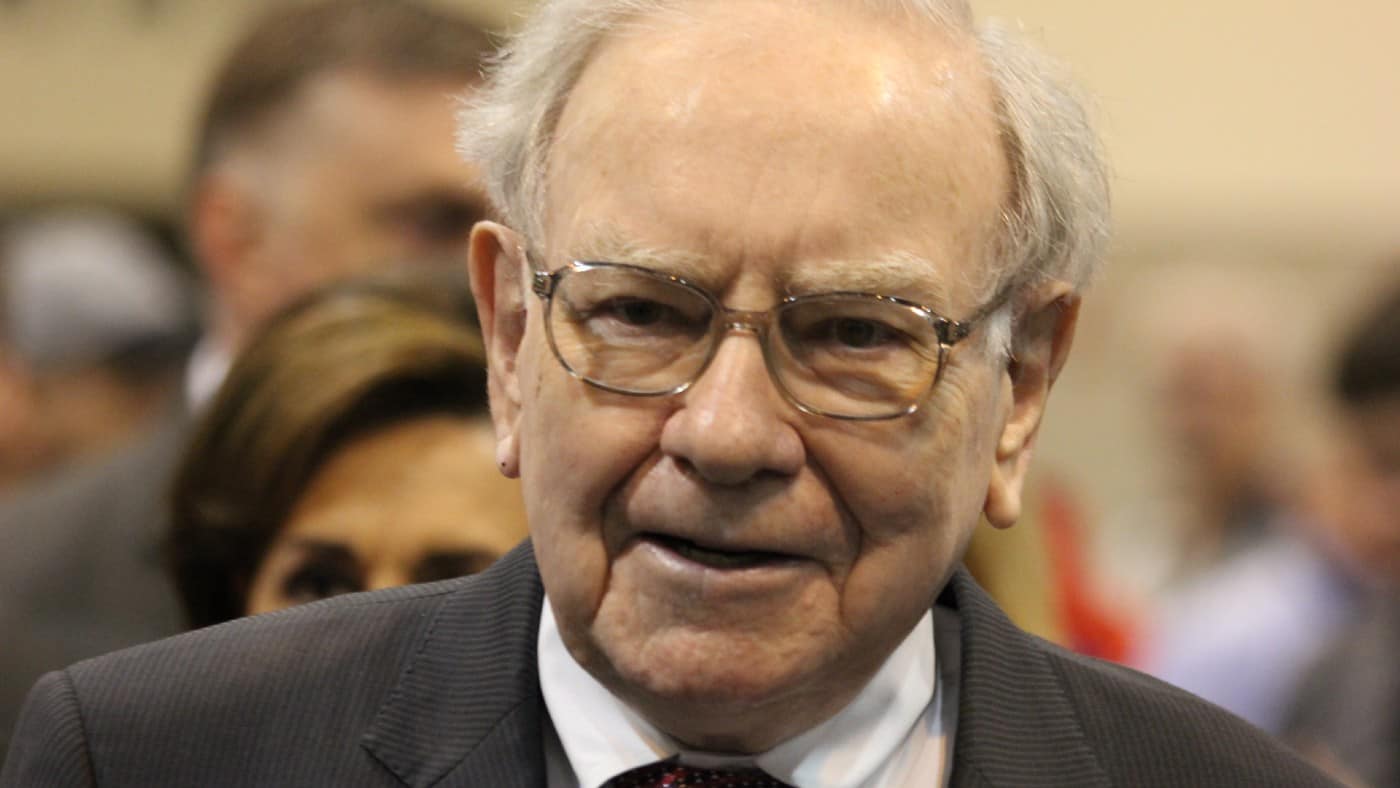

Image source: The Motley Fool
Warren Buffett is the most celebrated investor in history. Starting with relatively modest capital, he’s compounded wealth at a rate that has made him one of the richest people on the planet. And the blueprint he used is available to anyone willing to study it.
Let’s break down how I can use Buffett’s method to accelerate my quest for financial freedom and turn a £1,000 investment today into over £10,000 in the long run.
The numbers make a compelling case
Let’s start with a simple comparison. If I invest £1,000 right now in a bog-standard, low-cost FTSE 100 index fund, I can reasonably expect to earn a return close to the historical stock market average rate of 8% a year. While that isn’t guaranteed, it does provide a rough guideline of what I can realistically expect.
At this rate of return, after 29 years, my £1,000 would grow into £10,097.63. That’s certainly a solid outcome. But it takes nearly three decades of patience.
By comparison, picking high-quality individual stocks directly, Buffett has averaged an 19.9% annualised return throughout his entire investment journey at Berkshire Hathaway. And at that rate, the journey to £10,000 should only take just shy of 12 years – less than half the time.
So what’s his secret?
What does Buffett actually do?
The principles of Buffett’s strategy are deceptively simple. He invests only in businesses he fully understands. He focuses relentlessly on the long term, ignoring short-term noise and market volatility. He avoids chasing hype or fashionable sectors. And, crucially, he approaches every investment as if he were buying the entire business, asking not ‘will this stock go up’ but rather ‘is this a wonderful company at a fair price?’
The result is a concentrated portfolio of high-quality businesses with durable competitive advantages. And one of the most enduring examples of this in action is Coca-Cola (NYSE:KO).
The investment thesis was straightforward. Coca-Cola’s a globally-recognised brand with pricing power, a product that generates repeat purchases billions of times a day, all supported by a distribution network that competitors cannot replicate easily.
So does that thesis still hold in 2026?
Is Coca-Cola still worth considering?
Buffett’s bull case for Coca-Cola remains remarkably intact. The company continues to generate enormous free cash flow, has raised its dividend for 63 consecutive years, and its Coke, Sprite, and Fanta brands retain dominant global market share across both developed and emerging markets.
At the same time, management’s recent push into premium beverages and energy adds a meaningful growth dimension to what was once seen purely as a defensive income play. But that doesn’t mean the stock’s a guaranteed winner.
Rising health consciousness is applying long-term pressure on sugary drink consumption in Western markets. At the same time, input cost inflation, particularly for sugar, aluminium, and logistics, continues to squeeze margins. And with Coca-Cola’s success story being so well known, the market has priced the shares at a premium valuation that leaves little room for error.
That doesn’t mean the growth story’s over. Coca-Cola’s competitive advantages shouldn’t be overlooked. And even Buffett’s known for paying a premium when the underlying quality is sufficiently high. So for investors looking for a boring but dependable compounder, Coca-Cola shares might indeed still be worth a closer look.
Should you invest £5,000 in Coca-Cola right now?
When investing expert Mark Rogers and his team have a stock tip, it can pay to listen. After all, the flagship Twelfth Magpie Share Advisor newsletter he has run for nearly a decade has provided thousands of paying members with top stock recommendations from the UK and US markets.
And right now, Mark thinks there are 6 standout stocks that investors should consider buying. Want to see if Coca-Cola made the list?
Zaven Boyrazian does not hold any positions in the companies mentioned.