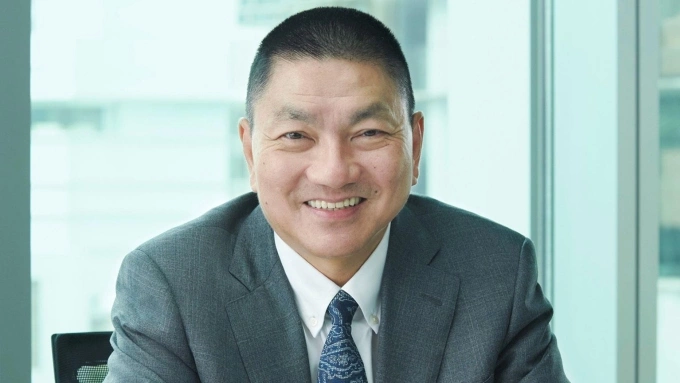
The co-founder of Hong Kong-based asset manager Value Partners was ranked Malaysia’s 22nd-richest billionaire late last month by Forbes, which estimated his net worth at US$1.25 billion at the time.
Hailing from Malaysia’s northwestern state of Penang, Cheah’s childhood was marked by hardship. Losing his father to kidney failure at the age of nine, he supported himself by selling pineapples along the roadside, according to Time magazine.
He recalled growing up constantly hungry because his family often did not have enough food.
After getting his high school diploma, Cheah entered journalism by chance at 17 after taking a job folding newspapers for The Star, where editors spotted his writing ability and shifted him into a reporting role.
He received an offer for a better-paying job in Hong Kong three years later, prompting him to travel there in the hold of a cargo ship. Cheah recounted that he had not envisioned a grand career for himself at the time.
“The initial plan had been to spend a few years in Hong Kong, save enough money, buy car, buy house, go back to Penang and be happy,” he told The Business Times in 2017.
Hong Kong, however, steered him deeper into the world of finance and investing. He first worked for The Standard and then HK-TVB News, The Wall Street Journal Asia and the Far Eastern Economic Review, covering business developments and financial markets throughout East and Southeast Asia.
He was eager to learn, teaching himself accountancy and immersed himself in books on stock markets and finance, repeatedly studying them to memorize key details.
Investment bank Morgan Grenfell later recruited Cheah as a proprietary trader managing its house account, a role that let him explore value investing and earned him about $1 million a year.
“For the first time in my life I became some kind of a millionaire! I couldn’t believe it,” he recounted.
 |
|
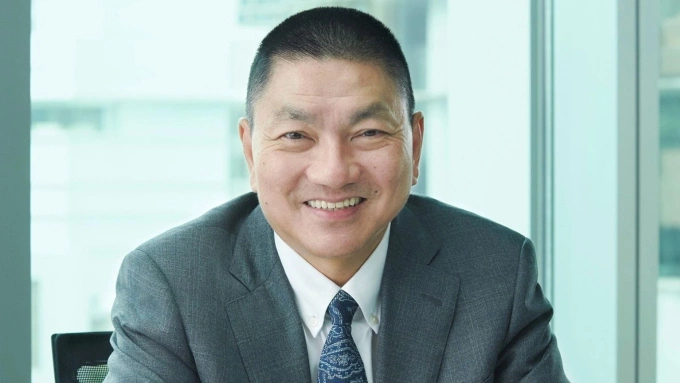
Cheah Cheng Hye, co-founder of Value Partners. Photo from Cheah Capital’s website |
In 1993, he and his business partner V-Nee Yeh co-founded Value Partners, which started with less than $5 million in capital, including about $1 million from Cheah himself.
He said they were simply “young people having fun” and trying to prove that value investing could work in Asia and that their investment approach was both legitimate and effective.
The strategy focuses on backing undervalued companies for long-term gains. But for Cheah, value investing means seeking out businesses that meet the “3Rs,” or “the right business, run by the right people at the right price.”
“That’s all, it’s simple, but difficult,” he told BT. “For Asia, the right business and right price you can find, but right people very difficult because corporate governance in Asia is still so-so.”
Cheah has shared that one of his most memorable successes was betting on Shenzhen-based BYD before Warren Buffett’s Berkshire Hathaway invested $230 million for a roughly 10% stake in the company.
At the time, BYD was still a relatively little-known Chinese firm and had begun venturing into car manufacturing, a move that was met with skepticism.
But Cheah was convinced his investment would pay off after a visit to BYD’s factory in Shenzhen, where he met company founder Wang Chuanfu. The company has since grown into the world’s largest electric-vehicle maker.
Not all of Cheah’s investments turned out successful, however. Among his most painful setbacks was budget airline Oasis Hong Kong.
Founded in 2006 by a Sunday school preacher, the carrier sought to challenge Cathay Pacific by offering full-service flights at lower fares. But sustaining a low-cost airline proved difficult, and it turned into a “high-cost airline, charging low-cost prices,” according to Cheah.
Nearly half of his firm’s $30 million investment in Oasis was wiped out within just three months. The airline shut down after 18 months due to funding issues. Cheah’s firm eventually recovered $17 million but still suffered losses of about $13 million.
Learning from the failure, Cheah avoided investing in the airline sector afterward, admitting that it falls outside his area of expertise.
“Now, I only stick to a few areas that I know best,” he told China Daily, adding that mistakes are inevitable in investing and in life.
“The key to survival is to identify the mistake early and correct it fast, rather than simply avoid any mistake.”
Cheah also built a reputation as a contrarian. “We buy when people sell and we sell when people buy. We like things that people hate, we hate things that people like,” he told The Edge Malaysia. “That’s how we make money.”
Over time, not following the crowd seems to have paid off for him. Value Partners became the first asset management company listed on the Main Board of the Hong Kong Stock Exchange in 2007.
When Cheah stepped down as the firm’s co-chairman and co-chief investment officer last January, it had become one of Asia’s largest independent asset managers, overseeing $5.4 billion in assets. Its assets under management previously peaked at more than $18 billion around 2018-19.
Cheah, meanwhile, was a face of value investing in Asia for three decades, according to Bloomberg.
Despite the hardships of his childhood, Cheah has often described himself as “very lucky” and a beneficiary of an economic miracle.
He noted that he entered the workforce in 1971 during what he considered one of the most prosperous periods in human history.
“We lived in a magical time, wages went up by double digits every year and career prospects exploded,” he told The Edge, pointing out how he was able to secure a good job and steadily advance his career as new opportunities kept appearing despite him initially arriving in Hong Kong without knowing how to speak or read Chinese.
Meanwhile, younger generations face more intense competition, he said. “The unlucky boy was very lucky, but he didn’t know it then.”