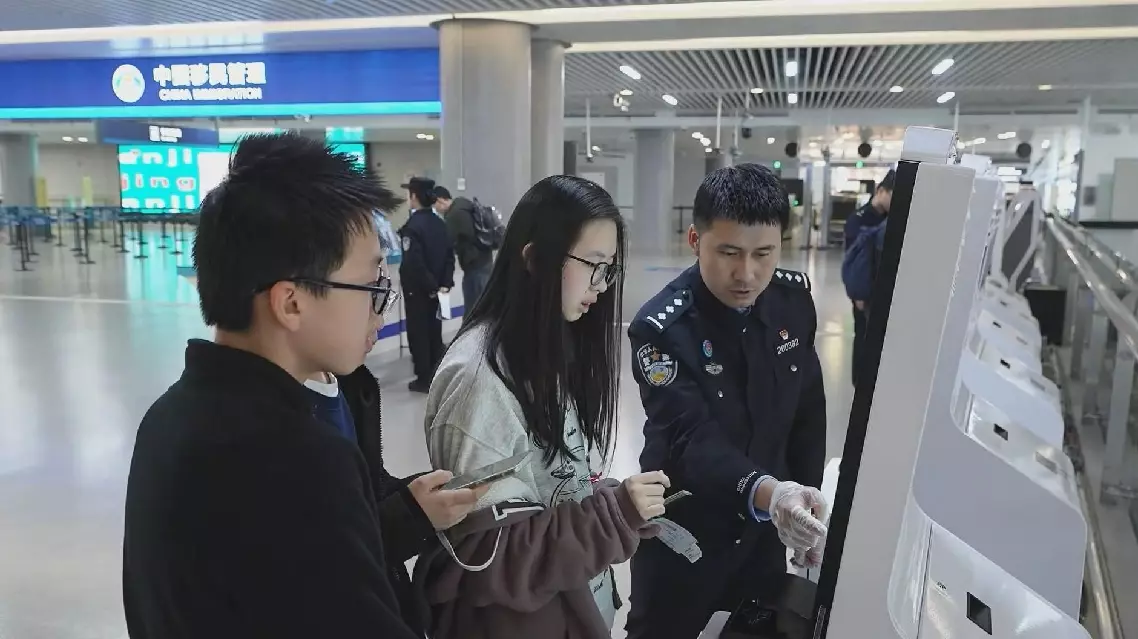
Passenger traffic at international ports across China remained high during the three-day Qingming Festival holiday, as people of Chinese ancestry, returning to participate in annual traditions, joined the steadily growing inflow of international travelers.
Falling on April 5 this year, Qingming Festival, or Tomb-Sweeping Day, is a traditional Chinese festival for honoring the deceased and paying tribute to ancestors.
During this Qingming holiday, ports in east China’s Jiangsu Province are expected to inspect and clear approximately 34,000 cross-border travelers. Returning home for tomb sweeping, taking parent-child educational trips, and going on cross-border spring outings have become the primary purposes of travel.
“I came to Wuxi City this time because I wanted to see the cherry blossoms at Yuantouzhu. The new direct flight route from Kuala Lumpur to Wuxi is very fast, and China’s 30-day visa-free policy for Malaysia is very convenient,” said a Malaysian traveler surnamed Chen.
In Shenzhen City, south China’s Guangdong Province, average daily passenger traffic during this Qingming holiday is expected to reach 990,000, potentially breaking historical peak records, with the single-day peak possibly exceeding 1.13 million.
At Shenzhen’s Liantang Port, many cycling enthusiasts from Shenzhen and the Hong Kong Special Administrative Region (SAR) crossed the border with their bicycles.
The border inspection authorities have deployed new temporary inspection platforms to facilitate rapid clearance during peak hours.
“Very efficient, very quick and we just love cycling through here. It’s very easy to cross and very convenient,” said a foreign tourist named Jagdish.
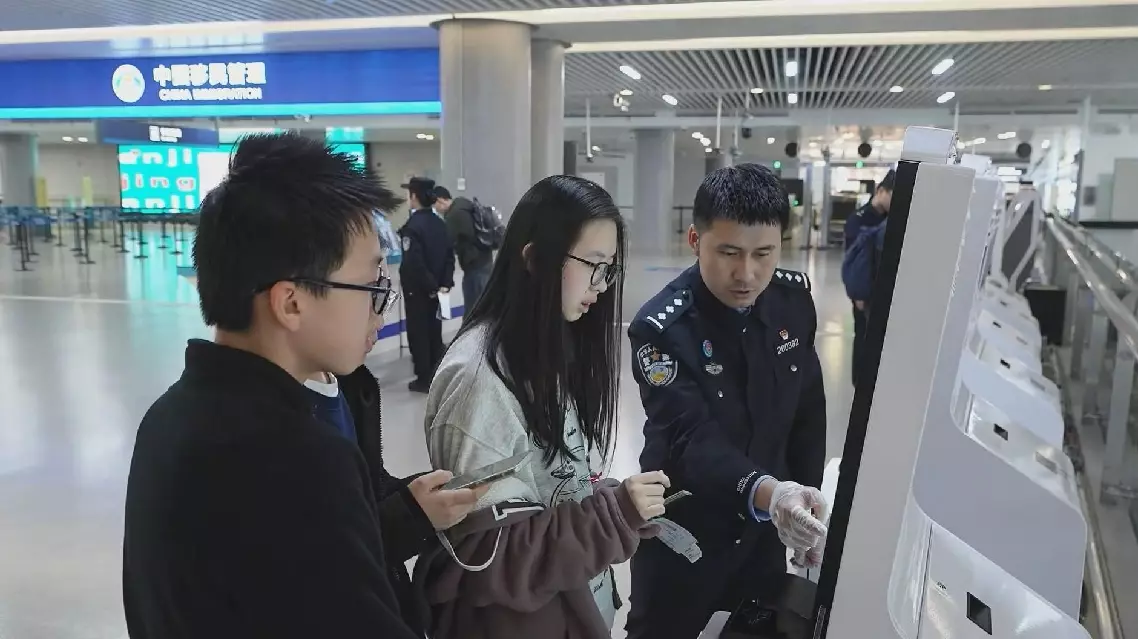
China’s ports see high passenger traffic during Qingming holiday
Iran’s Foreign Ministry spokesman Esmaeil Baghaei on Monday said that the United States has lost its diplomatic credibility, accusing Washington of saying one thing and doing another by threatening more attacks while simultaneously proposing negotiations.
Speaking at a weekly press conference in Tehran, Baghaei said the U.S. had twice attacked Iran during negotiations, committing war crimes and showing its disregard for diplomacy.
He stressed that Iran’s goal is clear: all its efforts are focused on defending the nation.
Regarding a U.S. ceasefire proposal conveyed by mediators, Baghaei said Iran has already expressed its clear stance and demands.
“Our goal is to protect national interests and security, as well as the legitimate demands of the Iranian people. Iran has long known its demands and red lines, and now our position is very clear,” he said.
Responding to U.S. President Donald Trump’s so-called “deadline” for Iran to make a deal and reopen the Strait of Hormuz by Tuesday, Baghaei said issuing such threats constitutes a war crime, and any country assisting in such crimes must bear responsibility.
He emphasized that for a ceasefire to be achieved, all of Iran’s demands must be met.
“Iran should not hesitate in defending its country because of any so-called ‘deadline’. The reason we do not accept a ceasefire is based on past experience. A ceasefire means a brief respite, allowing the other side to strengthen its forces and commit more crimes afterward. No reasonable person would do that. Our demand is to end this imposed war and ensure that the cycle of ceasefire and war does not repeat,” he said.
Baghaei also said that the recent U.S. operation to rescue downed fighter jet pilot in central Isfahan Province could be a “deception operation” aimed at stealing Iran’s enriched uranium.
The operation, however, ended in failure, Baghaei said.
Iran is believed to be in possession of a stockpile of 60-percent enriched uranium that is reportedly buried “under the rubble” of its bombed nuclear facilities, including the one located in Isfahan.
Regarding the situation in the Strait of Hormuz, Baghaei said that over the past few days, Iran has taken a series of security measures to safeguard the Strait of Hormuz.
He emphasized that Iran has made it clear that it will absolutely not allow enemy vessels to pass through.
In addition, he said that Iran has decided to hold talks with Oman to reach a protocol on vessel passage through the Strait of Hormuz. These talks will continue until a final result is achieved, he said.
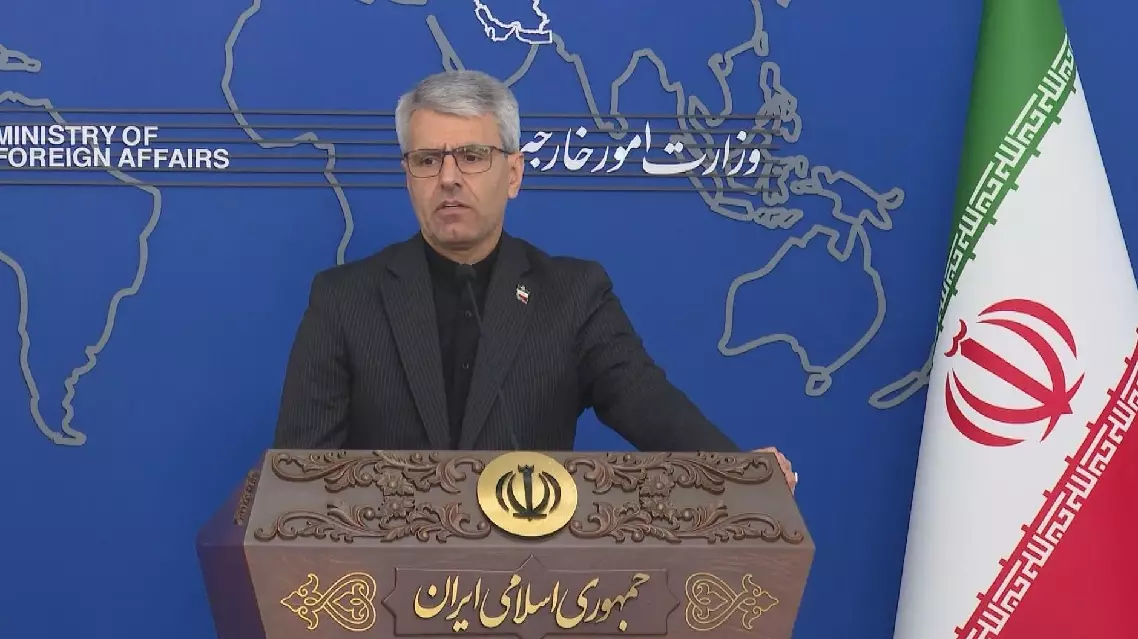
Iran accuses US of mismatch between rhetoric and action