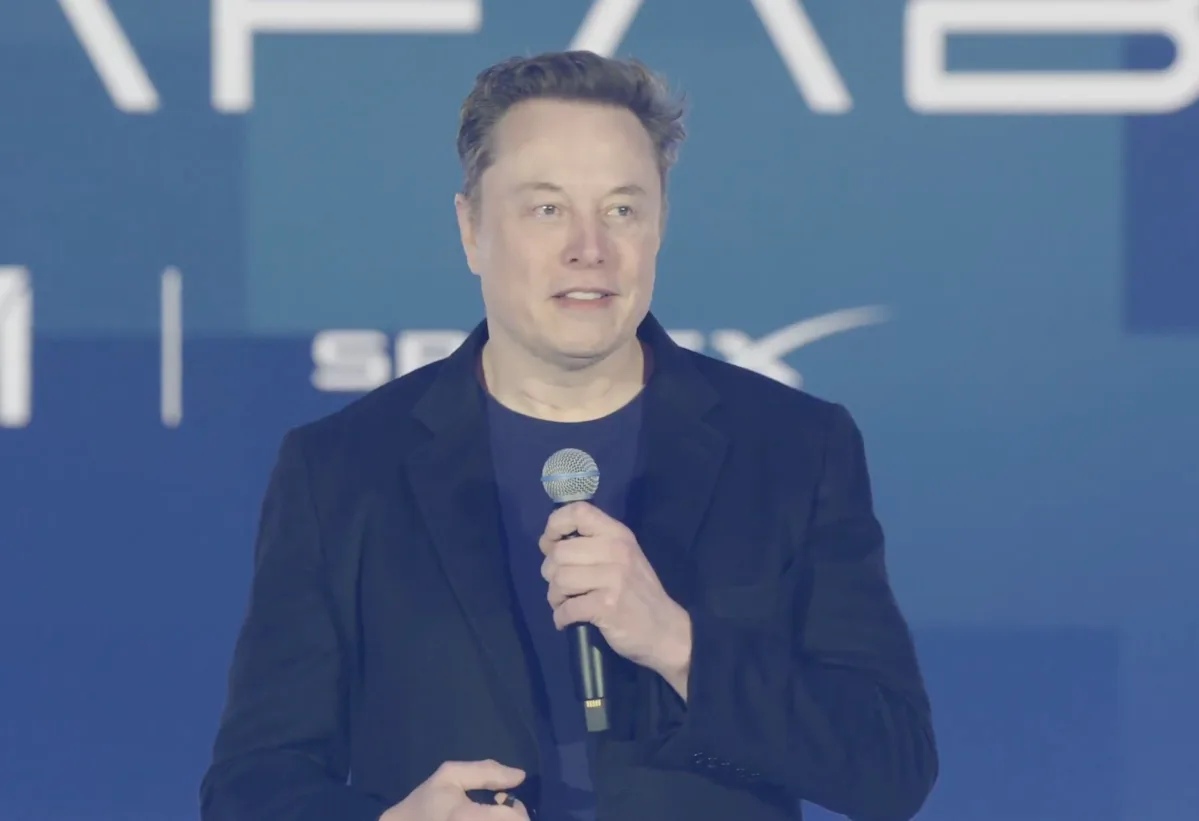
Over the weekend in Austin, Texas, Tesla (TSLA) and SpaceX (SPAX.PVT) CEO Elon Musk unveiled what might be his grandest overarching vision for where he sees his companies headed.
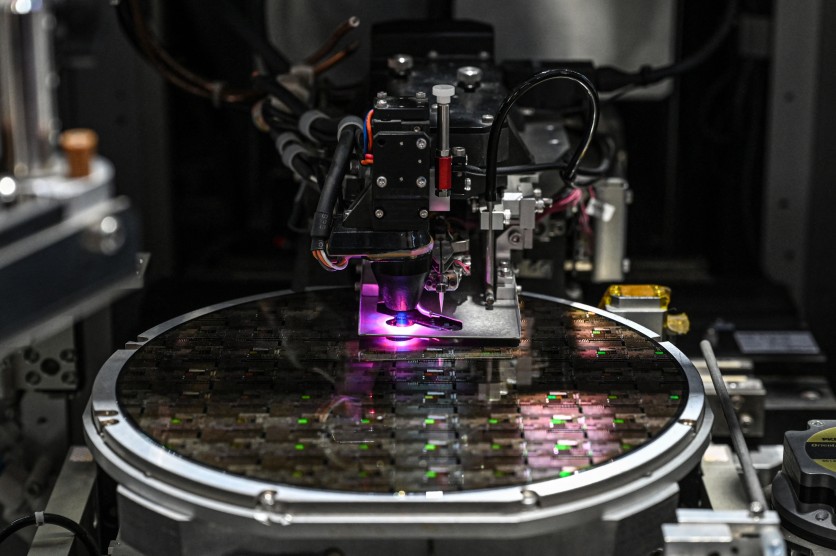
The project is called Terafab, a joint venture between Musk’s Tesla, SpaceX, and xAI, designed to consolidate every stage of semiconductor production under one roof — including chip design, fabrication, memory production, and packaging. Terafab will be built on the North Campus of Giga Texas, in a building planned to dwarf that of Giga Texas, already one of the biggest buildings on Earth.
Initial costs are in the $20 billion to $25 billion range, with Musk noting that Tesla’s capital expenditures for 2026 do not include Terafab costs. The timing is also interesting given SpaceX may IPO as soon as this spring.

That being said, Musk called Terafab “the most epic chip-building exercise in history by far,” adding that he is pursuing the project because chipmakers like TSMC (TSMC34.SA) and Samsung (005930.KS) aren’t making chips fast enough for his companies’ AI and robotics needs.
“We either build the Terafab or we don’t have the chips, and we need the chips, so we build the Terafab,” he said. “There’s a maximum rate at which they’re comfortable expanding. That rate is much less than we would like.” He went further, claiming that current AI compute output is roughly 20 gigawatts per year and that the rest of the world’s output is about 2% of what his companies need.
Terafab targets two primary chip types: an edge-inference processor optimized for Tesla’s Full Self-Driving systems, Optimus humanoid robots, and Robotaxi fleets, and a high-power variant hardened for space environments, supporting SpaceX satellites, orbital data centers, and xAI initiatives.

The Optimus program is the single biggest driver of demand. Morgan Stanley analyst Andrew Percoco wrote in a note last week that Giga Texas alone is expected to have capacity for 10 million humanoid robots per year, which would require 20 million chips — approximately six times Tesla’s current chip demand for its entire auto business.
And if Tesla hits its stated long-term target of 100 million Optimus robots annually, it would require more than 200 million chips, or over 50 times its current demand across automotive and Robotaxi combined.
Interestingly, Terafab will pursue a 2-nanometer process technology, the most advanced in the world and one that established players like TSMC are only beginning to make.
Musk’s stated goal is to produce more than a terawatt — 1 trillion watts — of AI computing power per year, with most of that capacity ultimately destined for space. He provided no firm timelines for construction, output, or full-scale operation but indicated that the project would begin with prototyping and testing of infrastructure.