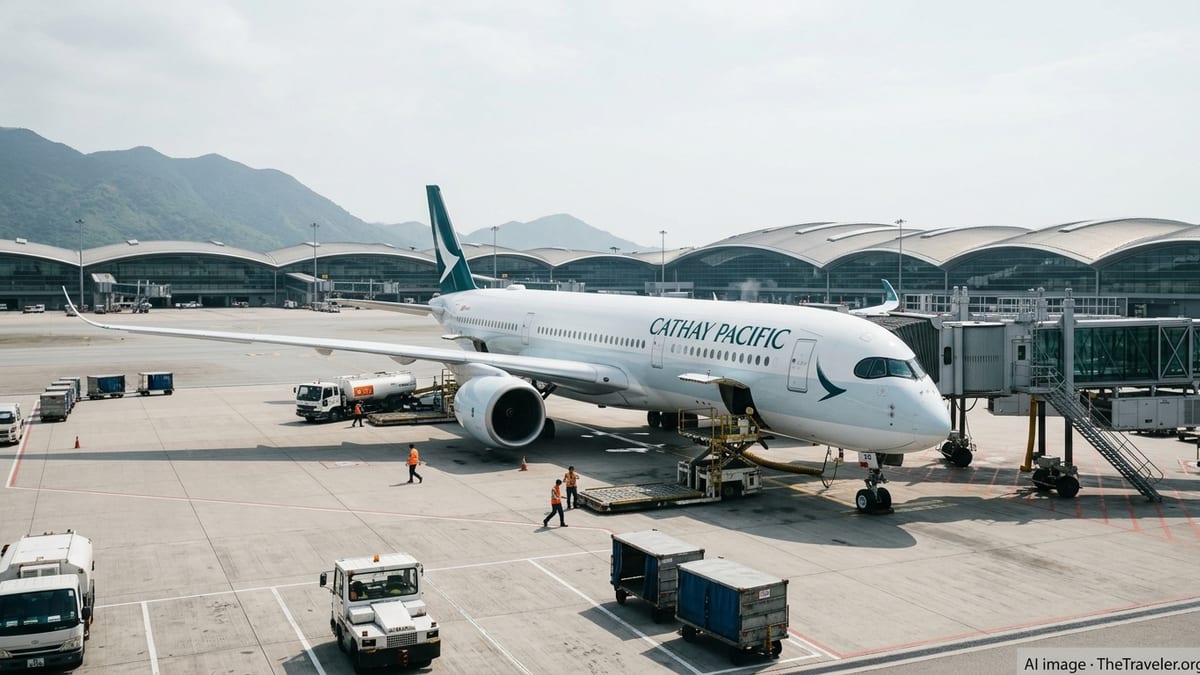
Cathay Pacific is set to restore nonstop flights between Hong Kong and Seattle from March 30, 2026, deploying Airbus A350-900 aircraft in a move widely viewed as a marker of renewed confidence in transpacific travel demand.
Get the latest news straight to your inbox!
Five Weekly Nonstops Reconnect Two Innovation Hubs
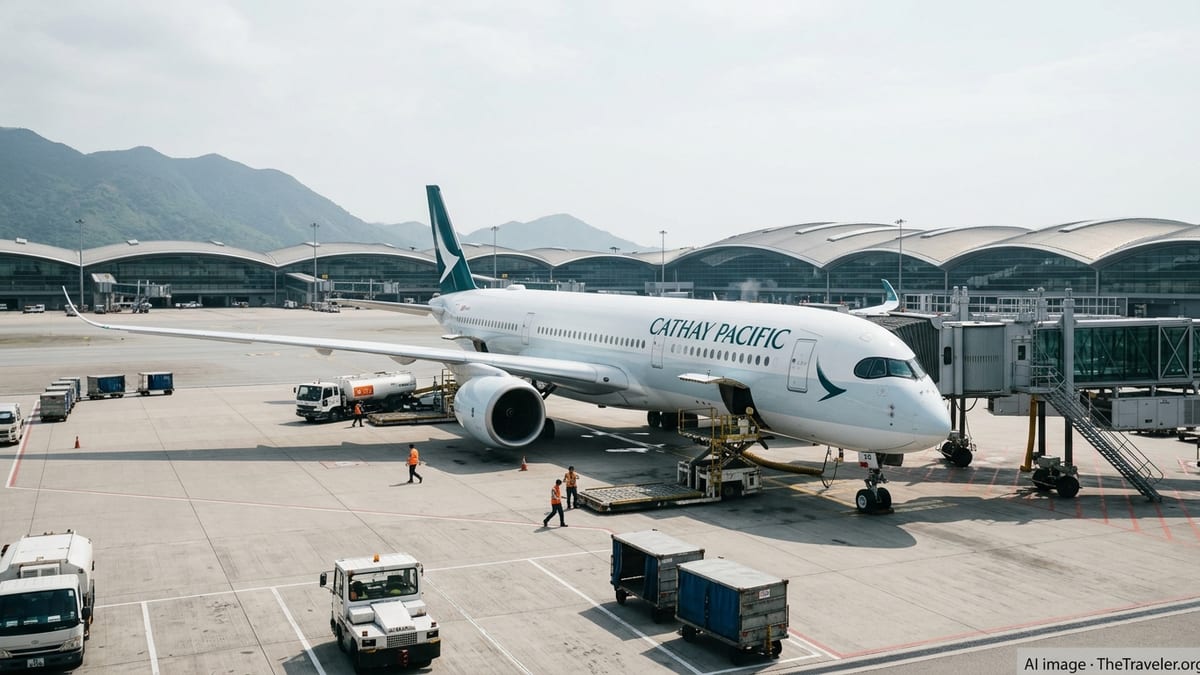
According to publicly available schedule data and airline announcements, Cathay Pacific will relaunch its Hong Kong–Seattle service with five nonstop return flights per week starting March 30, 2026. The route, which was suspended during the pandemic-era downturn, will again link Hong Kong International Airport with Seattle-Tacoma International Airport, reconnecting two major centers for technology, logistics, and global commerce.
Reports indicate that the restored service will operate on a near year-round basis, initially focused on the northern summer season. Timings currently published show daytime departures from Hong Kong and morning arrivals in Seattle, with westbound flights scheduled to leave Seattle late morning and arrive in Hong Kong the following afternoon local time. The pattern is designed to maximize onward connectivity across Asia through Cathay Pacific’s hub.
Travel industry coverage notes that Seattle will become Cathay Pacific’s ninth passenger destination in North America when the service resumes, joining major gateways including Los Angeles, San Francisco, New York, Toronto and Vancouver. The new schedule is being positioned as part of a broader rebuilding of Hong Kong’s role as a premier Asian gateway following several years of capacity cuts and border restrictions.
A350-900 Deployment Elevates Passenger Experience
Cathay Pacific has confirmed through its public statements that the Hong Kong–Seattle route will be operated by the Airbus A350-900, the carrier’s latest-generation long-haul workhorse. The A350-900 is known for its quieter cabin, higher humidity and improved air filtration, features that airlines often highlight as helping reduce fatigue on ultra-long-haul sectors across the Pacific.
Seat maps and fleet information shared in aviation industry coverage show that Cathay Pacific’s A350-900s typically offer three cabins: a lie-flat Business Class, a dedicated Premium Economy cabin and a standard Economy cabin. The aircraft deployed on Seattle flights are expected to feature fully flat beds in Business, wider seats and extra legroom in Premium Economy, and a relatively modern 3-3-3 layout in Economy, aligning the product with the carrier’s other North American services.
Analysts point out that using the A350-900 rather than older twin-aisle types underscores Cathay Pacific’s intent to compete aggressively for high-yield corporate and premium leisure travelers on the revived route. The aircraft’s fuel efficiency and lower operating costs also support the economics of rebuilding a long-haul market that is still normalizing after several years of disruption.
Strategic Boost to North America Network
The Seattle resumption fits into a wider expansion of Cathay Pacific’s North American network, which has been rebuilding toward and in some cases beyond pre-pandemic levels. Publicly available timetable summaries indicate that by summer 2026 the airline expects to operate more than 110 weekly return flights between Hong Kong and North America, spanning cities such as Boston, Chicago, Dallas-Fort Worth, Los Angeles, New York, San Francisco, Toronto and Vancouver.
Industry reports highlight that the airline is especially focused on strengthening its U.S. footprint. Direct Hong Kong–Dallas-Fort Worth flights that launched in 2025 are due to ramp up to daily service in late October 2025, just months before Seattle comes back online. Together, the central hub at Dallas-Fort Worth and the West Coast gateway at Seattle are expected to broaden one-stop connectivity from Asia into secondary U.S. markets via partner airlines.
Travel analysts note that the decision to prioritize Seattle’s return, even at five weekly frequencies rather than a daily schedule, reflects a careful balance between capturing pent-up demand and managing capacity risk. The Pacific market remains competitive, with U.S. and Asian carriers adjusting networks to reflect shifting corporate travel patterns, hybrid work, and sustained demand from visiting-friends-and-relatives traffic.
Implications for Transpacific Travel Demand
Market observers describe the Hong Kong–Seattle restart as another signal that transpacific demand is consolidating around key technology and trade corridors. Both Hong Kong and Seattle anchor sizable communities of business travelers, students and diaspora families, many of whom have relied on indirect routings through other hubs since nonstop options were withdrawn earlier in the decade.
Publicly available booking and fare information for the launch period show promotional pricing and early-capacity sales campaigns aimed at stimulating traffic in both directions. Travel agencies and corporate travel managers in North America and Asia are responding by adding the route back into their preferred-program lineups, highlighting shorter journey times and simplified connections through Hong Kong to cities across mainland China and Southeast Asia.
Aviation analysts suggest that if load factors and yields track positively through the 2026 northern summer season, Cathay Pacific could eventually consider increasing frequencies or adjusting schedules to capture additional corporate demand. For now, the five-times-weekly pattern is viewed as a pragmatic test of the route’s resilience in a market where capacity remains in flux and fuel and currency costs remain key variables.
Positioning Hong Kong as a Rebounding Global Hub
The return of Seattle service also carries symbolic weight for Hong Kong’s positioning as a global hub. Before the pandemic, the city was a major transit point for passengers traveling between North America and destinations in mainland China, Japan, South Korea and Southeast Asia. A combination of travel restrictions and airline restructuring sharply reduced this role, prompting some travelers to shift to alternative gateways.
Recent traffic statistics and corporate disclosures from the airline group indicate that connecting flows through Hong Kong are steadily rebuilding, supported by reopened borders, relaxed testing and quarantine requirements, and a methodical restoration of long-haul links. The Seattle relaunch adds another spoke to that recovering hub system, creating additional one-stop options for travelers moving between the Pacific Northwest and cities across Asia.
Observers in the aviation and tourism sectors view the move as part of a longer-term recalibration rather than a short-term experiment. By anchoring the revived Hong Kong–Seattle corridor with the fuel-efficient A350-900 and integrating the route into a larger North American growth strategy, Cathay Pacific is signaling its expectation that transpacific travel will remain a cornerstone of its network in the years ahead.