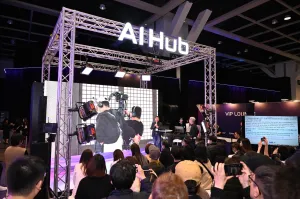
Entering its 30th edition this year, Hong Kong Filmart is taking place at a time of unprecedented tech disruption in the media and entertainment industry, as well as political strife across huge swathes of the world.
At the time of writing, Filmart organizers the Hong Kong Trade Development Council (TDC) were still assessing the impact on visitor numbers of the on-going US-Iran conflict, although as most overseas participants are traveling from within the region, cancelations may be limited. However, there are other events closer to home that are likely giving the organizers a major headache.
Scheduled for March 17-20 at the Hong Kong Convention & Exhibition Centre, Filmart provides a platform for the film, streaming, animation and technology industries through a physical sales market, extensive conference program and series of business matching and networking events.
According to TDC figures, more than 780 exhibitors and 7,700 industry professionals are expected to attend this year’s edition, with around 42% of exhibitors coming from Hong Kong and mainland China and the rest from overseas. National pavilions are being hosted by South Korea, France, Germany, Italy, Malaysia, Thailand and a wide array of mainland Chinese provinces and cities.
On the buyer side, around 30% are from Hong Kong, 60% from the rest of Asia and 10% from outside the region. The TDC is reporting “very active engagement” from Asian territories including mainland China, Korea and Southeast Asia. “Beyond these traditional strongholds, we are noticing rising interest from emerging markets in Africa, Eastern Europe and Latin America,” says TDC Associate Director of Service Promotion, Candas Yeung.
Sales business has been slow at recent editions of the market, at least compared to pre-pandemic times, but this is in keeping with physical sales markets everywhere in the world. These days, film and TV markets seem to be more about providing intelligence on a rapidly changing industry, rather than the quotidian business of signing deals memos. Filmart had a strong conference program last year and looks set for several interesting sessions this year, including a returning focus on AI tech developments, microdrama and international co-production.
The AI Hub, piloted last year, features an exhibition zone, a series of 15 interactive workshops and a panel discussion. Companies exhibiting in the trade show include China’s Alibaba Cloud, Daogu Culture, Kling AI, Kino X AI and MiniMax. Workshops include sessions on AIGC (audio, script, images & videos), virtual production, digital humans, animation, shorts and IP protection.
Yeung says the AI Hub aims to shed light on both the creative and business aspects of AI filmmaking: “Our goal goes beyond just learning the tools. By helping content creators utilise AI to streamline their production, we are actively promoting collaboration between content creators and tech specialists. We see this intersection as a significant new business opportunity for the industry.”

Filmart’s AI Hub in 2025
A focus on microdrama will similarly explore both the practical side of making vertical dramas – a booming industry that has overtaken the traditional film and TV business in mainland China in revenue terms – as well as the business angles, with speakers from Chinese companies including DataEye, Mansen Culture Media and Xiaowu Brothers HK.
International co-production will be addressed through the Producers Connect platform which aims to match local producers with their counterparts overseas. Ten overseas film agencies have signed up to participate in the program, including the British Film Institute, China Film Co-Production Corp, Italy’s Cinecitta, Film Development Council of the Philippines, ICEX Spain Trade and Investment, Korean Film Council, Indonesia’s Ministry of Culture, Malaysia’s FINAS, Slovakia Film Commission and Vietnam Film Development Association.
A panel discussion, part of Filmart’s Entertainment Pulse series, will take an in-depth look at co-production with speakers including Hong Kong’s Peter Ho-sun Chan, Singapore’s Anthony Chen and Golden Globe-winning producer Janet Yang. In addition to sessions on AI, microdrama and co-production, Entertainment Pulse is also hosting panel discussions on animation, streaming, film financing and a Filmmaker Sharing session with Hong Kong producers and directors including Amy Chin and Patrick Leung.
Notably absent from the conference program is the participation of Japanese producers and filmmakers, despite Japan currently being one of Asia’s most fertile filmmaking territories with growing interest in international co-production. Two Japanese film and TV agencies – UniJapan and International Drama Festival Tokyo – are hosting pavilions at Filmart, as they have at past editions of the market, but beyond that, Japanese representation remains slim.
While TDC declined to comment, the Hong Kong government is now very much aligned with Beijing’s foreign policy, which has recently been soft banning Japanese film, music and other entertainment products following remarks made by Japanese Prime Minister Sanae Takaichi that Japan would consider military intervention if China invades Taiwan.
The fallout of Takaichi’s comments has affected mainland China more than Hong Kong – no Japanese films have been released in China since Demon Slayer: Kimetsu no Yaiba: Infinity Castle last November, although Japanese titles including Kokuho and Tokyo Taxi have recently been released in Hong Kong to strong box office results. However, the China-Japan spat does appear to be impacting some Hong Kong film productions and major film events.
Japanese actor Takuya Kimura recently pulled out of the sequel to Twilight Of The Warriors: Walled In, despite the first film being a hit in Japan, reportedly due to the China-Japan tensions. The Asian Film Awards, an anchor event of Hong Kong’s Entertainment Expo, which usually takes place on the eve of Filmart, has canceled the main awards ceremony, citing the need to be low-key following last year’s Tai Po fire tragedy.
However, the awards are co-organised by Tokyo International Film Festival, and speculation has been rife that there were concerns about the optics had the ceremony taken place, as Japanese cinema has had a strong year and was likely to walk off with multiple prizes.
In addition, this year’s Hong Kong International Film Festival (HKIFF, April 1-12), another anchor event within Entertainment Expo, is light on Japanese titles, although as the festival is celebrating its 50th anniversary, it was always going to have more of a focus on the history and current status of Chinese-language cinema.
Unfortunately, the China-Japan spat is not the only geopolitical issue impacting Hong Kong’s international trade and business events. Filmart heavily promotes its super-connector status – positioning itself as a bridge between the West and East Asian markets including mainland China, Southeast Asia and the rest of Asia. But the reality is that, due to the shifting regulatory environment and a slew of failed financing deals, the West is now much less interested in working with China.
Meanwhile, the Hong Kong government has been pumping funds into supporting local filmmakers and encouraging international co-production. But the territory continues to wrestle with the impact of the National Security Law, which has raised censorship issues for some projects. This year’s Hong Kong Film Awards, another Entertainment Expo event scheduled for April 19, dropped four titles from its contenders list, along with the Best Asian Chinese-language Film category, prompting censorship concerns.
None of this bodes well for the Hong Kong film industry, which is also fighting commercial headwinds, including a wave of cinema closures and a tough financing environment. Notably three major Hong Kong companies – Emperor Motion Pictures (EMP), One Cool Group and Universe Entertainment – have opted out of building the expensive booths that usually front the trade show floor at this year’s Filmart.
However, there are still bright spots for the local industry, including a resilient crop of indie filmmakers who continue to get films into production and onto the festival circuit (see Deadline’s interview with HKIFF Industry for more on Hong Kong indies). And over the past few years, some mainstream films, including Media Asia’s Twilight Of The Warriors: Walled In and EMP’s The Last Dance, have become record-breaking hits.
Over the recent Lunar New Year holiday, Edko Films’ Night King, about a fading nightclub in Tsim Sha Tsui East, was a huge hit in both Hong Kong and mainland China, grossing $27.5M (RMB190M) in China alone. Many Hong Kong companies continue to exhibit at Filmart, including Edko, Golden Scene, MakerVille Company, Media Asia and Mei Ah Entertainment.
Jack Ng’s ‘Night King‘
“While the industry is certainly navigating a period of transformation, it is doing so from a position of remarkable strength; domestically, we have seen local films consistently break the HK$100M [US$12.8M] box office benchmark over the past few years,” says Filmart’s Yeung.
“Far from sitting back, Hong Kong companies are aggressively expanding their international presence. We are also seeing a strategic diversification in content. Companies are broadening their portfolios beyond traditional film to embrace new formats like microdramas and streaming series, while also integrating AI technologies.”
Some of the issues currently buffeting Filmart – the China-Japan spat and US-Iran conflict – will hopefully be a distant memory at next year’s edition, while others are longer term and connected to China’s internal politics, as well as tech developments reshaping the international content industries. The challenge for Filmart is how it will navigate these internal and external forces going forward.

