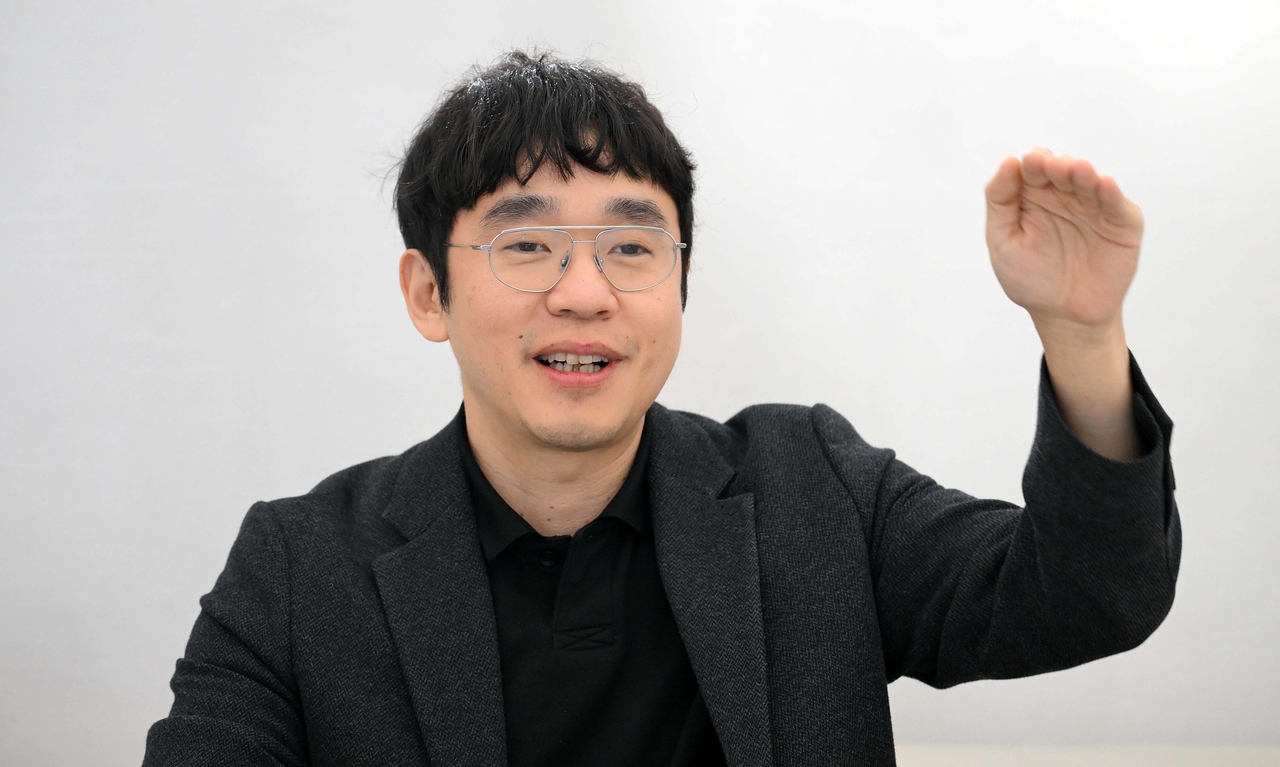
Shin Jin-woo says ecosystem scale, not model scores, will shape Korea’s AI future
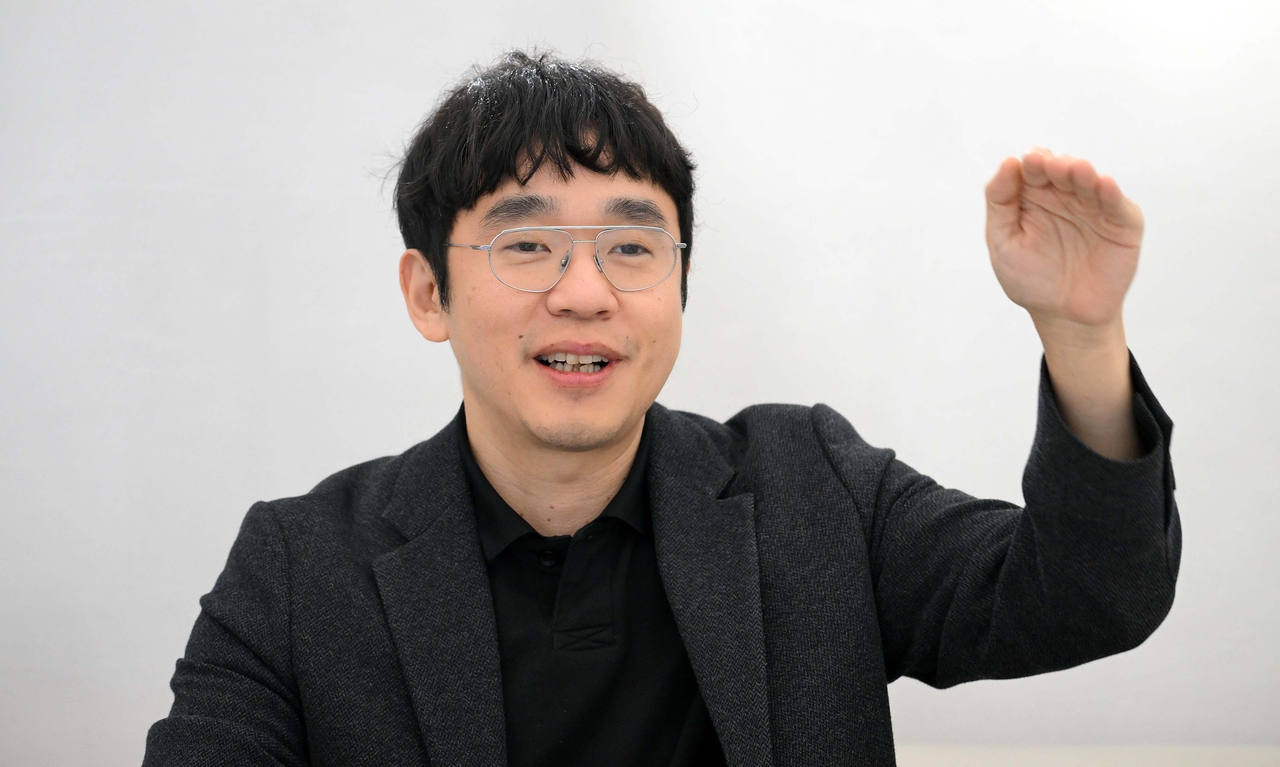
As China accelerates its advance in foundation models, South Korea is not far behind in frontier model performance, according to Shin Jin-woo, ICT endowed chair professor at the Kim Jaechul Graduate School of AI at KAIST.
But performance is not the real issue.
“The technology gap is often exaggerated,” Shin said in a recent interview with The Korea Herald in Seoul. “Based on the time required to absorb and reproduce publicly released technologies, the difference is closer to half a year.”
Because many Chinese models are open source, Korean developers can study and replicate core advances quickly, he explained.
However, he drew a sharp distinction between matching benchmarks and leading ecosystems.
“China already has the technological power to lead parts of the industry,” he said. “That’s a different matter from simply catching up in performance.”
Deployment speed as structural advantage
Shin noted that raw performance differences between US and Chinese models are narrower than commonly perceived.
“US models may be more polished in certain services,” he said, “but Chinese models have reached comparable levels in many areas.”
Where China stands out is industrial deployment speed.
“Even if the technology is not fully refined, it is deployed quickly,” he said. “Feedback from those deployments flows back into the next generation of models. That cycle has become a structural advantage.”
The loop — development, deployment, data accumulation and refinement — compresses iteration timelines in ways that pure lab competition cannot match.
Three pillars: talent, data, compute
According to Shin, China’s acceleration rests on three coordinated pillars: talent, data and computing power.
“AI ultimately depends on people, data and computing,” he said. “China has mobilized engineering talent, expanded access to data and invested heavily in computing infrastructure.”
While the US maintains dominance in high-end AI hardware globally, China has strengthened domestic semiconductor capabilities and alternative computing pathways.
“Bringing those three elements together in a coordinated way makes a major difference,” Shin said.
Sovereign AI and strategic insurance
The debate over “sovereign AI” in Korea has intensified as the government advances a state-backed foundation model initiative.
During the second-stage review of the national AI project, questions arose over how much open-source integration is acceptable for models labeled as domestically independent.
“It was a process of clarifying standards,” Shin said. “We needed to draw a line between open-source adoption and sovereign development.”
For Shin, sovereign AI is not about isolation — it is about strategic insurance.
“If dependency on overseas platforms grows and access conditions change, industries across the board could be affected,” he said. “Domestic capabilities act as a safeguard.”
He added that large-scale foundation model development cannot be sustained by private companies alone.
“AI is capital-intensive and long-horizon,” Shin said. “In Korea’s corporate environment, few firms can absorb years of losses without government backing. Some level of state-driven momentum is inevitable.”
Shin argued that Korea should neither abandon foundation model development nor concentrate all resources on surpassing the US or China.
“It would be unrealistic to give up foundation models entirely,” he said. “But it would also be impractical to focus solely on beating global leaders in this area.”
Instead, he advocates a two-track strategy: maintain core foundation model capabilities while leveraging Korea’s manufacturing and electronics strengths in areas such as agent-based AI and physical AI, including robotics.
“AI is moving beyond software into physical domains,” he said. “In the next few years, we may see tangible commercialization there.”
For Shin, the next five years will be decisive.
“Korean AI talent is highly competitive,” he said. “But without sufficient industrial scale, it becomes difficult to retain that talent domestically.”
Top researchers are increasingly drawn to larger markets and deeper capital pools overseas.
“In the end, talent follows industry,” Shin said. “Building that industry is the real challenge.”
yeeun@heraldcorp.com