Published on
March 1, 2026

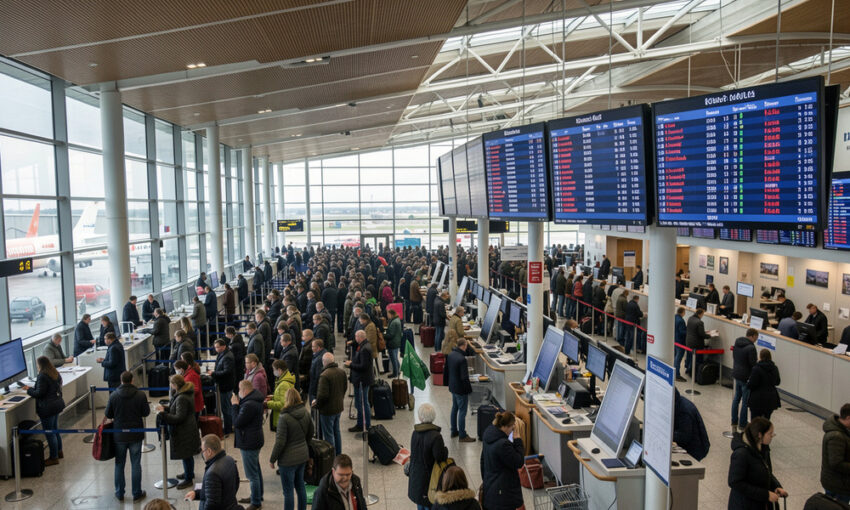
Image generated with Ai
Hundreds of passengers at Hong Kong International Airport faced significant disruptions on Sunday due to a joint US-Israeli airstrike on Iran, which led to airspace closures across the Middle East. As a result, numerous flights to key destinations such as Riyadh, Doha, and Dubai were either cancelled or delayed, stranding travellers and causing confusion. The attack’s immediate impact on flight operations prompted several airlines, including Cathay Pacific Airways, to suspend all passenger and cargo flights to the region, leaving passengers scrambling to adjust their plans. This unexpected escalation of geopolitical tensions highlights the vulnerability of global air travel to regional conflicts, with major airports in the Middle East now affected by flight suspensions and rerouted flights.
Airlines Grapple with Flight Cancellations as Middle Eastern Airspace Closes Due to US-Israeli Strike on Iran
A joint US-Israeli airstrike on Iran triggered significant disruptions to international flights on Sunday, forcing airlines to cancel or delay at least 27 flights from Hong Kong to the Middle East. Passengers were left stranded at Hong Kong International Airport as they scrambled to secure alternative travel arrangements, with suspended departures primarily affecting destinations such as Riyadh in Saudi Arabia, Doha in Qatar, and Dubai in the United Arab Emirates (UAE).
Hong Kong’s flagship airline, Cathay Pacific Airways, was one of several carriers forced to suspend all passenger and cargo flights to the Middle East following airspace closures caused by the conflict. The airline’s suspension of flights led to a surge in inquiries from frustrated passengers, all hoping for clarity on when operations would resume.
Advertisement
Advertisement
By Sunday morning, hundreds of passengers packed Hong Kong International Airport, anxiously seeking information on flight cancellations. Affected travellers faced uncertainty as they were told to await further instructions or make new arrangements. A significant number of the disrupted flights were headed to Dubai, a key air travel hub for the region.
As the situation escalated with retaliatory attacks from Iran, several other flights to the region were impacted. Flight cancellations from Hong Kong were spread across various Middle Eastern cities, with multiple flights to Dubai being cancelled. Three passenger flights, alongside nine cargo flights, were cancelled, and additional delays affected other cargo flights to and from the region.
Advertisement
Advertisement
The air strikes also forced airlines to cancel passenger flights and cargo shipments to Doha. One passenger flight was halted, and three cargo flights experienced cancellations, while delays affected another five cargo flights. Additionally, flights to Abu Dhabi and Riyadh were impacted, with a cargo flight to Abu Dhabi and two flights to Riyadh being cancelled on Sunday.
By 11 AM on Sunday, the Hong Kong Airport Authority confirmed that nine passenger flights had been cancelled due to the crisis. The authority urged affected passengers to directly contact their airlines to explore rebooking options or make alternate arrangements. As the day went on, further cancellations occurred, leaving passengers struggling to make decisions about how to proceed with their travel plans.
Advertisement
Advertisement
The Hong Kong Travel Industry Council expressed concern over the widespread disruption caused by the closure of airspace over the Middle East. Dubai and Doha are major transit hubs for flights connecting Europe with destinations across Asia and the Middle East. With these airports now shut off from certain flight paths, the disruption was set to cause delays not only for passengers heading to the Middle East but also for those attempting to transit through these critical hubs.
The ripple effects of the conflict extended beyond just those flying from Hong Kong, as global airlines were forced to adjust their routes and cancel flights across the Middle East. A significant number of airlines had to reroute flights to avoid affected areas of the Middle Eastern airspace, with many canceling flights to Qatar, Israel, and the UAE.
As of Sunday midnight, aviation analytics firm Cirium reported that 865 out of 3,326 scheduled flights from 12 airlines destined for the Middle East had been cancelled. Qatar saw the highest cancellation rate, with 50.8% of flights to the country being affected. Israel and the UAE were also significantly impacted, with 48.6% and 35% of their scheduled flights, respectively, being called off due to airspace closures and safety concerns.
The cancellations were a direct consequence of the escalating conflict between the US and Israel and Iran, forcing airlines worldwide to make difficult decisions about which flights to cancel or reroute. The situation raised concerns not only over the safety of flight operations in the region but also about the broader economic implications for airlines heavily reliant on routes passing through the Middle East.
Hong Kong’s Tourism Industry Council stated that the impact of the airspace closures would also affect less than ten scheduled tours departing or arriving in Hong Kong during the following days. Despite the disruptions, most affected tour groups did not face any immediate or long-term complications in terms of customer travel.
However, some tour groups did face more complicated situations. A group of 21 tourists who were scheduled to fly from Morocco to Hong Kong had their flights cancelled on Saturday night, leaving them stranded in Morocco. In response, the tour operator made quick arrangements for their accommodation until flights could resume. Similarly, another group of 26 travellers scheduled to depart Hong Kong for Morocco had their plans disrupted due to the flight cancellations.
Moreover, a tour group that had already arrived in Dubai was unable to return to Hong Kong. They were left uncertain about their return travel options, as airlines scrambled to manage the growing number of cancellations and rerouted flights. Some passengers were left wondering whether it would be safe to wait for the situation to improve before making any further travel decisions.
As tensions in the Middle East continue to mount, airlines are closely monitoring the situation and adjusting their operations to comply with airspace restrictions while also ensuring the safety of their passengers. The travel disruptions caused by the air strikes highlight the broader vulnerabilities in global air travel, as conflicts in one region can have far-reaching effects on flight operations worldwide.
Passengers affected by the cancellations are encouraged to check with their airlines for updates on the status of their flights. Airlines are working to rebook affected passengers and explore alternative travel routes, but with airspace over the Middle East still in flux, the full recovery of air travel to the region remains uncertain.
The full scope of the conflict’s impact on global air travel will likely continue to unfold in the coming days, with passengers and airlines alike facing a challenging road ahead as they navigate the complexities of disrupted air routes and ongoing geopolitical tensions.

