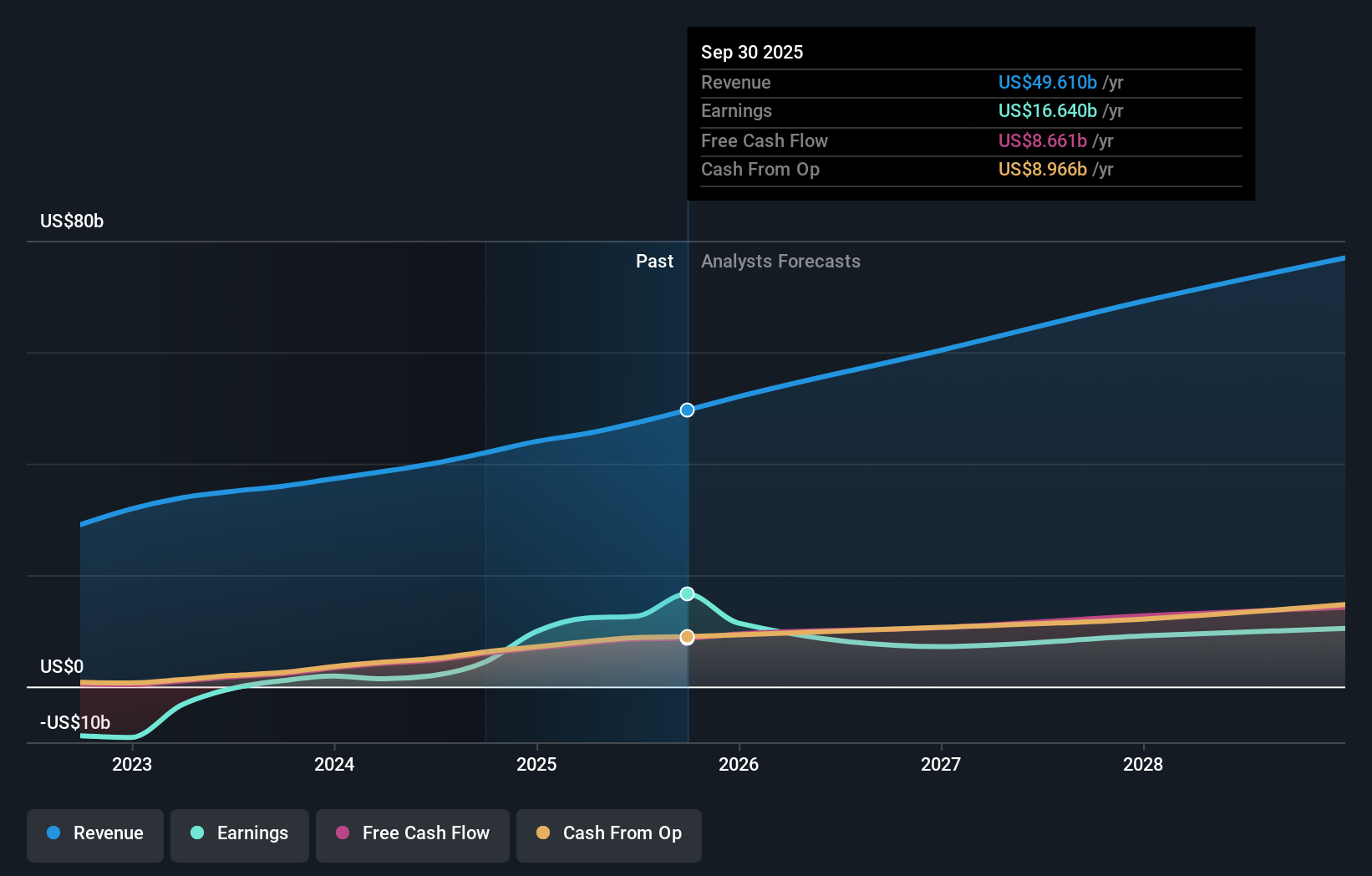
- Uber Technologies (NYSE:UBER) has re-entered Macau with ride-hailing services.
- The company is also launching a cross-border limousine service connecting Macau and Hong Kong.
- This marks Uber’s first move back into the Greater China region since exiting mainland China in 2016.
For investors watching NYSE:UBER, this move adds a fresh piece to the story of a company that builds its business around ride-hailing, delivery and related mobility services. Macau and Hong Kong are dense, tourism heavy hubs, so cross border transport options can be a meaningful part of local travel infrastructure.
This step into Macau brings a new geography and a differentiated service format together, which may matter for how Uber thinks about other complex, high traffic corridors. As you assess the company, you might treat this as one data point in how management is pursuing expansion in Asia and experimenting with more specialized offerings.
Stay updated on the most important news stories for Uber Technologies by adding it to your watchlist or portfolio. Alternatively, explore our Community to discover new perspectives on Uber Technologies.

How Uber Technologies stacks up against its biggest competitors
For Uber, re-entering Macau and adding a pre-booked cross-border limousine service to Hong Kong fits with the push to use its platform in dense, tourism-heavy corridors where reliable, higher-value trips can matter for unit economics. It also nudges Uber back into Greater China territory alongside large ride-hailing peers like DiDi and regional rivals such as Grab, which could be relevant if you are tracking how the company balances growth opportunities with regulatory and competitive pressures in Asia.
How This Fits Into The Uber Technologies Narrative
This move lines up with the longer-term story of Uber trying to widen its role as urban transport infrastructure while layering on differentiated products, from premium rides to cross-border options. If you are following the narrative around autonomous partnerships and AI-powered services, Macau and Hong Kong offer another test bed where Uber can connect its demand network, local regulators and potentially future AV partners across tightly linked cities.
Risks and Rewards To Keep In Mind
- 🎁 Cross-border and airport style routes can support higher-value trip types, which may help offset pressure from lower cost products elsewhere in the platform.
- 🎁 Success in Macau could provide a framework for similar complex, cross-jurisdiction services, strengthening Uber’s position against players like DiDi and Grab.
- ⚠️ Greater China related expansion brings regulatory and licensing risk, especially where authorities are sensitive to foreign platforms and labor classification topics.
- ⚠️ The company is already facing regulatory and tax disputes in markets such as France, so adding another tightly regulated region introduces further execution and compliance risk.
What To Watch Next
From here, you might watch how quickly Uber can recruit licensed drivers in Macau, how cross-border limousine demand shapes up versus regular ride-hailing, and whether the company references this corridor alongside its broader Asia and autonomous-vehicle plans on future earnings calls. If you want to see how this kind of expansion fits into different long-term storylines, check the community narratives on Uber’s dedicated page, where investors connect news like this to growth, risk and valuation views.
This article by Simply Wall St is general in nature. We provide commentary based on historical data
and analyst forecasts only using an unbiased methodology and our articles are not intended to be financial advice. It does not constitute a recommendation to buy or sell any stock, and does not take account of your objectives, or your
financial situation. We aim to bring you long-term focused analysis driven by fundamental data.
Note that our analysis may not factor in the latest price-sensitive company announcements or qualitative material.
Simply Wall St has no position in any stocks mentioned.
New: AI Stock Screener & Alerts
Our new AI Stock Screener scans the market every day to uncover opportunities.
• Dividend Powerhouses (3%+ Yield)
• Undervalued Small Caps with Insider Buying
• High growth Tech and AI Companies
Or build your own from over 50 metrics.
Have feedback on this article? Concerned about the content? Get in touch with us directly. Alternatively, email editorial-team@simplywallst.com