One of the biggest challenges we face with healthy eating is whether our bodies can actually absorb the vitamins and minerals from the food we eat.
According to a 2024 study, billions of people worldwide do not get enough essential micronutrients (vitamins and minerals) from their diets. This isn’t always because people aren’t eating “healthy” foods – it’s often because those nutrients aren’t fully absorbed.
Poor gut health can impair the breakdown and absorption of food, while restrictive diets can unintentionally eliminate key nutrients altogether.
Even the healthiest meals won’t deliver their full benefits if key vitamins and minerals are lost through the body. Factors like food combinations, preparation methods and the presence of certain nutrients can all influence how much goodness we ultimately absorb.
Luckily, there are certain food pairings that can help the body unlock and absorb nutrients more effectively, making the meals we already eat work even harder. From healthy fats that boost vitamin uptake to ingredients that improve mineral absorption, small swaps in your weekly shop can make a meaningful difference to how your body benefits from food.
5 food pairings that help your body absorb nutrients
Bini Suresh, registered dietitian and head of dietetics and therapy services at Cleveland Clinic London, speaks to us about the foods that can help boost nutrient absorption.
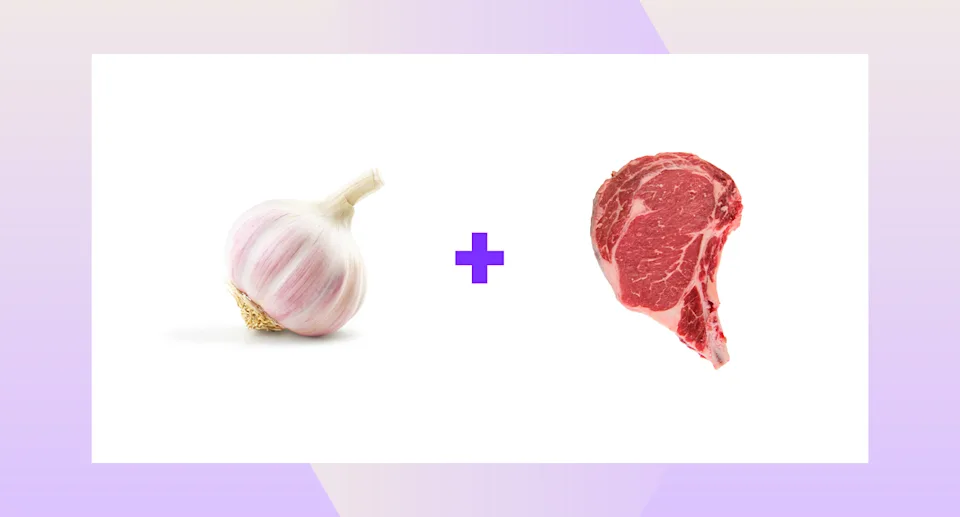
Garlic and red meat

Garlic and red meat can easily be paired together.
(Yahoo Life UK / Getty Images)
A kitchen staple, garlic can do more than add depth to a dish. Suresh tells us: “Garlic contains sulfur-containing compounds that may support digestive enzyme activity and mineral absorption, particularly iron and zinc.”
Iron and zinc are both essential for energy and overall health. You’ll find iron in foods like red meat, beans, leafy greens and fortified cereals, and zinc in foods such as shellfish, dairy, nuts and wholegrains.
The dietitian says that, rather than boosting nutrients directly, garlic supports digestion, which helps the body break down food more efficiently and absorb nutrients more effectively as a result.
✔️ Roast garlic bulbs and stir into a bolognese sauce
✔️ Infuse garlic into a slow-cooked beef stew
✔️ Mix finely chopped garlic into beef mince and season to make meatballs

Garlic is one of the most common ways of adding flavour to dish.
(haoliang via Getty Images)
Ginger and lemon

Ginger can help break down foods.
(Yahoo Life UK / Getty Images)
Studies suggest that ginger can increase the uptake of key micronutrients like iron, magnesium and zinc. Paired with lemon, which is high in vitamin C, this combination can further boost iron absorption.
Much like garlic, ginger supports digestion by helping food move more smoothly through the digestive system and reducing inflammation in the gut.
“This may indirectly support nutrient absorption, particularly in people who experience bloating, nausea or slower digestion, as it helps create optimal digestive conditions for absorption,” says Suresh.
✔️ Make a warm ginger and lemon tea
✔️ Create a ginger and lemon dressing to use over salads or vegetables
✔️ Mix ginger and lemon to make a marinade for chicken or fish

Ginger and lemon tea is one of the easiest ways to take advantage of this food pairing.
(fcafotodigital via Getty Images)
Tomatoes and lentils

There are a variety of dishes that combine this popular food pairing.
(Yahoo Life UK / Getty Images)
Vitamin-C-rich foods like tomatoes, bell peppers, kiwi and citrus fruits significantly increase the body’s ability to absorb plant-based iron.
Pairing these foods with iron-rich plant sources – like lentils, beans, leafy greens or whole grains – can make a meaningful difference, especially for those following a vegetarian or plant-based diet.
Suresh explains, “Vitamin C plays a well-established role in improving the absorption of non-haem iron, the form of iron found in plant foods. It helps convert iron into a form that is easier for the body to absorb.”
✔️ Make a fresh side salad from tomatoes and lentils and season with lemon juice
✔️ Blend tomatoes and lentils into a soup
✔️ Create a tomato and lentil pasta sauce

Tomatoes are a versatile source of vitamin C that you can easily add to meals.
(Mint Images via Getty Images)
Olive oil and leafy greens

Olive oil pairs perfectly with a range of leafy greens.
(Yahoo Life UK / Getty Images)
Many important vitamins are fat-soluble – vitamins A, D, E and K – which means they require a source of dietary fat to be absorbed properly. Without fat, a portion of these vitamins can pass through the gut unused.
“Adding small amounts of healthy fats, such as olive oil on vegetables or nuts in a salad, has been shown to improve absorption of fat-soluble vitamins and carotenoids like beta-carotene and lutein,” says Suresh.
She adds, “You don’t need large amounts of fat. Modest portions are enough to support absorption.”
✔️ Make a pesto sauce by blending spinach or kale with olive oil, nuts, garlic and lemon
✔️ Add a generous glug of olive oil to roasted veggies
✔️ Drizzle olive oil over a fresh green salad

Making your own pesto is easy to do and takes no time to prepare.
(Kseniya Ovchinnikova via Getty Images)
Black pepper and turmeric

Black pepper and turmeric is one of the strongest food pairings.
(Yahoo Life UK / Getty Images)
Studies show that black pepper can improve the body’s ability to absorb certain beneficial compounds from some ingredients. This is down to something known as piperine – a natural compound in black pepper that helps the body absorb nutrients more effectively.
The strongest evidence relates to turmeric. Typically, turmeric contains a small percentage of what’s called curcumin, a natural compound that is said to offer a range of health benefits that can help with inflammation and indigestion. However, curcumin is generally difficult for the body to absorb.
To improve absorption, several studies suggest taking it with piperine, the compound found in black pepper, which helps increase the amount that enters the bloodstream.
✔️ Sprinkle freshly ground black pepper on scrambled eggs made with turmeric
✔️ Season curry dishes with black pepper and turmeric
✔️ Add a pinch of black pepper and turmeric to a smoothie

Simple swaps or add-ons can make a big difference to how many nutrients your body absorbs.
(alvarez via Getty Images)
Foods and habits that may inhibit nutrient absorption
-
Tea and coffee – high in tannins which can block the absorption of minerals like iron, especially when drunk with meals
-
Unsoaked wholegrains, legumes or seeds – high in phytates, naturally occurring compounds that can interfere with the absorption of minerals like iron, zinc and calcium
-
Very restrictive or low-energy diets – may limit overall nutrient intake and slow digestion, making it harder for the body to absorb and utilise essential vitamins and minerals