Published on
November 13, 2025
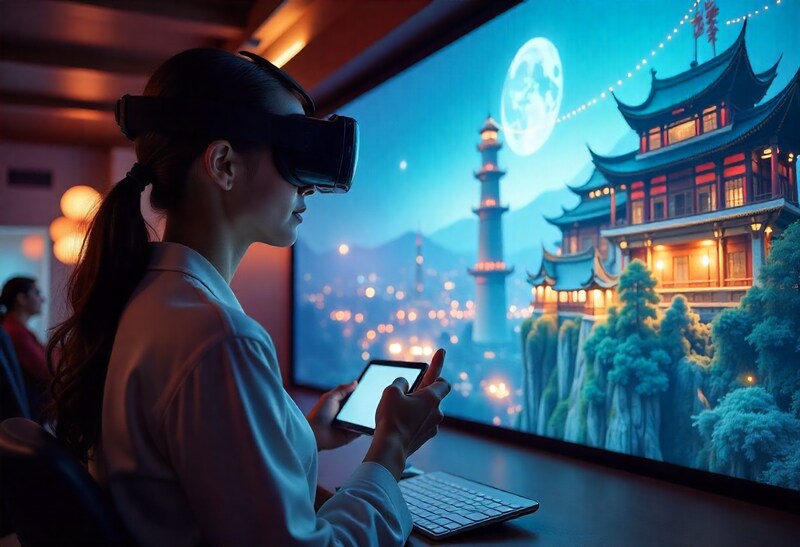
The integration of technology with the tourism sector is on the rise in China, bringing with it the booming of the sector with advancements like virtual reality time travel and aerospace travel experiences. These experiences in China tourism dedicate a significant amount of their focus on the technological advancements in virtual reality, allowing clients witness programs of contemporary China in real time, and lateral travel to witness programs of ancient China. These technological marvels, integrated with the cultural and tourism aspects of China, is projected to bring in almost 200 billion USD in 2025. The growing rate of high-end technological marvels in the Chinese tourism sector is the primary contributory factor to the growth in China, leading the world in technology tourism.
In recent years, a wave of technological innovation has taken the tourism industry in China by storm, offering visitors experiences that seamlessly blend culture, history, and futuristic technologies. From virtual reality (VR) journeys through ancient tombs to immersive space missions, the rapid advancement of tech-driven tourism is transforming the way travelers explore the world. As China’s smart tourism market continues to expand, tech tourism is becoming an essential part of the country’s travel landscape, attracting both domestic and international visitors eager to experience the intersection of culture and cutting-edge technology.
A Glimpse into the Past and Future: VR Experiences in Ancient Settings
One of the standout trends in China’s tourism sector is the rise of virtual reality experiences that transport visitors back in time. At various scenic spots across the country, VR technology has been implemented to offer tourists the chance to explore historical sites in entirely new ways. A popular example is the recreation of the Qin Dynasty’s underground mausoleum, home to the world-famous Terracotta Army. Donning VR goggles, visitors can walk through the tomb as if they were witnessing the silent warriors come to life before their eyes.
Similarly, tech-driven tourism offers experiences beyond ancient history, like Mars-themed attractions. In these immersive environments, children dressed in astronaut suits step into mock spacecraft, embarking on thrilling missions to explore the Red Planet. Such attractions are not only exciting but also provide visitors with an educational glimpse into the future of space travel.
These experiences mark a dramatic shift from traditional sightseeing, where visitors simply view and observe. In the era of tech tourism, travelers are actively participating, engaging with technology to experience cultural and scientific concepts in more interactive and dynamic ways. As VR and augmented reality (AR) continue to improve, these experiences will only become more realistic, blurring the lines between history and modern-day technology.
Tech Tourism’s Rapid Growth: A Future-Forward Industry
The global trend of tech tourism is rapidly gaining traction, and China is at the forefront of this revolution. Experts predict that the country’s smart tourism market will exceed 1.4 trillion yuan (approximately US$197.6 billion) by 2025. This growth is driven by the increasing demand for interactive and immersive experiences that go beyond traditional sightseeing.
Museums and science centers, in particular, are embracing technology to make their exhibits more engaging. The Shenzhen Science and Technology Museum, for instance, has created an exhibition where visitors can “travel” through space via VR. Similarly, the Qingdao Science and Technology Museum offers a unique experience where children can put on VR goggles and transform into “underwater archaeologists,” exploring the depths of the ocean and uncovering its hidden treasures.
These experiences aren’t limited to the younger generation. Tech tourism also appeals to older visitors who are eager to see how technology can enhance their understanding of science and culture. In fact, science museums and popular science venues have become top choices for family trips, providing educational experiences that are both fun and informative.
High-Tech Industrial Tourism: Blending Education with Adventure
China’s industrial tourism sector is also experiencing a surge in popularity, with high-tech attractions gaining significant attention from visitors. The FAST telescope, located in Guizhou Province, is one such example. As the world’s largest and most sensitive radio telescope, the site attracts science enthusiasts and tourists eager to learn more about the cutting-edge technology that powers this impressive facility. Visitors can explore the surrounding natural beauty of the region while also gaining insight into one of China’s most important scientific endeavors.
Additionally, China’s aerospace industry has become a key player in the growing trend of industrial tourism. The rocket viewing platform in Wenchang, located in Hainan Province, draws over 100,000 spectators for each rocket launch, offering an up-close look at China’s space program. These industrial sites are proving that tech tourism is not only about visiting museums and historical sites; it’s also about experiencing the future of science and technology firsthand.
The rise of industrial tourism in China is part of a global trend where industrial facilities such as factories, power plants, and tech hubs are opening their doors to tourists. In China, aerospace and automotive industrial tours have accounted for more than 20% of related searches during peak travel seasons, illustrating the growing interest in these high-tech attractions.
Gen Z and the Appeal of Interactive Tech
One of the driving forces behind the success of tech tourism is the desire for younger generations to engage in experiences that allow them to be more than just passive observers. Generation Z, in particular, is leading the charge as they seek more interactive, immersive, and shareable experiences. Tech tourism offers them the opportunity to participate actively in educational activities while also satisfying their craving for social media-worthy moments.
The integration of AI, robotics, and interactive VR/AR experiences allows these young tourists to engage with technology in ways that feel personal and meaningful. Whether it’s testing out a new piece of tech or participating in a hands-on science experiment, these activities provide a new level of engagement that traditional forms of tourism simply can’t offer.
Moreover, as Gen Z travelers often prioritize experiences over material goods, the rise of tech tourism presents a unique opportunity for tourism operators to cater to this demographic. High-tech experiences offer not just entertainment but also educational value, appealing to this generation’s increasing thirst for knowledge and hands-on learning.
The Future of Tech Tourism: More Than Just a Trend
As technology continues to evolve, so too will the potential for immersive, tech-driven travel experiences. What was once considered a niche market is rapidly becoming a mainstream trend in the tourism industry. Visitors are no longer just sightseeing—they are actively participating in their journey through interactive and immersive technologies.
From exploring ancient civilizations through VR to engaging with cutting-edge scientific research, tech tourism offers an endless array of possibilities for travelers seeking new and exciting ways to explore the world. As China continues to innovate and push the boundaries of what’s possible in the tourism sector, the global tourism industry is sure to take notice. The future of travel is not just about visiting landmarks—it’s about stepping into new worlds, whether that’s through time, space, or industry.
With the growing integration of AI, VR, and AR technologies, China’s tourism industry is poised to lead the charge in this tech-driven revolution. The nation’s vast and diverse attractions are uniquely suited to host these groundbreaking experiences, and as the demand for interactive and immersive tourism grows, the potential for tech tourism to reshape the industry becomes even more apparent.
As technology continues to evolve, tourists in China and beyond can expect even more mind-blowing, interactive experiences that enhance both the entertainment and educational value of their travels. The rise of tech tourism marks a shift from passive sightseeing to active participation, providing travelers with the opportunity to engage with the past, present, and future in ways that were once only imaginable.
China’s tech tourism, driven by VR time travel and aerospace tours, is rapidly surpassing expectations, with the sector set to reach nearly 200 billion US dollars by 2025, as innovative experiences attract global visitors.
With its ever-expanding offerings and growing appeal, tech tourism is set to become one of the most significant trends in the global travel industry. Whether through VR time travel, industrial tours, or space exploration experiences, the future of tourism is here, and it’s powered by technology.

