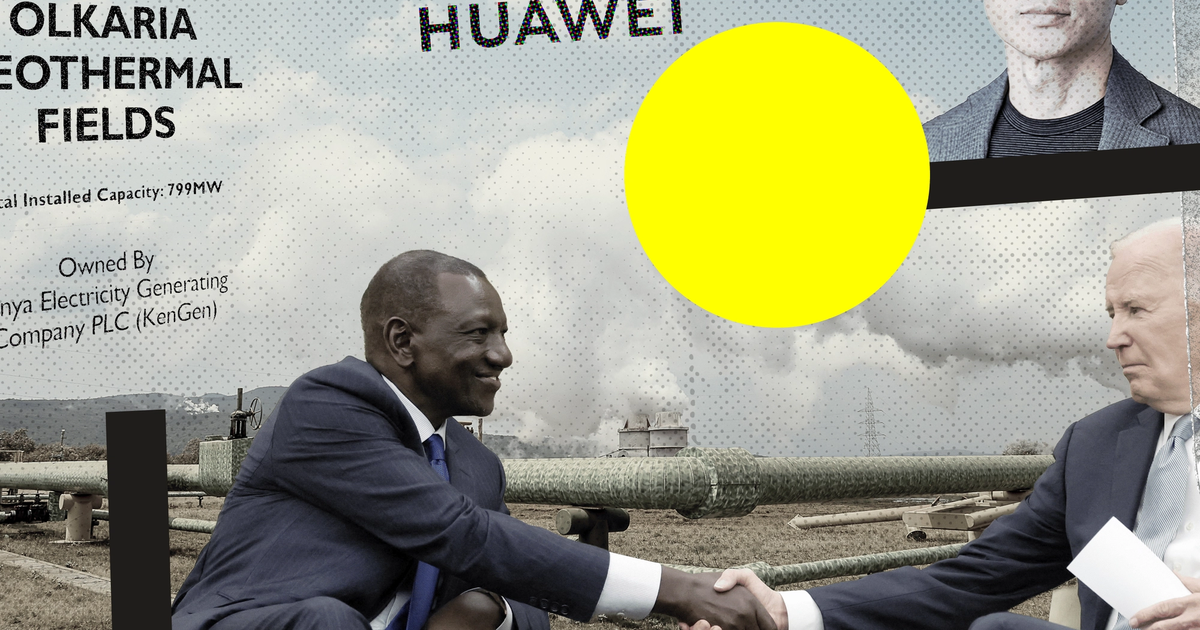
When it announced the deal in May 2024, Microsoft said the roll out of cloud-computing in East Africa through the Olkaria data center would improve prospects for its Azure products in the region. As part of the agreement, the Kenyan government — which already provides digital access to public services through its eCitizen platform — planned to move more operations to the cloud. G42 was brought in as a key partner.
The problem: The companies have struggled to figure out what Microsoft’s cloud services will actually be used for, beyond Nairobi’s commitment. Two people with direct knowledge of the project said — 15 months after the deal was inked — G42, Microsoft, and the Kenyan government are still working on identifying the business rationale and a sustainable financial model.
“It all came together in a very geopolitical way,” one of the people, a tech infrastructure financier who was involved in talks about the project’s development and who spoke on condition of anonymity, told Semafor. “The UAE government was scrambling to give the US something to make up for their previous dalliances with Huawei.”
Through its tech giants, China has become a key player in Africa’s digital infrastructure development over the past decade: ZTE manufactures telecoms hardware and China Telecom is an internet access provider.
It is Huawei, however, that is most deeply embedded in Africa’s tech ecosystem, providing cloud, data center, and power grid modernization across the continent. The Shenzhen-headquartered company — the world’s biggest supplier of telecoms equipment — has built around 70% of Africa’s 4G networks, partnering with governments and companies in the continent’s largest economies, including Ethiopia, Kenya, Nigeria, and South Africa.
Huawei has established itself as an attractive partner for African nations by providing infrastructure at significantly lower prices than Western competitors, while working closely with governments to quickly deliver large-scale projects. Its investment in digital skills training has burnished its reputation across the continent as a company willing to provide long term partnership.
G42 also maintained ties with Huawei, which provided servers and data center networking equipment to the Abu Dhabi-backed AI conglomerate. But the Biden administration reportedly voiced concern over the relationship, and so, in late 2023, the Emirati firm announced that it was severing ties with Huawei to ensure access to US-made chips. “For better or worse, as a commercial company, we are in a position where we have to make a choice,” G42’s CEO Peng Xiao told the Financial Times. “We cannot work with both sides. We can’t.”
Ultimately, those efforts led Biden to approve cutting-edge chip exports to Abu Dhabi, Semafor has previously reported, and last year Microsoft invested $1.5 billion in G42.
Around the same time, years of behind-the-scenes work by then-US Ambassador to Nairobi Meg Whitman, to present Kenyan President William Ruto as Washington’s preferred business and political partner in Africa, were paying off. With her backing, Ruto secured an historic state visit to the US in May 2024 — the first by an African leader in 16 years.
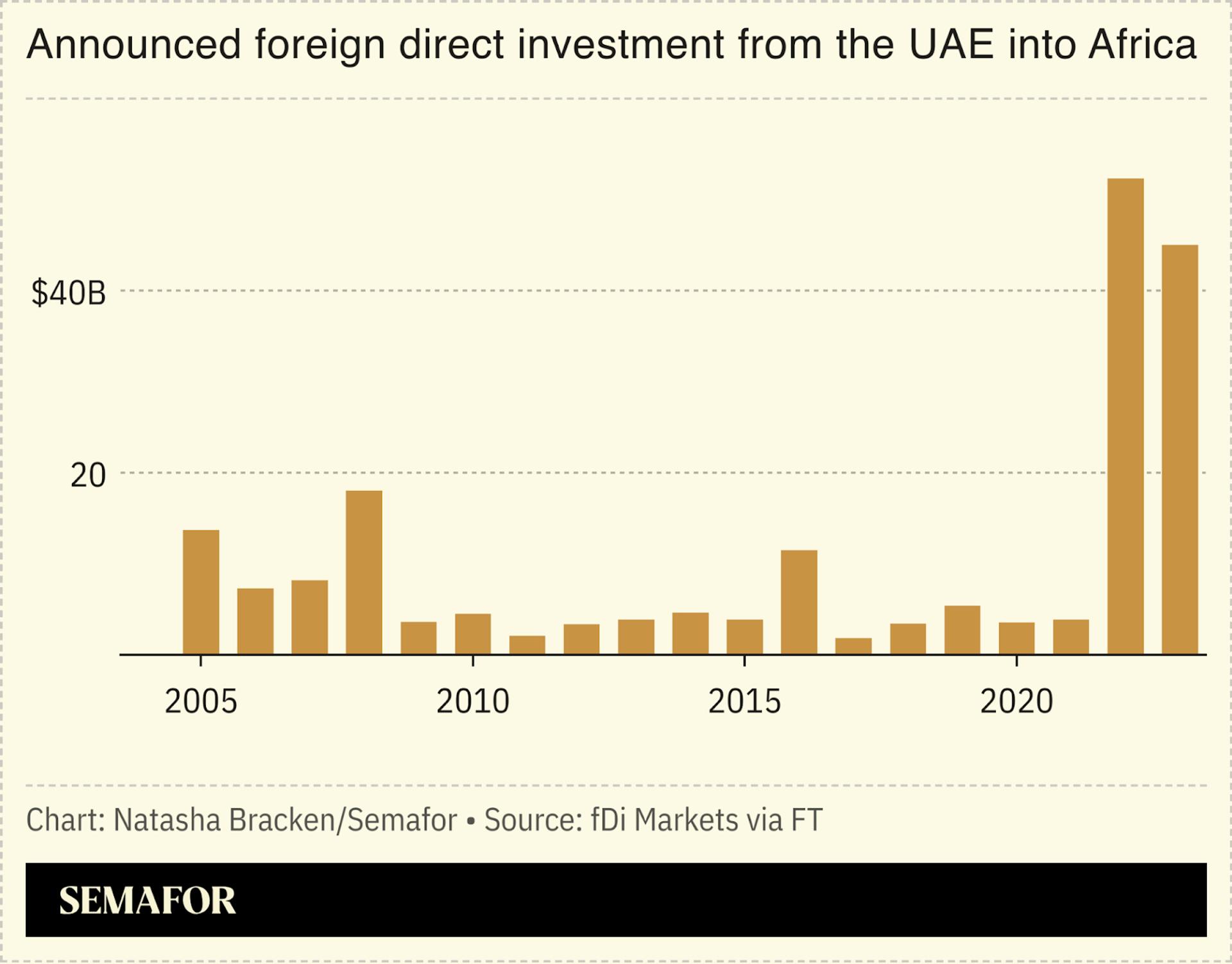
It was then that Microsoft and G42 announced their partnership to build a data center in Kenya, with financing led by the Emirati firm. It marked the latest step in a trend that has seen the UAE become among the largest foreign investors in Africa, having surpassed China in terms of total announced investments. And that it came during a state visit by the Kenyan leader made clear the underlying geopolitical nature of the deal.
Even at the time, officials acknowledged the deal was far from a typical business transaction. “This partnership is bigger than technology itself,” Ruto said. He called it a “coming together of three countries with a common vision.”
If the Olkaria project was forged by geopolitics, it has also been undone by geopolitics — at least in part.
In the months since US President Donald Trump took office, technology has, if anything, surged closer to the center of the political agenda, yet that has counterintuitively cemented the Kenya deal’s laggard status.
Artificial Intelligence has driven much of the conversation in the US, and prioritizing American dominance of the technology is a rare issue in which there has been bipartisan agreement in Washington: An AI action plan published by the Trump administration in July states that the US “must meet global demand for AI” by exporting relevant technology to other countries. It makes the case that American companies must look abroad in order to “stop our strategic rivals from making our allies dependent on foreign adversary technology.”
And in practice, Trump’s AI ambitions have shown themselves to far surpass the Olkaria project.
At home, his strategy encompasses the $500 billion Stargate joint venture with OpenAI, Oracle, and SoftBank that aims to build a network of data centers across the US.
Abroad, the focus has been on advanced economies which offer a safer bet than emerging markets such as Kenya. In May, Trump announced deals with the UAE worth $200 billion, which included plans for the Gulf state to build the largest AI campus outside the US. And last week Washington unveiled a $42 billion technology deal with Britain to boost ties in AI and quantum computing.
By comparison, Olkaria is large, but far from all-encompassing. Combined with Africa typically ranking low on Washington’s list of priorities, the project has not garnered much attention, overtaken by bigger targets in more prominent locations. A White House official, who spoke to Semafor on the condition of anonymity, said the administration’s focus has been on the Gulf and Europe. Africa isn’t on the radar and isn’t seen as an urgent battleground in the tech war with China.
Semafor sought comment from the White House over the Kenya data center project. In response, White House spokesperson Kush Desai said: “President Trump pledged to cement America’s dominance in cutting-edge technologies like AI and cryptocurrency, and the Administration is committed to delivering on this agenda at home and abroad.”
G42 did not respond to a request for comment on the project’s delay or a revised timeline. Microsoft declined to comment.
