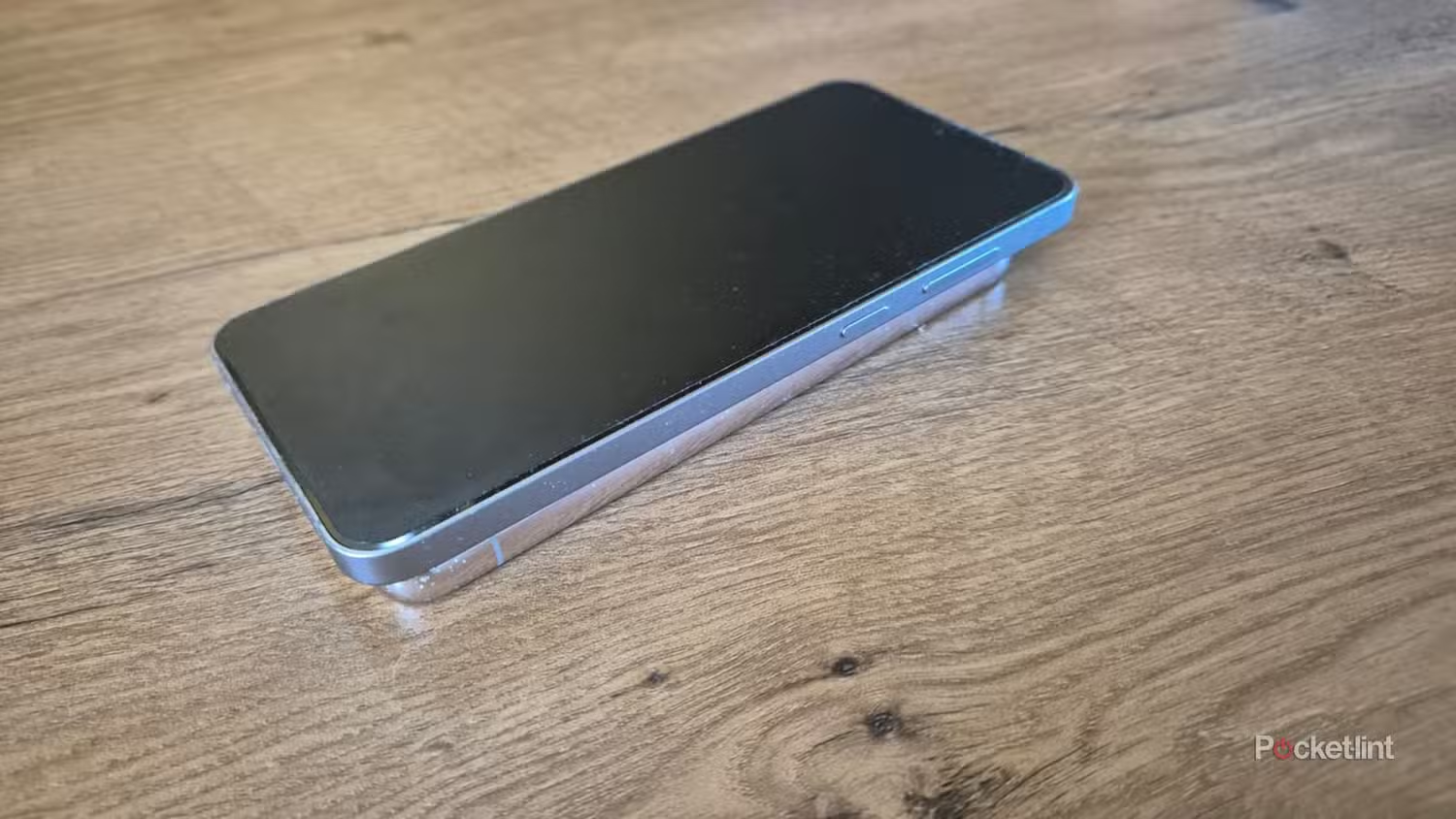
Modern smartphones are often packed with unwanted AI and other overrated features you don’t need, inflating their prices. Evolution seems to have stagnated, and smartphone makers, like Samsung, Apple, and Google, provide iterative updates with gimmicky features as selling points rather than committing to real innovation.
These overrated phone features often have limited practical use, and most users won’t even notice them. Others sound impressive in advertising material and offer questionable benefits to buyers. You probably don’t need these five overrated phone features and shouldn’t pay extra for them.
Reverse Wireless charging
It’s not practical

Reverse wireless charging seems like a good idea and could theoretically be useful if you need to top up another phone in a pinch. In reality, it’s a feature that I’ve probably used once, and most people I know don’t know it exists, let alone use it.
On my Samsung Galaxy, wireless power sharing only works if I remove the covers from both phones and perfectly align them back-to-back.
It’s understandable because it’s slow and inconvenient to use. On my Samsung Galaxy, wireless power sharing only works if I remove the covers from both phones and perfectly align them back-to-back. The slightest movement interrupts charging, and it also becomes difficult to use my phone. Carrying a spare USB-C cable or power bank is a more practical option, and it doesn’t drain my battery.
144Hz refresh rate
You probably won’t notice

The jump from 60Hz to 120Hz refresh rates on mobile phones offers noticeably smoother scrolling, making it feel snappier and more responsive. It’s also better for animations and gaming because the visuals are crisp and clear with less motion blur. That’s why popular flagships, like the iPhone 17 Pro Max and Samsung S26 Ultra, stick to 120Hz as the sweet spot for their displays.
The Xiaomi 15T Pro and the latest Motorola Edge 70 Pro now pack 144Hz refresh rates, which offer questionable benefits.
Competitors, like the Xiaomi 15T Pro and the latest Motorola Edge 70 Pro, now pack 144Hz refresh rates, which offer questionable benefits. Most users won’t notice the difference between 120Hz and 144Hz, and it isn’t worth the extra battery drain. It might be ideal for die-hard gamers looking for the edge in compatible titles, but most of us are better off with a standard 120Hz display.
High-megapixel camera
Questionable benefits

The idea of 200 megapixel (MP) cameras sounds amazing in adverts, but they aren’t as important as you might think for delivering the best photography. That’s because the size and quality of each megapixel is more important than the overall quantity. Smartphones have tiny sensors compared to cameras, and fitting 200 tiny megapixels reduces the quality.
The size and quality of each megapixel is more important than the overall quantity.
Most phones address this issue by using a technique called pixel binning, which combines information from several neighboring pixels to form a single larger pixel. This system produces brighter, noisier images, effectively nullifying the benefits of the high pixel count. When looking for a good smartphone camera, you might want to consider other features, like the sensor, aperture size, and image stabilization, which determine picture quality.
8K video recording
Overkill for most users

8K video recording is available on high-end phones, like the Samsung Galaxy S26 Ultra and Google Pixel 10 Pro, but comes with its drawbacks. For one, most people don’t have 8K-compatible playback devices and will only be able to view the footage at 1080p or 4K.
8K content takes up considerable storage space and requires more battery power.
There’s also a question of resources. 8K content takes up considerable storage space and requires more battery power. It’s also harder to edit compared to lower resolutions. Recording in 4K at 120 fps makes more sense because you still get a high-resolution video that works on more devices and is easier to edit and store.
7 years of software updates
Will your phone last that long?

Smartphone brands are now offering up to seven years of software updates on their flagship phones, which seems like a good gesture, but it isn’t as beneficial as it may seem. Firstly, these updates are only available on their top-of-the-range models, and the people buying them are unlikely to keep their phones for seven years before upgrading.
Battery degradation is inevitable, and most phones won’t last that long.
Even if you want to keep your phone for seven years, there are other factors to consider. By that time, the hardware will be outdated and unable to handle the latest updates without loss of performance. There’s also a question of durability. Battery degradation is inevitable, and most phones won’t last that long without parts like the display or body taking some damage or wearing out with use.

- Brand
-
Google
- SoC
-
Tensor G5
- Display
-
6.3-inch Actua Display 1080 x 2424 pixel resolution OLED (60-120Hz)
- RAM
-
12GB
- Storage
-
128GB/256GB
- Battery
-
4,970mAh

