3 Dividend Stocks Warren Buffett Would Buy in a Market Crash
Uncategorized
3 Dividend Stocks Warren Buffett Would Buy in a Market Crash
010 mins
Let’s be clear: A stock market crash doesn’t appear imminent. Even famed investors like Paul Tudor Jones, who recently spoke of a possible stock market crash, admitted that the current bull market could last another year or two.
However, there’s no harm in preparing to tactically invest during a market downturn. When sentiment shifts to bearish, many investors will head for the hills. Investing legend Warren Buffett, though, would likely stick to his old adage: “Be fearful when others are greedy, but be greedy when others are fearful.”
Will AI create the world’s first trillionaire? Our team just released a report on a little-known company, called an “Indispensable Monopoly,” providing the critical technology Nvidia and Intel both need.
Just prior to his exit as CEO of Berkshire Hathaway, Buffett appeared to be following the first portion of his investing maxim. Sitting on nearly $375 billion in cash at the end of 2025, Buffett was seemingly waiting for a downturn to capitalize on short-term fear, uncertainty, and doubt to buy quality on sale.
Buffett may no longer be at the helm of Berkshire, but if he were, it wouldn’t be surprising if, in a market downturn, he would have the company pounce on the following three dividend stocks that the company has owned in the past: Johnson & Johnson(NYSE: JNJ), McDonald’s(NYSE: MCD), and Procter & Gamble(NYSE: PG).
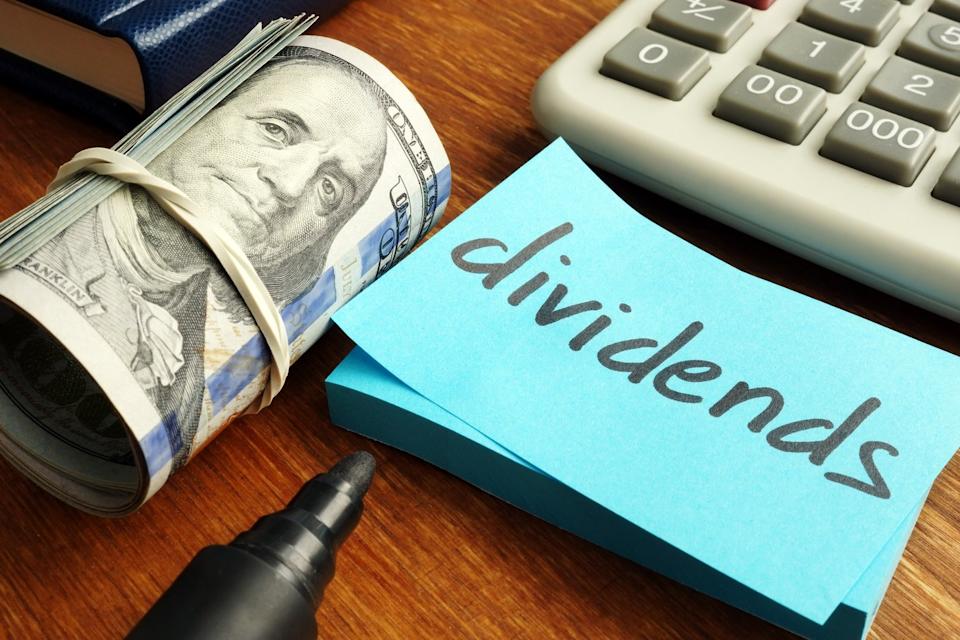
Image source: Getty Images.
Johnson & Johnson: A “Buffett buy” at lower prices?
For the most part, Johnson & Johnson fits the Warren Buffett stock mold. However, currently, the diversified healthcare company is a bit pricey. Trading for around 19 times forward earnings, it is in line with its historic valuation , but at a premium to other healthcare and pharmaceutical stocks.
So, it makes sense that Berkshire sold its stake in 2023. However, if the market crashes anytime soon, I could see Berkshire and current CEO Greg Abel take out a new position in Johnson & Johnson stock.
Operating in a recession-resistant sector, J&J has a long track record of steady earnings growth. This has translated into a long track record of dividend growth. The company has raised its dividend during each of the past 65 years. This places it well within Dividend King status — companies with at least 50 consecutive years of dividend growth.
On a 20% to 25% pullback, shares would trade at a much more attractive multiple in the mid-teens. The stock would have a dividend yield of 2.5% to nearly 3%. At this valuation, the stock would likely have the Oracle of Omaha’s seal of approval.
Recent weakness with McDonald’s creates a golden opportunity
It’s been a long time since McDonald’s was part of Berkshire Hathaway’s portfolio. Berkshire cashed out of its position back in 1998.
Buffett has said he regrets cashing out of McDonald’s, missing out on the stock’s solid gains in the nearly three decades since. However, while Berkshire never got back into the stock, the current situation could morph into one that Buffett would arguably pounce upon.
McDonald’s shares have pulled back strongly, falling from $340 per share in February to around $275 per share today. Uncertainty remains high about the fast-food chain’s efforts to regain inflation-wary customers, who have cut back on Big Macs and Happy Meals amid higher prices.
Weak sentiment alone likely wouldn’t pique Berkshire’s interest. McDonald’s currently has a moderately high forward dividend yield of 2.7%. Valuation-wise, however, the stock isn’t exactly cheap, trading for 21 times forward earnings.
However, if a stock market crash knocked McDonald’s to a relatively discounted valuation, this could change in Berkshire Hathaway’s favor.
Procter & Gamble: A safe bet in any downturn
Procter & Gamble is also a Dividend King, with an impressive 71 years of consecutive dividend increases under its belt. Moreover, P&G, the household products company behind brands like Tide and Gillette, is a safe bet during challenging times.
The company operates in a recession-resistant industry, yet its shares may be volatile during a downturn. Currently, shares are fairly priced, but not quite yet a bargain. The stock trades for 20.5 times forward earnings, on par with other blue chip dividend stocks. The stock has a forward dividend yield of 3%.
However, if the market pulls back, shares could fall to a more bargain-basement valuation. For instance, in the aftermath of the late-2000s, shares traded for between 10 and 15 times earnings.
History may not repeat itself, but at a valuation in the mid-teens, investors like Buffett would likely pile in. Beyond the potential for outsize price appreciation in a rebound, buying at such a low price could yield solid gains from the stock’s steadily growing dividend.
Should you buy stock in Johnson & Johnson right now?
Before you buy stock in Johnson & Johnson, consider this:
The Motley Fool Stock Advisor analyst team just identified what they believe are the 10 best stocks for investors to buy now… and Johnson & Johnson wasn’t one of them. The 10 stocks that made the cut could produce monster returns in the coming years.
Consider when Netflix made this list on December 17, 2004… if you invested $1,000 at the time of our recommendation, you’d have $469,293!* Or when Nvidia made this list on April 15, 2005… if you invested $1,000 at the time of our recommendation, you’d have $1,381,332!*
Now, it’s worth noting Stock Advisor’s total average return is 993% — a market-crushing outperformance compared to 207% for the S&P 500. Don’t miss the latest top 10 list, available with Stock Advisor, and join an investing community built by individual investors for individual investors.
Thomas Niel has no position in any of the stocks mentioned. The Motley Fool has positions in and recommends Berkshire Hathaway. The Motley Fool recommends Johnson & Johnson and recommends the following options: long January 2028 $320 calls on McDonald’s and short January 2028 $340 calls on McDonald’s. The Motley Fool has a disclosure policy.