There’s a reason that your gut is nicknamed the ‘second brain’. According to Johns Hopkins Medicine, the walls of the digestive system contain the Enteric Nervous System (ENS), which consists of more than 100 million nerve cells that line your gut. Therefore, the brain-to-gut connection is sensitive and plays a significant role in your overall well-being. That’s why it’s important to keep your gut as healthy as possible, and there are ways to do so naturally.
We pulled together top tips for improving your gut health (aside from just ‘eating yoghurt’), stemming from nutrition experts and registered dietitians. More often than not, inviting beneficial gut bacteria into your body usually comes down to the kinds of foods you’re eating, how you move your body, how you practice mindfulness, and, first and foremost, understanding your gut reactions. Explore these suggestions on your journey to better gut health…
25 ways to improve your gut health

Prioritize B12
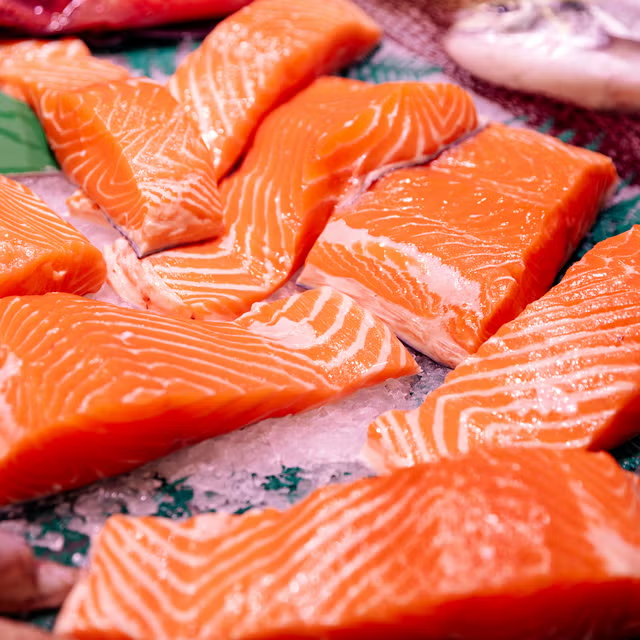
Dr Amy Burkhart, tells Women’s Health that nutrient deficiencies can have a hand in microbiome health. B12 specifically, which is found in salmon, tuna, eggs, milk, and more, promotes a diverse microbiome. If you aren’t getting enough, gut issues like bloating and constipation may arise.

Stay hydrated
Dr Burkhart says to Women’s Health that ‘dehydration leads to inflammation’. Although there’s no one-size-fits-all answer on how much water each person should drink in a day, Harvard Health notes that the standard daily average is about 3.6L for men and 2.7L for women.

Sleep consistently
Going to bed on time, and at a consistent time each night, is more important than you’d think. Dr Will Bulsiewicz, previously told Women’s Health that your microbes ‘are sensitive to the time of day, just as much as we are,’ because your body runs on a circadian rhythm.

Avoid ultra-processed foods
Our diet consists of a lot of UPFs – think frizzy drinks, energy drinks, crisps, sugary cereals, processed meats – the list is endless. Karl Kwok, MD, gastroenterologist, explains to Women’s Health that fast food and sugary treats could promote inflammation and alter gut microbiome diversity. So moderation is key!

Exercise regularly
‘Regular exercise creates positive changes in the gut microbiome,’ Dr Burkhart explains. It’s recommended to engage in moderate- to high-intensity exercise for 30 to 90 minutes at least three times per week for eight weeks to see improvements in your microbiome, per this 2023 review.

Add more fibre
This is arguably one of the most important tips. Dr Bulsiewicz identifies fibre as the ‘key source of nutrition for gut microbes’ because it’s good for digestion, heart health, blood sugar control, and psychological health. You’ll want to stock up on soluble fibre – learn about the types of fibre here.

Be smart about antibiotics
Antibiotics, as explained in a previous Women’s Health piece, are meant to kill bad bacteria, but with that, the medication also kills good gut bacteria. Therefore, make sure you’re only taking antibiotics when completely necessary (like for strep throat or a urinary tract infection).

Replace cocktails for mocktails
Dr Burkhart advises limiting or eliminating alcohol intake because it’s a common gut irritant. Mocktails are trending anyway, so you might as well start sipping on the beverage instead of cocktails.

Manage stress
It’s one of the worst feelings when stress zeros in on your stomach. Stress changes can alter the balance of your gut health, so make sure to take out time for yourself during trying times, like going for a walk in nature or reading your favourite book.

Consume produce
‘I advocate that patients eat a diet rich in fruits and vegetables, which promotes an equilibrium in the gut bacteria and has an anti-inflammatory effect,’ Dr Kwok says. The USDA recommends two servings of fruit and three servings of veggies per day.

Consider supplements
If you’re experiencing gut symptoms, have a chronic digestive disease, or know you can’t consume enough gut-healthy foods, then probiotics might be for you. Although the caveat is that there isn’t enough science to know which supplement is actually helpful.
Dr Kowk explains that we currently ‘don’t know if one prebiotic is better than another or if a supplement with 1 billion live active cultures is twice as good as one with 500 million’.

Swap out soft cheeses for hard, aged ones
Megan Hilbert tells Women’s Health that ‘aged cheeses have been shown to contain probiotics’. The longer cheese is aged (think of fermented cheeses like Gouda and Parmesan), the less lactose it has. Hilbert continues: ‘some research suggests that those who consume cheeses have more diverse gut biomes.’

Try tart cherry juice
A study done on a small group correlated tart cherry juice with a reduction in inflammation.
‘We can just take these findings at face value, because there is a lot of information to show that the juice reduces inflammation in the group that took it compared to the placebo,’ Dr Ashkan Farhadi, gastroenterologist, explains. ‘But we really have to take this with a grain of salt because there were only a few participants.’

Sleep earlier
‘It’s not just how long you sleep, but the time you go to bed,’ says Dr Bulsiewicz. Your microbes also run on a circadian rhythm, so try to head to bed around 10 p.m. And, we know it’s tough, but avoid screens at least one to two hours beforehand.

Eating cottage cheese may help
If you see a cottage cheese brand labelled with ‘live and active cultures,’ then it’s packed with probiotics. Registered dietitian Stephanie Crabtree says that the good bacteria will keep harmful bacteria at bay and benefit overall gut health.

Skip juice cleanses
‘When you are juicing as opposed to having the whole fruit, you are eliminating most of the fibre,’ Dr Roshini Rajapaksa, gastroenterologist at NYU Langone says. ‘And that is one of the really important nutrients that we get from fruits and vegetables that basically feeds and fosters the growth of a healthy microbiome.’
Therefore, without a healthy amount of fibre, a juice cleanse can negatively impact your oral and gut health temporarily.

Always wash produce before eating
‘The WHO recommends washing fruits and vegetables before eating and cooking,’ says Stephan Kamrad, PhD, to Women’s Health. ‘If using pesticides in your garden, always follow the instructions and protect yourself as required.’

Get moving during your commute
Walking has so many hidden benefits. People who incorporate physical activity throughout the day, whether walking or cycling, have been found to have an increase in the richness and diversity of certain health-promoting microbes. ‘Regular exercise creates positive changes in the gut microbiome,’ says Dr Burkhart.

Don’t forget about sauerkraut
Ditch your usual condiments at your next barbecue bash for sauerkraut, a topping made from fermented cabbage. Though Gena Hamshaw, RD, and author of The Full Helping blog, advises that Women’s Health readers skip canned food aisles and search in the refrigerated section.
‘Shelf-stable sauerkraut or picked vegetables may have undergone processes to extend shelf life that kill their live organisms,’ she details.

Hop on the sourdough trend
Making sourdough is a delicious hobby that offers gut benefits. The bread achieves its signature flavour because it’s made by fermenting flour with wild yeast, producing lactic acid.
Janelle Connell, RDN, says to Women’s Health that ‘this fermentation process helps produce enzymes that break down proteins, such as gluten, often making sourdough easier to digest than traditional bread.’
