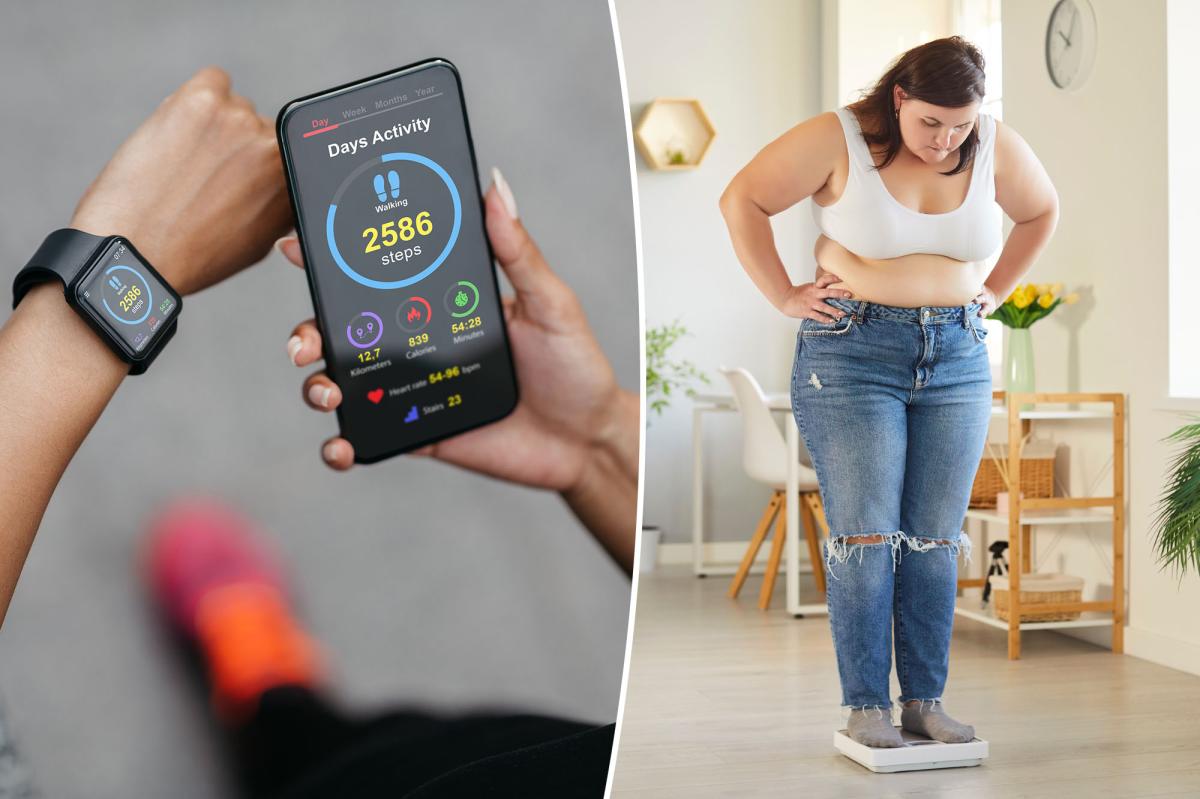
Is your phone sabotaging your gains?
New research suggests that popular calorie-counting and workout-tracking apps may be doing more harm than good, leaving users feeling frustrated rather than fired up to reach their goals.
That’s bad news for the 92 million Americans who rely on these platforms to track every bite and bench press, raising questions about whether the tech meant to help them is actually holding them back.
In the study, researchers at University College London and Loughborough University analyzed 58,881 posts on X (formerly Twitter) about five popular fitness apps.
Using artificial intelligence, the team sifted through the data and identified 13,799 posts where users expressed negative feelings about the programs.
“In these posts, we found a lot of blame and shame, with people feeling they were not doing as well as they should be,” senior author Dr. Paulina Bondaronek said in a press release. “These emotional effects may end up harming people’s motivation and their health.”
Bondaronek and her colleagues sorted the posts into broad themes to get a clearer picture of users’ struggles.
They found that many expressed frustration at how complicated it was to track calories, with some saying the platforms weren’t personalized enough to be accurate.
One user, for instance, pointed out that they couldn’t log breastfeeding, an activity that burns a significant number of calories.
The goals set by the platforms also aren’t based on public health guidelines, but on the user’s personal weight targets — which the researchers said can lead to unrealistic or even unsafe recommendations.
One user reported being told they needed to consume “−700 (negative 700) calories a day” to reach their target weight.
Another added: “If you allow [the app] to prescribe your calories you’ll end up with a deficit that’s unachievable, unsustainable and very unhealthy. You could also starve to death.”
Another major theme the researchers uncovered was the emotional toll of logging daily activity.
Some users said they felt “pestered” by notifications to log calories or keep sugar intake low. Intended to encourage consistency, the reminders often sparked judgment and anxiety, with some avoiding certain foods just to dodge negative feedback — undermining the very purpose of self-monitoring.
“I just got a notification from my fitness pal reminding me to log my dinner for today but I don’t want to bc I’m ashamed I just ate dominos,” one user wrote.
“Hate when my fitness pal asks why I haven’t logged my dinner! Haven’t logged my dinner mate cause I’ve ate a spice bag and milled a tub of Ben and Jerry’s leave me alone!” another commented.
Users also reported technical glitches that added to their frustrations, like mismatched calorie counts when syncing the same workout across platforms and app crashes that erased hours of effort.
“Argh, got a PB for a half−mara in training and my phone died at the end, so none of it recorded,” one user wrote. “Shouldn’t matter… (but does).”
Negative sentiments like these align with previous studies showing that measuring an activity can reduce enjoyment. Combined with unattainable goals, mounting shame and tech problems, the researchers found many users end up giving up.
“How disappointing is it when you smash gym and MyFitnessPal for a day and there’s no difference…. back to eating lotus biscoff spread out of jar,” one user wrote.
Other users said their decisions to exercise and eat well were driven more by negative emotions than the desire to reach their goals.
“Self-monitoring and action planning are powerful behaviour change techniques. But we over-use them. We need to learn to be kinder to ourselves,” Bondaronek said.
“We are good at blaming and shaming because we think it will help us to do better but actually it has the opposite effect.”
Bondaronek noted some limitations to the study. For example, the team only looked at negative posts, so they couldn’t assess the overall effects of the platforms on users’ well-being.
“The apps may have a negative side, but they likely also provide benefits to many people,” she said.
Looking ahead, the researchers are calling on health apps to revamp their designs. They’d like to see user-centered, psychologically informed platforms that prioritize well-being and intrinsic motivation over rigid quantitative goals like weight loss.
“Many of these apps also ask users to do tasks individually,” Bondaronek said. “This misses out the great potential of social connectedness for improving our health and happiness.”