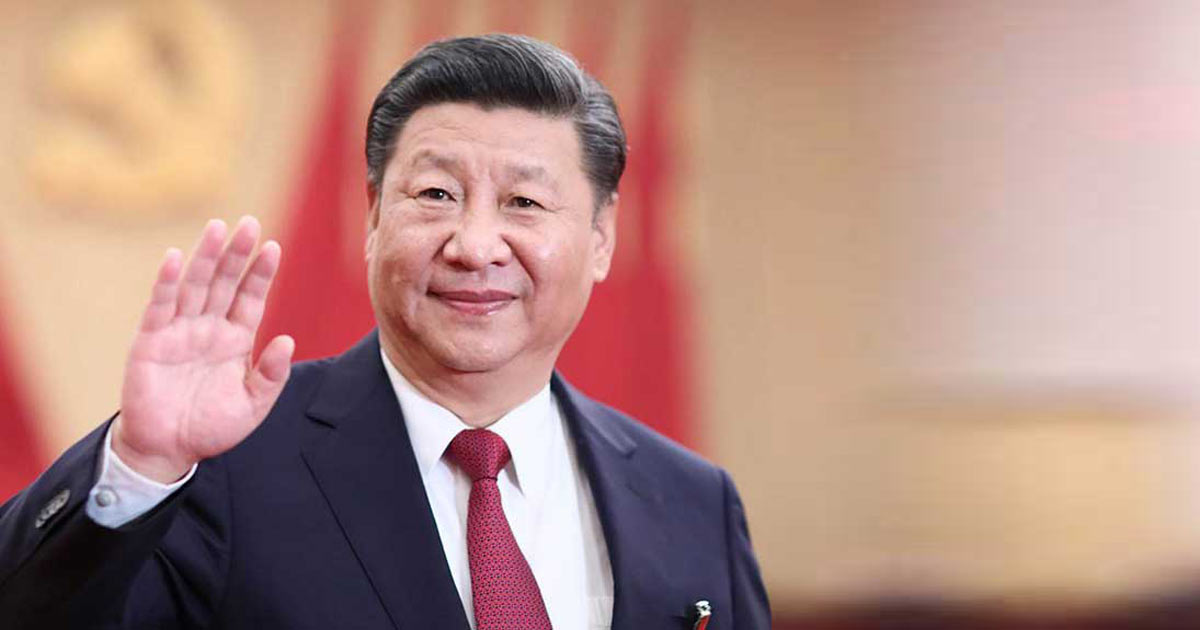

On 26 February 2026, China’s National People’s Congress (NPC) expelled 19 deputies from its membership, including nine from the People’s Liberation Army (PLA). The NPC’s effective roster fell from 2,977 to 2,848, after ninety-nine expulsions over the past three years. The decline, coupled with the 24 January 2026 purge of two of China’s seniormost generals, Zhang Youxia and Liu Zhenli, undermines the image of unity under President Xi Jinping. The façade of cohesion exposes fragility in Beijing’s elite politics, and frequent purges signal not confidence at the centre but pervasive distrust across China’s ruling class. It raises two critical issues: first, at this scale, the purge suggests a top-down cleansing of China’s governing class to restore central authority and eliminate unreliable networks, evoking comparisons with Mao’s rectification campaigns; and second, the progressive hollowing-out of leadership poses serious questions about its impact on domestic stability and regional security.
The façade of cohesion exposes fragility in Beijing’s elite politics, and frequent purges signal not confidence at the centre but pervasive distrust across China’s ruling class.
Widespread Military-Civilian Purge
The ongoing purge in the PLA is not a routine reshuffle but resembles a decapitation strike. Since 2022–23, Xi has removed more than 100 of the military’s seniormost officers, sweeping across every theatre command, each uniformed service, department, and even the Central Military Commission (CMC). Those dismissed were all lieutenant-general equivalents or higher, serving at the deputy theatre commander grade or above. With the PLA holding around 176 top billets, over 101—more than 50 percent—have been purged. As a result, by February 2026, much of the PLA’s higher command remains vacant, leaving only a handful of officers in office.
According to rough estimates, each of these officers would have shaped or influenced the careers of at least 100 junior officials over their long tenures in the PLA, through promotions, operations, exercises, and daily administration.[1] Consequently, the purge of this cohort directly affects at least 10,000 subordinates, with many more impacted indirectly. Predictably, the scale of purges among major generals and lower ranks remains opaque but is likely to be substantial.
Taken together, this dynamic threatens to paralyse the PLA’s hierarchy, leaving even those not yet under investigation acutely uncertain about their own futures. At a minimum, the campaign has eroded institutional memory, disrupted lines of succession, and weakened the command architecture. An emaciated CMC and hollowed-out leadership across theatre commands and key departments reveal the PLA’s weakened institutional spine. Historically, militaries subjected to intense political scrutiny become risk-averse, bureaucratic, and procedure-driven as fear percolates down the ranks, making officers cautious and suspicious—a pattern likely applicable to the PLA today.
Since 2022–23, Xi has removed more than 100 of the military’s seniormost officers, sweeping across every theatre command, each uniformed service, department, and even the Central Military Commission (CMC).
Parallel sweeps in the civilian party-state bureaucracy have been removing senior officials and their immediate subordinates with growing frequency. This has depleted the state’s expertise pool and undermined administrative ranks at a time of political tightening, expanding social control, and mounting ideological pressure. Beijing now appears to prioritise political reliability over professional competence, reflecting the hallmarks of a rectification-style campaign that has periodically reshaped elite politics and governance in China.
Democratic Centralism and Disrupted PLA Decision-Making
The operating philosophy of the Chinese Communist Party rests on democratic centralism: issues are debated across the hierarchy, but once the top leadership decides, all follow. The PLA operates along similar lines; consequently, the absence of clear top leadership risks grinding operational decision-making to a halt.
Moreover, the sole remaining CMC Vice Chairman, Zhang Shengmin, is a career political officer with limited experience in operational planning and execution. The Joint Staff Department is in even worse condition, losing not only the chief but at least four deputy chiefs, leading to unusual centralisation of authority in the General Office, working directly under Xi. This arrangement would be rather light on professional military expertise but stringent on political control.
Taken together, these factors suggest that China is poorly positioned to launch a major offensive against any adversary in the near future. Grey zone operations, however, are likely to persist, as Xi appears most comfortable operating below the threshold of open conflict, applying pressure incrementally and pausing when necessary. In either scenario, the balance leans toward regional stability, as China’s appetite for large-scale military adventurism is likely to remain constrained for the foreseeable future.
From Anti-Corruption to Political Filtration
Xi has been a hard-nosed leader, and his anti-corruption campaign builds on structural weaknesses he inherited in 2012. By then, decades of double-digit growth in defence budgets and the PLA’s extensive commercial enterprises had normalised corruption. Paying for promotions had become rampant; officers who could not afford to pay often sought patrons with deep pockets. One type of sponsor exploiting this vulnerability was foreign intelligence agencies, which backed their candidates and gained deep inroads into the PLA.
Taken together, these factors suggest that China is poorly positioned to launch a major offensive against any adversary in the near future.
Additionally, the Deng-era practice of frequently rotating senior officers across military regions had ceased about a decade earlier, allowing officials such as Xu Caihou to entrench their patronage networks and revel in corruption. To illustrate the decay, when General Gu Junshan’s ancestral house was raided, it contained stacks of gold, including a golden statue of Mao, a gold wash basin, and crates of expensive liquor. Therefore, Xi faced a senior cohort in 2012 whose loyalties were questionable, if not transactional.
Consequently, for Xi, a wide sweep of an entire generation serves purposes far beyond cleaning up corruption. It dismantles patronage networks, eliminates compromised leadership, and reasserts authority firmly within the Chinese Communist Party. The aim is not merely cleaner governance but tighter political control, which curtails the PLA’s residual autonomy and binds the gun to Party command. In this sense, the purge of the PLA’s officer cadre functions less as an anti-corruption measure than as political filtration—a periodic cleansing that rejuvenates the communist governance system.
Xi has reinforced this shift through public spectacle. He has even reached into the already retired cohort, such as Shen Jinlong, delivering the message that no one is safe, whether serving or retired. He could have allowed Zhang Youxia and others to retire quietly. Instead, he first used Zhang to consolidate his authority in the PLA and purge the rest of his cohort, and then opted for a public dismissal, echoing the brash handling of Hu Jintao at the 2022 Party Congress. The signal is unmistakable: loyalty is enforced, not assumed, and if utility ends, even friends and senior loyalists such as Zhang remain expendable.
Unchecked Authority and Leadership Risks
At present, Xi operates with virtually no guardrails. He has sidelined most party elders: Jiang Zemin is deceased, Hu Jintao publicly humiliated, Li Keqiang dead, and Wen Jiabao politically silent. Parallel purges of retired senior military officers have further unsettled elite groups. Consequently, no one remains as a moderating influence over Xi’s authority.
The aim is not merely cleaner governance but tighter political control, which curtails the PLA’s residual autonomy and binds the gun to Party command.
The repeated dismissal of Xi-appointed officials, however, points to a deeper problem. Xi appears to be a poor judge of character, and despite pervasive surveillance and formal vetting, he has repeatedly failed to conduct due diligence before promoting senior officers. The recurrent appointment of an official, followed by their purge—and at times even of their successor—exposes a leadership style that substitutes coercion for trust and constant correction for foresight.
A Temporary Strategic Window for India
In the near term, the PLA is likely to remain cautious and risk-averse, with decision-making slowed, particularly as internal investigations dominate attention. Xi expects that the newly appointed leadership will be technically proficient, forged in a less corrupt environment, and therefore more capable of execution. Over the medium term, the PLA is expected to exhibit a better centralised command, enfeebled autonomous cliques, and tighter Party control, led by a younger, politically vetted cadre.
Indian leadership should view this rectification campaign, particularly within the PLA, as a rare window of opportunity to accelerate border infrastructure development, augment combat capabilities, and prepare for contingencies likely to emerge in the coming years.
In the Indian context, it is notable that six senior PLA officials from the Western Theatre Command (WTC) and the Xinjiang and Tibet Military Districts have been purged. Additionally, other officers who previously served in the WTC, such as He Weidong, Xu Qiling, and Zhang Youxia, have also been removed. This suggests that past India-China contingencies and the PLA’s operational performance have been significant sources of dissatisfaction for the central leadership. Higher PLA casualties during the Galwan incident, although not officially acknowledged, may have played a critical role in these dismissals.
Indian leadership should view this rectification campaign, particularly within the PLA, as a rare window of opportunity to accelerate border infrastructure development, augment combat capabilities, and prepare for contingencies likely to emerge in the coming years. Given that India and China are structural competitors, the current upheaval and disarray within the PLA may temporarily ensure regional stability. However, to sustain this peace in the long term, India must leverage this period for an intensive force buildup, particularly as the broader neighbourhood remains distracted.
Atul Kumar is a Fellow – National Security and China Studies with the Strategic Studies Programme at the Observer Research Foundation (ORF).
[1] Author’s interview with senior military officers.
The views expressed above belong to the author(s). ORF research and analyses now available on Telegram! Click here to access our curated content — blogs, longforms and interviews.