If you thought that capitalism and the rise of Chinese billionaires would soften the Communist Party’s totalitarian rule, now you need to think again.
by Massimo Introvigne
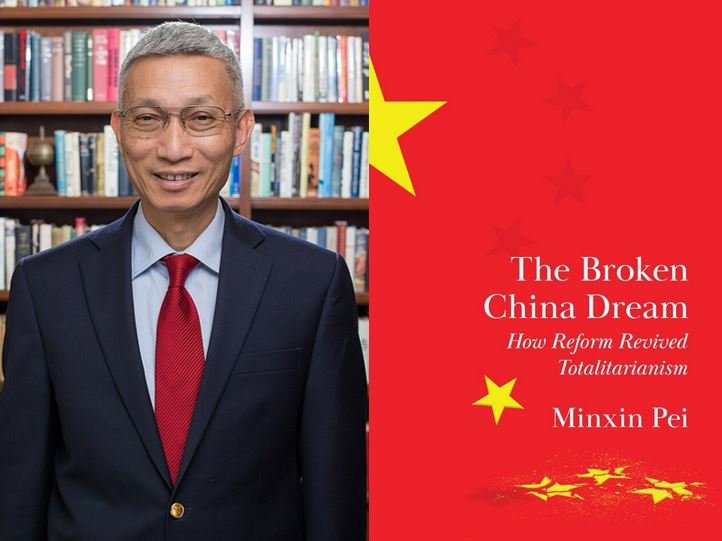
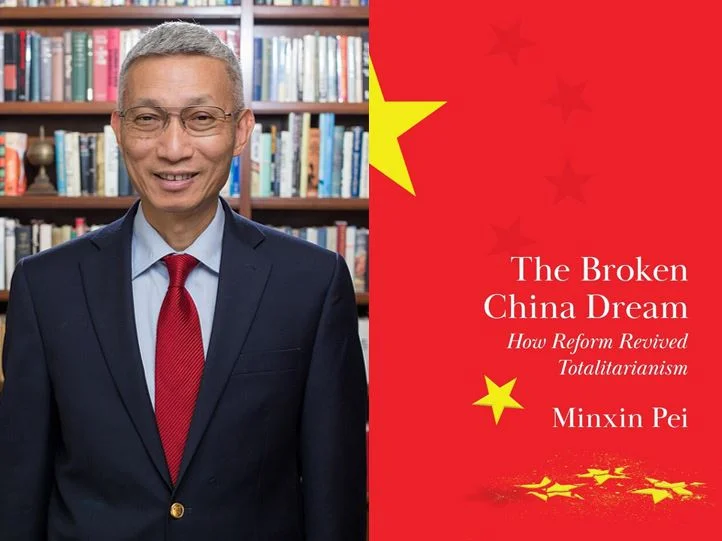
Chinese-American political scientist Pei Minxin’s “The Broken China Dream: How Reform Revived Totalitarianism” (Princeton, NJ: Princeton University Press, 2026) is an autopsy report on a failing idea that few were willing to address: the belief that markets would weaken authoritarianism, that billionaires would push the Chinese Communist Party toward democracy, and that a rising middle class would seek elections rather than larger apartments. Pei dissects the myth with scholarly precision and the dry humor of someone who has watched Western policymakers cling to the same fantasies for 40 years.
The book starts in the 1980s, a brief moment when China seemed to be moving toward more freedom. Pei reminds us that even then, the reform era was not a smooth journey toward openness but rather a struggle behind the Zhongnanhai walls. Deng Xiaoping’s coalition, united only by the desire to marginalize Hua Guofeng, quickly split into reformists who wanted to ease the system and conservatives who wanted to revive the command economy with better lighting. The decade concludes, inevitably, with tanks on Chang’an Avenue and a message that would define the next thirty years: economic experimentation is acceptable, but political experimentation is not.
Pei then shows how the CCP learned to grow wealthy without loosening its control. The rural reforms of the 1980s sparked entrepreneurial energy, but always at the fringes and under the watchful eye of a party intent on keeping power. China’s mixed economy—part market, part state, all political—became the engine of the “miracle” but also the source of contradictions that would later suffocate it. Growth was allowed, even promoted, as long as it posed no threat to the monopoly on power.
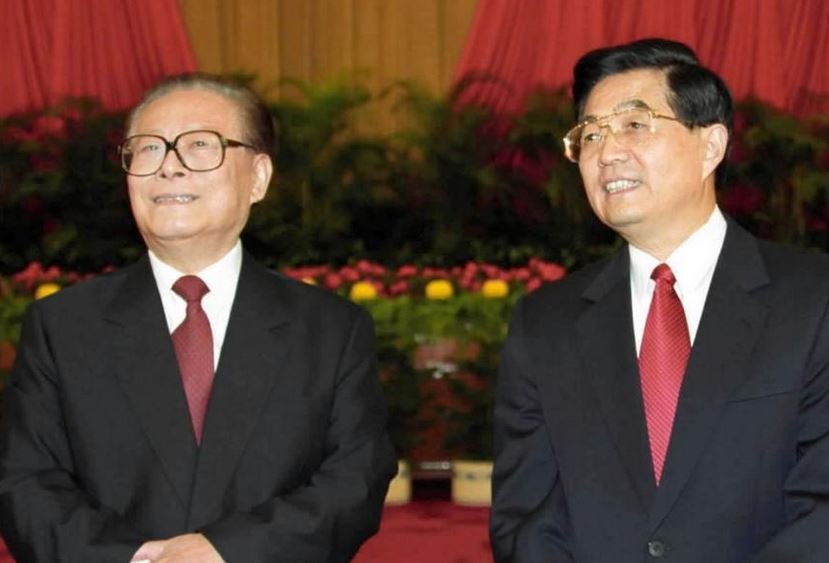
The Jiang Zemin years, often seen as technocratic and dull, emerge in Pei’s account as the period when neo-authoritarianism became a solid system. Stability was created through rules, norms, and a vast security apparatus that made dissent dangerous and futile. The party co-opted elites, bought off the middle class, and wrapped itself in nationalism. It looked modern but was fragile, like a skyscraper on unstable ground.
Hu Jintao’s administration, with its focus on “harmonious society,” comes across as perhaps well-meaning but overwhelmed. Inequality soared, corruption spread, and environmental damage reached alarming levels. The 2008 global financial crisis, initially seen by Beijing as evidence of Western failure, instead revealed the limits of a Chinese growth model that was overly reliant on debt, exports, and construction booms. By the time Hu left office, the system was already straining under its own contradictions.
Then comes Xi Jinping, and Pei’s narrative shifts from gradual decline to sudden reversal. Xi’s China is not just authoritarian; it seeks to revive totalitarian practices many thought had faded with Mao. Anti-corruption campaigns double as purges of political rivals. Surveillance becomes widespread. Ideology makes a robust return, as evidenced by the infamous Document No. 9’s list of forbidden Western ideas. Ethnic minorities, civil society, private entrepreneurs, and even senior party officials find themselves under attack from a state that now demands not just obedience but also ideological loyalty. Pei argues that the “China Dream” is a plan for centralized, personal, and unchecked power.
The later chapters depict a slow-motion disaster. Debt rises sharply. The population ages. Innovation stalls due to political fear. The economy, once the regime’s most significant source of credibility, turns into a liability. At the same time, China’s external circumstances shift from engagement to confrontation. What was once described as a “peaceful rise” now appears to be a path toward geopolitical conflict, driven by Xi’s assertiveness abroad and repression at home. Pei does not resort to drama, yet he clearly shows that a system that cannot reform itself will eventually clash with the outside world.
The conclusion connects all the threads with a clarity that feels sobering. China’s journey since 1979 has not failed to democratize because of missed opportunities. It failed because the very practices that drove economic growth also reinforced political control. The CCP’s strategy for survival—repress, co-opt, centralize—succeeded too effectively. The institutions that supported Maoism were never dismantled; they were repurposed. Under Xi, they have been reactivated with new ideological zeal. The result is a nation moving not toward liberalization but toward an even more sophisticated, technology-driven form of totalitarianism.
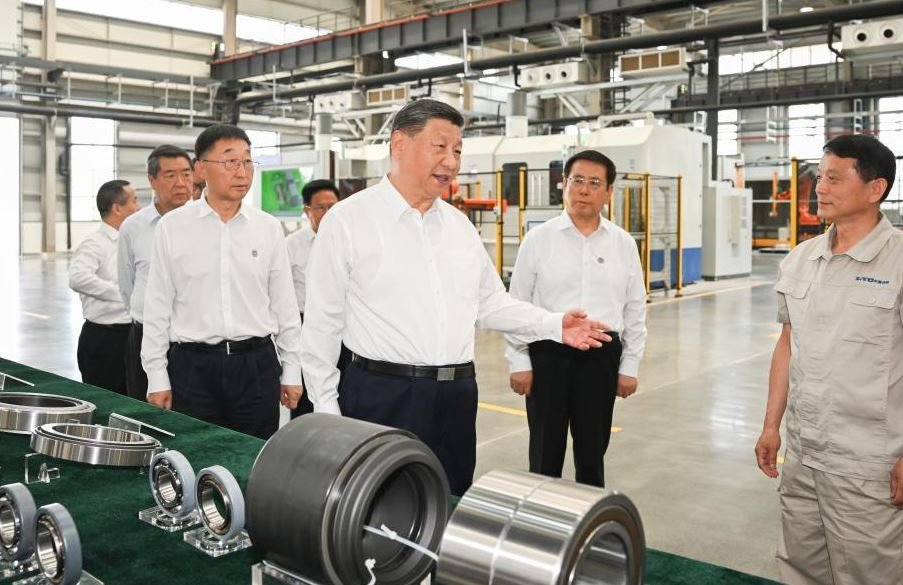
Republic of China.
Pei’s central message is both powerful and uncomfortable: economic reform does not automatically lead to political reform. In China’s situation, it led to quite the opposite. Prosperity has strengthened the party, enhanced its security forces, and given it the means to tighten its control. The “broken dream” is not only China’s dream of revival: it is the West’s misguided belief that capitalism would soften Leninism.
In the end, Pei offers no easy optimism. China’s path under Xi points toward stagnation at home and conflict abroad. The system’s internal logic pulls it further away from democracy, not closer.
The world must finally confront a truth it has long avoided: totalitarianism does not fade in the marketplace; at times, it thrives.

Massimo Introvigne (born June 14, 1955 in Rome) is an Italian sociologist of religions. He is the founder and managing director of the Center for Studies on New Religions (CESNUR), an international network of scholars who study new religious movements. Introvigne is the author of some 70 books and more than 100 articles in the field of sociology of religion. He was the main author of the Enciclopedia delle religioni in Italia (Encyclopedia of Religions in Italy). He is a member of the editorial board for the Interdisciplinary Journal of Research on Religion and of the executive board of University of California Press’ Nova Religio. From January 5 to December 31, 2011, he has served as the “Representative on combating racism, xenophobia and discrimination, with a special focus on discrimination against Christians and members of other religions” of the Organization for Security and Co-operation in Europe (OSCE). From 2012 to 2015 he served as chairperson of the Observatory of Religious Liberty, instituted by the Italian Ministry of Foreign Affairs in order to monitor problems of religious liberty on a worldwide scale.