And we are off. Three red cards including a VAR intervention. Two goals for co-hosts Mexico in the Estadio Azteca. One nightmare start for South Africa midfielder Yaya Sithole. And an emotional first World Cup goal for Raul Jimenez at the age of 35.
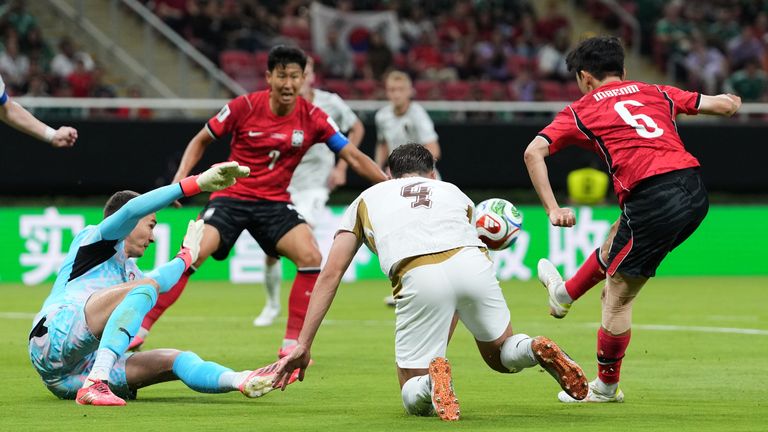
The second game in Group A was even better, a clash of styles as South Korea came from behind to beat the Czech Republic to the delight of their own vocal support in Guadalajara. The tournament is under way. Finally, the football can take centre-stage.
We had to clear it of Shakira and her pals first. Allow FIFA chief Gianni Infantino, who managed to show his face at both of the opening matches, his latest glimpse of the limelight coming with Salma Hayek. But this game has always had a way of outshining the stars.
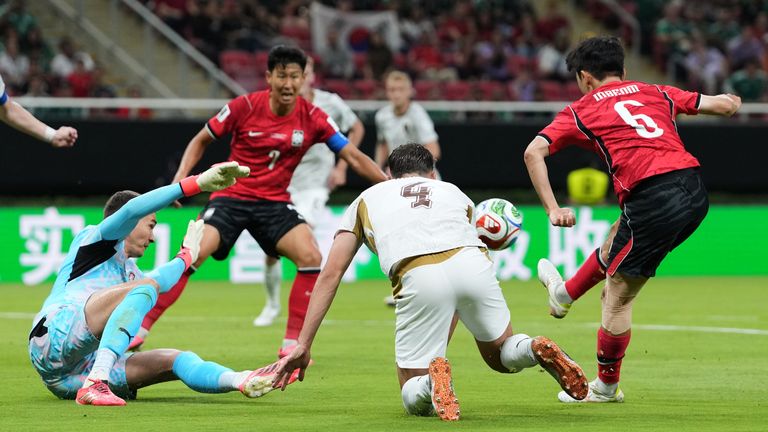
South Korea’s Hwang In-Beom scored a sensational equaliser against the Czech Republic
Hwang In-Beom and Lee Kang-In were sensational for Korea. Julian Quinones delivered a player-of-the-match display for Mexico that not only highlighted the World Cup’s power to elevate reputations but sparked a debate about passing out from the back.
“It is a shocking touch from the midfielder. He should knock it to his centre-back, then to his wing-back and they are away,” said Gary Neville. But Roy Keane disagreed. “For me, it is all on the goalkeeper. He has better options. Nine minutes into a World Cup!”
Granular, perhaps, but this is what it can do to you. The pair had begun the broadcast on macro matters, debating the implications of United States foreign policy when hosting the world. Here they were scrutinising the minutiae of Ronwen Williams’ distribution.
That dichotomy is likely to be a feature of the summer because the World Cup itself is an event of contrasts and contradictions. This is football at its most pure – stripped as it is of its transfer fees and its billionaire owners, the game being played for the glory of it.
The Champions League has long since superseded this tournament when it comes to objective quality but every football fan knows that if their passion for this sport hinged on their team emulating Paris Saint-Germain then they would have given it up long ago.
For players, World Cups stir emotions like nothing else. Jimenez cried. “That is likely to be the greatest moment of his footballing life,” said Neville. “For Sithole, World Cups can make dreams come true but they can also shatter dreams.” Right on both counts.
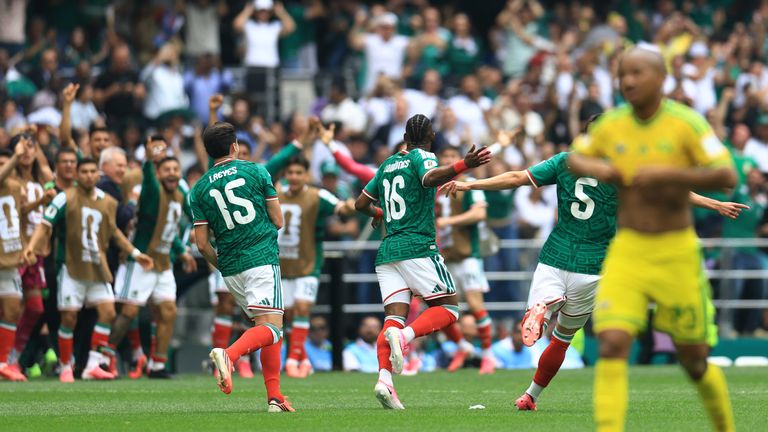
Mexico celebrate their opening goal against South Africa at Estadio Azteca
But this is also football at its most grubby. Ticket prices obscene, travel costs absurd, the familiar boasts from Infantino about this being the biggest World Cup ever cannot mask its status as one of the most controversial too. Perhaps the most political in memory.
And yet, it was ever thus. Comparisons with the controversies surrounding Qatar and Russia before that are inevitable. But as long ago as 1934, Benito Mussolini, Italy’s fascist leader, had latched onto the World Cup’s potential for propaganda and grandstanding.
Separating football and politics has forever been a forlorn hope and rarely more so than when one of the World Cup hosts are engaged in direct military conflict with a visiting nation. Iran have already had to move their training base over the border into Tijuana.
There was the uncomfortable spectacle of Senegal and Uzbekistan players having to navigate the security checks, a glimpse of what freedom looks like to those expected to provide the entertainment let alone those who are just hoping to watch some of it.
There was the sound of Andrew Giuliani, executive director of the White House Task Force, making noises about the safety of Americans being his priority. An unremarkable sentiment until you remembered he was discussing Switzerland striker Breel Embolo.
Perhaps most astonishingly, there was Somali referee Omar Artan being denied entry to the States. “We are not going to allow a soccer tournament to be the opportunity for terrorists to potentially get in the country,” said Giuliani when quizzed on his absence.
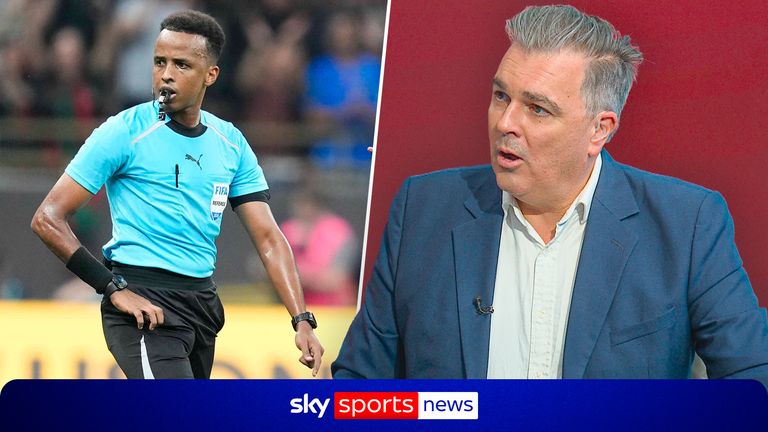
Geraint Hughes explains how UEFA have handed referee Omar Artan the 2026 Super Cup
That will be news to the residents of Salzburg given that UEFA have since appointed Artan to referee the Super Cup there in August. An amusing but revealing insight into the sort of tit-for-tat games that the sport’s main powerbrokers appear to prefer playing.
If you are among the view to have seen the self-aggrandising and self-commissioned FIFA movie, you will know that these men in suits – and they are almost always men – seem to believe that they made this game. The truth is that the game made them.
It retains that power, that magic. It is why there is hope, even expectation, that the football can be as dynamic as the pricing and succeed this summer despite all the distractions and detractions. Football, if you can forgive the pun, really does trump all.
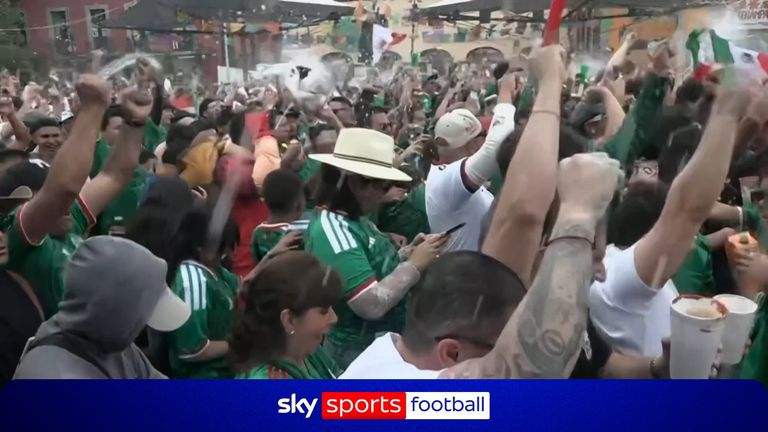
Relive Mexico’s fans celebrating their victory over South Africa in the opening game
Expect all the emotions over the next six weeks. And if the quality is a little diluted then the stories should make up for it. Haiti take on Brazil, Cape Verde face Spain, Curacao are up against Germany – and that is just in the first round of these group games.
Twelve groups in all, each with representatives from at least three different continents, a truly global affair. There will be upsets, scenes of joy and despair. All of it played out not just on the football pitch and in the stands but in squares and streets around the world.
It will all end at the Meadowlands in New Jersey next month but starting in Mexico City was a masterstroke, the Azteca an arena as evocative as they come, conjuring as it does images of Pele in 1970 and Diego Maradona in 1986. A place where people fall in love.
These opening fixtures weren’t quite that. But even the sight of a modest Mexico side starting with a win and South Korea’s later joy was enough to remind us what all the fuss is about. Two down, 102 to go. The World Cup is here. And there is just nothing like it.