Capital gains tax relief rolled out to rein in retail-driven dollar demand
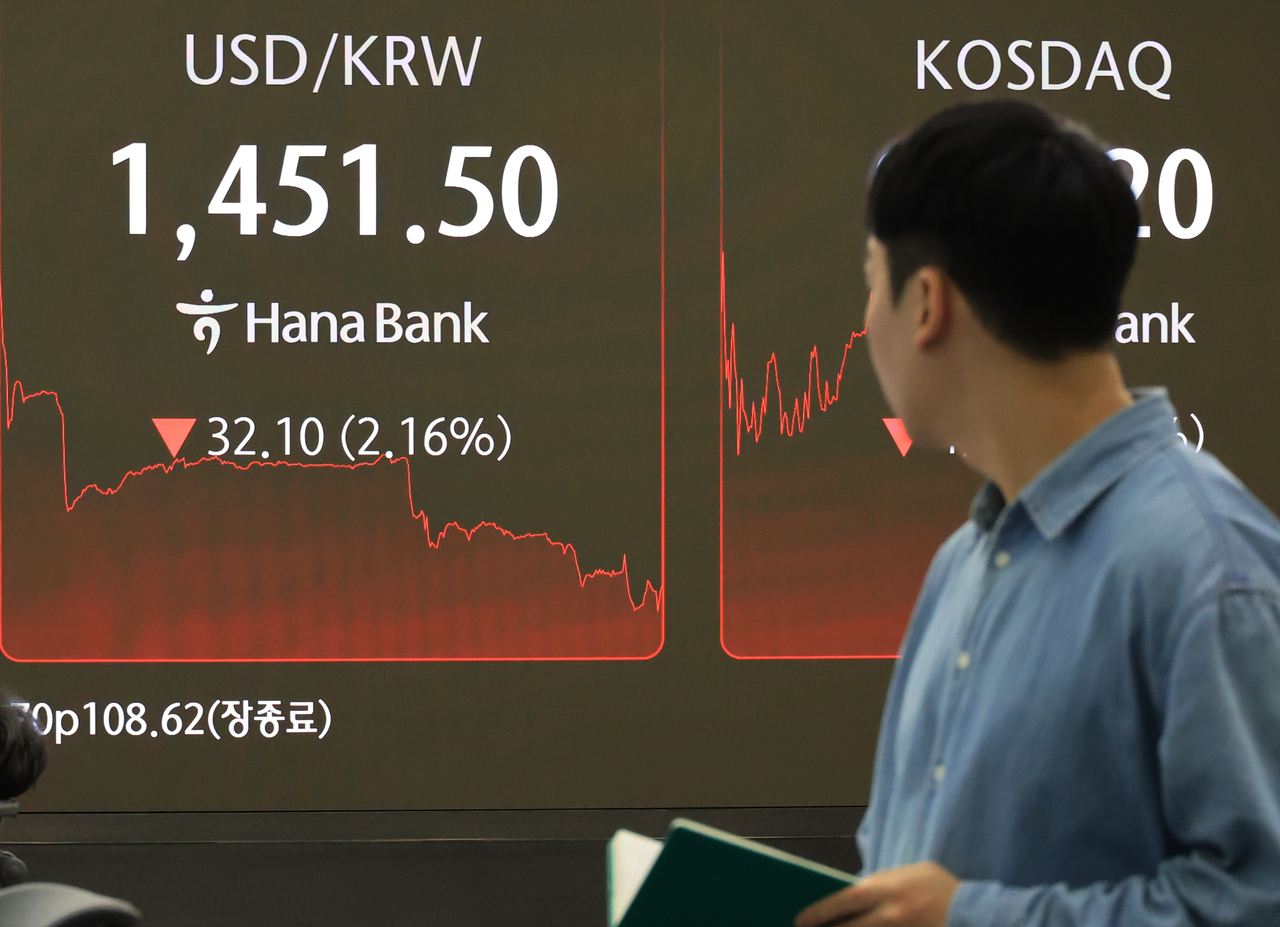
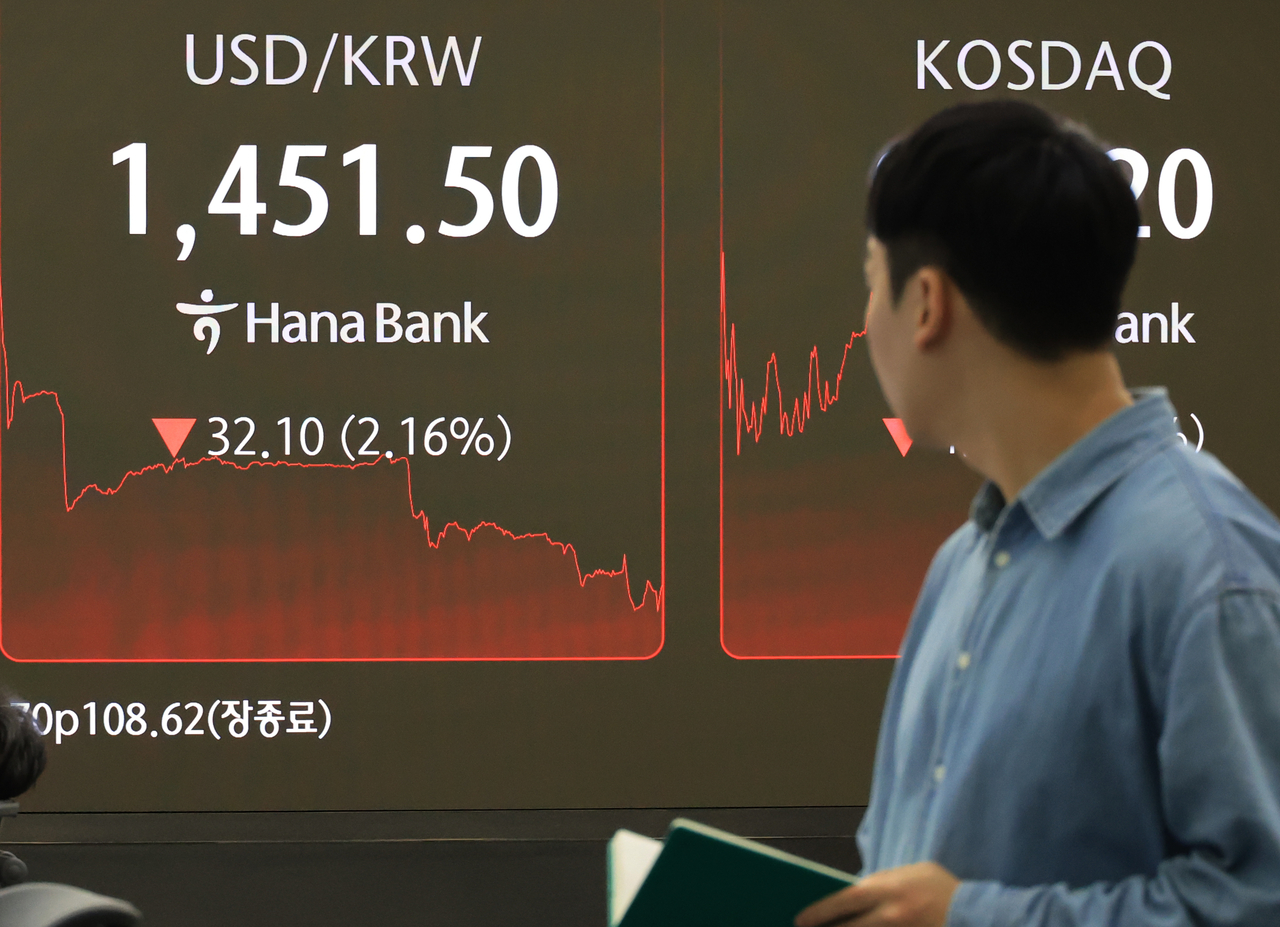
A rare, verbal intervention by South Korean foreign-exchange authorities helped shore up the won on Wednesday, with the currency reaching its strongest close in seven weeks — a threshold closely watched by market participants.
At 9 a.m., as onshore trading opened, director generals in international affairs at the Finance Ministry and the Bank of Korea released a joint statement warning that the won’s excessive weakness was “undesirable.”
The unusually strong wording signaled a tougher stance against persistent foreign-exchange volatility.
“The market will soon see that the series of meetings held over the past week or two and the rollout of measures by individual ministries and agencies were part of an effort to put the situation in order,” the statement said, adding that the moves underscored the government’s resolve and capacity to execute a comprehensive policy response.
It marked the first director-level verbal intervention in about one year and eight months, an escalation from a working-level message issued in October.
Markets reacted swiftly. The won initially weakened past 1,460 per dollar within an hour — a level last seen in mid-November — before reversing course. Compared with its opening level, the currency strengthened by about 33 won to close at 1,449.8, breaking the 1,450 won barrier for the first time since Nov. 6.
The government rolled out incentives alongside the warning, announcing tax benefits aimed at curbing overseas stock investment by individuals, which officials and analysts have repeatedly cited as a key driver of rising dollar demand.
Under the measures, individuals who shift existing holdings of foreign stocks into long-term domestic investments through a so-called Reshoring Investment Account will be eligible for temporary capital gains tax relief. The incentive will be offered for one year, applied on a differentiated basis depending on the timing of asset sales.
Authorities also stepped up safeguards for retail investors amid heightened currency volatility. Securities firms will roll out retail-oriented forward-exchange products, while tax benefits will be offered for hedging existing overseas stock holdings.
“Individual investors tend to invest overseas without hedging currency risk, leading to dollar purchases proportional to investment size and adding upward pressure on the exchange rate,” said Choi Ji-young, deputy finance minister for international affairs, at a briefing, pointing to the government’s growing focus on redirecting capital back into domestic markets.
Retail investors accounted for less than 10 percent of Koreans’ overseas equity investment before 2020, a share that has since climbed to more than 30 percent, with individuals holding a combined $161.1 billion in overseas stocks as of the end of September, according to the ministry.
The tax benefits are set to take effect next year, pending legal amendments and the rollout of related products by securities firms.
Some market participants said the timing and tone of the warning reflected concern that earlier policy signals had failed to gain traction. Since October, authorities have repeatedly flagged the need to stabilize the foreign-exchange market, but responses have been muted as dollar demand continued to rise amid expanding foreign asset investment, pushing the won toward the 1,500 level.
“There was a sense that the market was no longer responding to policy signals,” said Moon Jung-hiu, a senior economist at KB Kookmin Bank. “Given the year-end timing and relatively supportive external conditions, authorities likely judged this was the right moment to deliver a stronger message and re-anchor expectations.”
Moon added that the scale of the market reaction suggested there may have been more than a verbal warning, with the possibility of actual intervention through dollar supply or other measures.
While such moves carry risks, Moon said action had become unavoidable. “It’s a question of market confidence in policy effectiveness,” he said. “With the risk of a high exchange rate becoming entrenched, strong action was inevitable, whether now or later.”
Analysts broadly expect the won to avoid further sharp weakening and to stabilize gradually as policy effects take hold.
“The measures should help ease the one-sided bias toward won weakness,” said Park Sang-hyun, an analyst at IM Securities, citing expectations for US Federal Reserve rate cuts and Korea’s planned inclusion in the World Government Bond Index as additional supportive factors for the won.
Moon added that the 1,450 level carried psychological significance.
“If the currency can hold below 1,450 through year-end, market attention is likely to shift toward a 1,400-1,450 range rather than a return toward 1,500,” he said.
“That alone could help stabilize sentiment into early next year.”
jwc@heraldcorp.com

