Is that it? The American people are left to wonder as the terms of President Trump’s emerging “memorandum of understanding” with Iran leak to the press. While the U.S. can claim real achievements from 38 days of war, the job isn’t done and 47 days of cease-fire may deliver a strategic setback.
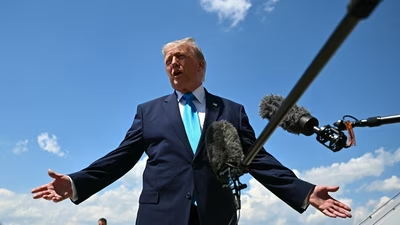
President Donald Trump
The preliminary deal, as mooted in the press, is for both sides to end their blockades, and perhaps for the U.S. to sweeten the pot financially, while talks on nuclear issues and further sanctions relief continue for 60 days or more. A U.S. official says, but Iranian officials deny, that the regime gave assurances a final deal would include “disposal” of its enriched uranium.
***
The basic problem lies with ending U.S. pressure before dismantling the nuclear program. If the blockade ends and Iran can sell its oil, all that’s left to coerce it into nuclear concessions is the threat of renewed war.
But Mr. Trump wasn’t willing to do that after Iran reneged on reopening the Strait of Hormuz and attacked U.S. forces and Gulf allies. How credible will the threat be 60 days closer to midterms, when it would trigger a new Iranian blockade of Hormuz? A pledge not to build a nuclear weapon means nothing because the regime has always said that while doing the opposite.
Israeli Prime Minister Benjamin Netanyahu says Mr. Trump agrees that a final deal must dismantle Iran’s nuclear enrichment sites and remove its enriched uranium from the country. U.S. officials have also been briefing that all the “nuclear dust” must go, but would they retain the leverage to insist on that?
Some press reports have the U.S. settling for Iranian assurances not to use underground nuclear facilities and for downblending—not removal—of only the 60% enriched uranium. This would leave Iran with large quantities of 5% and 20% enriched uranium, which can easily be enhanced to weapons grade. With the potential enrichment site beneath Pickaxe Mountain also intact, Iran would remain a nuclear danger. This would require the strictest inspections, which again raises the leverage question.
The U.S. and Iran also have yet to agree on how long Iran would be banned from enriching uranium. The question may be academic because the regime only has to wait out the Trump Administration to gain a freer hand. Iran’s history is to drag out negotiations, and this preliminary deal is no doubt part of that strategy.
Reopening the Strait will reduce oil prices, but in the President’s reluctance to do so by force, he has signaled that Iran holds the trump card. Even if successful, the deal would leave that card intact and looming.
Iran insists that no deal will restore the Strait to its status quo ante. It could allow the passage of a prewar number of vessels, state media says, but on Iranian terms and under its control. Recall that tanker traffic decreased after Iran had promised a gradual reopening with the April 7 cease-fire.
This is reason enough not to give Iran sanctions relief up front. U.S. officials say relief will be tied to performance, and they will need to hold to that to get a decent final deal.
Meanwhile, don’t ask about Iran’s ballistic missiles and proxies, two goals of the war. While both have been damaged, formal limits or restrictions have been pushed off to “regional discussions.” The Israelis say they will retain freedom of action to fight Hezbollah in Lebanon under the deal, though Iranian sources deny it. Iran wants its terror proxy to be able to carry out a war of attrition against Israel without consequence.
***
Much of the press wants to debate whether this amounts to a better or worse deal than Barack Obama’s in 2015. The major difference in our view is the military strikes: Fordow, Natanz and Isfahan were severely damaged in June. Enrichment has been stopped, at least for now.
Mr. Trump on Sunday pushed back against critics of the deal, saying “I don’t make bad deals.” But it’s fair to wonder if he isn’t feeling the growing pressure at home of rising gasoline prices and bond yields as midterm elections get closer. That’s no doubt partly behind his desire to reopen the Strait even on Iran’s terms.
We’d add that a bad deal would leave him worse off politically, even if gas prices fall. Even a half victory by Iran would hurt America’s standing—and Mr. Trump’s.
Iran’s regime went into this war facing domestic political and economic crises. War has made these worse. Saving such a regime now with an economic bailout would be the real betrayal—of the U.S. interest even more than the Iranian people.