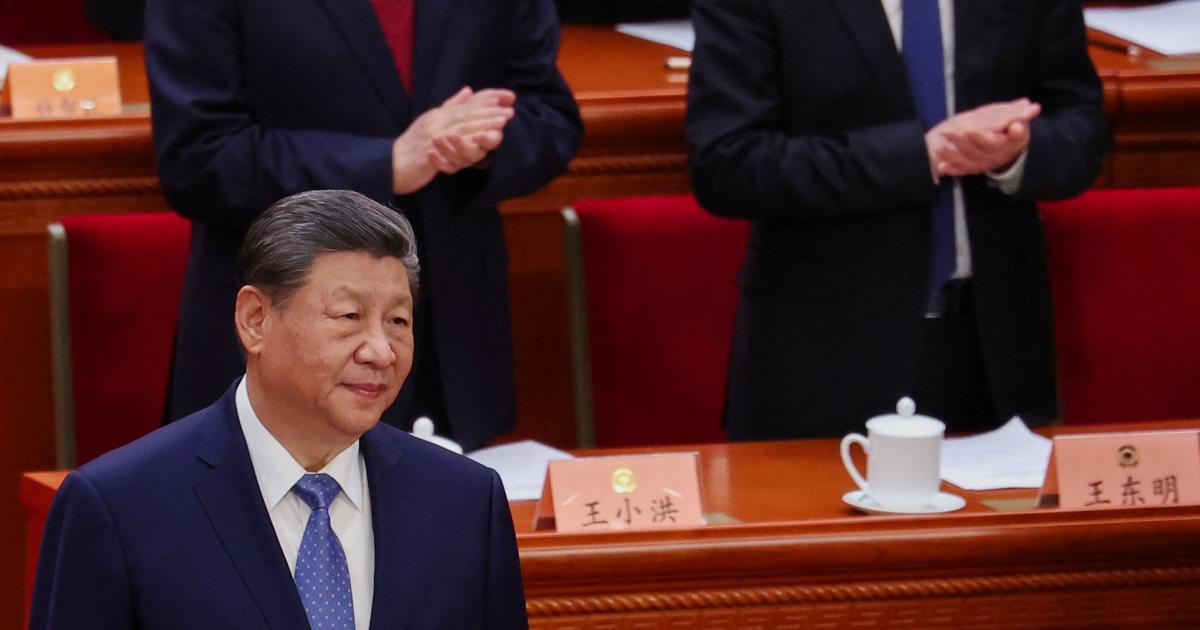
At the end of this month, U.S. President Donald Trump is scheduled to visit China for a major summit with Chinese leader Xi Jinping, the first of what may be as many as four meetings between the two leaders in 2026. The planned three-day summit comes on the heels of discussions the leaders held in October 2025 on the sidelines of the Asia-Pacific Economic Cooperation forum in Busan, South Korea, where they reached a fragile truce to calm the rising economic tensions in the U.S.-Chinese relationship. Trump and Xi agreed to forgo, for one year, many of the draconian measures their countries had imposed or threatened to impose on each other in the preceding months. The United States backed down from the threat of sky-high tariffs and suspended a large expansion of the roster of Chinese companies on the U.S. Commerce Department’s Entity List, which limits their access to American business on national security or foreign policy grounds. China, for its part, reversed its refusal to purchase U.S. agricultural products and dropped sweeping restrictions on exports of critical minerals on which the United States and many other industrial economies depend. The agreement left the two countries fairly close to where they started before the economic conflict began earlier in 2025.
Foreign capitals and global stock markets welcomed the outcome because the alternative of further escalation would have been much worse. But the talks left critically important economic issues untouched—including transshipment tariffs that the United States has threatened to impose on countries importing intermediate products from China for use in the final products they export to the United States. There were also no long-term agreements regarding the restrictions on exports of rare-earth elements from China or high-end semiconductors from the United States. Moreover, the durability of the truce is threatened by persistent frictions in other areas of U.S.-Chinese competition, including the tendency of each country to employ economic sanctions as a means of coercion over noneconomic issues and to push back hard whenever such penalties are leveled against them.
But perhaps the most significant factor that will shape the upcoming Trump-Xi meetings will be Beijing’s perception of its own apparent success in 2025 in responding to U.S. threats with resolute counterthreats. The process of escalation and de-escalation that led to the Busan truce bolstered confidence among Chinese elites about their country’s growing power and leverage. Many Chinese experts believe that Beijing, unlike other capitals subjected to Trump’s threats, managed to back Washington into a corner and that this outcome signaled China’s arrival as a global power on par with the United States. The prominent Chinese international relations scholar Jin Canrong declared that the Busan summit’s outcome demonstrated that China and the United States had become “equal great powers.” After all, even before the meeting, Trump had boosted Beijing’s self-assurance by referring on social media to the impending talks as a convening of the “G-2”—a term U.S. officials had long avoided using because they did not want to treat China as a great-power peer and because U.S. allies and partners feared that such a framework would allow Beijing and Washington to make decisions affecting those countries’ interests without them in the room. The political scientist Zheng Yongnian wrote that Trump’s adoption of the G-2 language just before the summit “implicitly acknowledge[d] China’s pivotal global status”—in other words, its arrival as a peer of the United States. Some U.S. experts have also fed this perception. Rush Doshi, a former Biden administration official, called what happened in Busan an “unmistakable demonstration that China could now face America as a true peer.”
These conclusions are overblown. China is no doubt a great power, and it has long had the ability to cause major problems for the United States and its partners, both militarily and economically. This leverage is only increasing as China’s military, economic, and technological power continues to rise—a trajectory that should be taken seriously. But China is still no global peer of the United States. That U.S. efforts to coerce China in early 2025 were poorly conceived and therefore failed to produce many positive results does not mean that China can match the United States in comprehensive national power. Any Chinese perception to the contrary could lead Beijing to adopt assertive and potentially destabilizing policies in Asia.
STILL ON TOP
The United States enjoys varied advantages over China. Not least among them is Washington’s unparalleled network of more than 60 allies and security partners, which includes nearly all the world’s advanced economies. China’s security partners, meanwhile, are primarily rogue states. Russia is hamstrung by its largely unsuccessful war of attrition in Ukraine; Iran has been severely weakened by domestic turmoil, economic sanctions, and military attacks by the United States and Israel; and an unpredictable yet assertive North Korea causes more trouble for Beijing’s foreign policy—specifically its relations with Japan and South Korea—than it provides solutions to China’s strategic challenges.
China has modernized its military and developed noteworthy military capabilities it could deploy in a potential conflict in the western Pacific, but it still matches the United States only in assessments of potential conflict in areas nearby in the Asia-Pacific. Reports of war games in which Chinese forces defeat the U.S. military, for example, are always based on scenarios near Taiwan, right on China’s doorstep, not Puerto Rico, Greenland, or the Middle East. Despite its impressive military modernization, China lacks the conventional power projection it would need to challenge American or allied supremacy anywhere outside its immediate surroundings.
On economic grounds, too, the United States has more leverage over China than the reverse. China has a monopoly on rare earths and active pharmaceutical ingredients, which poses serious problems for the United States. But now that this reality has been called to everyone’s attention, policymakers in various countries know they must take action to ensure that Beijing’s supply chain monopolies will not be a permanent Chinese asset. Moreover, as the political scientist Victor Cha recently noted in Foreign Affairs, China’s economy remains dependent on industrial inputs from the United States and its regional allies and partners. Despite significant efforts to diversify its energy supply, Beijing still relies on seaborne imports from the Middle East, Africa, or Latin America for the majority of its petroleum needs. And because domestic demand for manufactured goods in China remains weak, the country’s access to export markets is increasingly important to guarantee continued growth. China’s trade surplus has skyrocketed to levels historic for any country, nearing $1 trillion in 2024 and surpassing that number in 2025. It is doubtful that foreign markets will continue to absorb Chinese products at this rate, but until Beijing can ground its economy more solidly in domestic consumption, it will remain dependent on foreign markets for future growth.
Then there is the nuclear equivalent of U.S. economic leverage: foreign financial institutions’ reliance on access to the U.S. dollar. In the unlikely but possible event that Washington applied sweeping financial sanctions against China’s large state banks and Chinese companies, these institutions would find it very difficult to function internationally. Despite China’s attempts to hedge against this vulnerability by internationalizing the renminbi, the dollar will remain the world’s reserve currency long after China’s chokehold on rare earths and pharmaceutical ingredients—its primary economic weapon—is broken. Like almost all countries, China still relies heavily on the ability to make financial transactions in U.S. dollars and will likely do so for years to come.
BACK TO THE FUTURE?
China’s remaining vulnerabilities should not make Americans complacent. The country has many ways to push back against a more powerful United States. Moreover, as the international relations scholar Robert Jervis has argued, perceptions are at least as important as reality in global politics. The perception among many Chinese elites that Beijing prevailed in the escalation and subsequent de-escalation of the economic conflict with Washington in 2025 will likely have real-world consequences.
The last time China was overconfident about its growing power was after the 2008 financial crisis, when its economy suffered less damage and recovered faster than those of the United States and its allies and partners. Beijing’s resulting overweening faith in its relative national strength produced a negative trend in China’s foreign policy. As I outlined in a 2011 article for Foreign Affairs, Beijing’s adoption of an arrogant and uncooperative foreign policy posture in 2010 toward India, Japan, South Korea, and members of the Association of Southeast Asian Nations decimated the diplomatic goodwill it had fostered in the region beginning in the mid-1990s. By the end of 2010, China had managed to alienate almost all its neighbors except Russia.
Chinese foreign policy may now be revisiting this negative trend of overconfidence and assertiveness. Beijing has imposed economic sanctions on Japan over public suggestions by Prime Minister Sanae Takaichi that Japan could play a role in a conflict in the Taiwan Strait (although the sanctions have only boosted Takaichi’s domestic popularity). After Trump announced an $11 billion package of U.S. arms sales to Taiwan in late 2025, the Chinese military conducted extensive exercises and placed its forces nearer to Taiwan’s main island than it had in the past. China has also enhanced its military and paramilitary presence in disputed areas of the South China Sea, and it is building physical structures over Seoul’s objections inside South Korea’s exclusive economic zone in the Yellow Sea, which separates the two countries. In short, 2026 is starting to look a lot like 2010.
China’s remaining vulnerabilities should not make Americans complacent.
The potential for frictions in U.S.-Chinese relations to increase also exists in Europe, the Middle East, and Latin America. A confident Beijing can be expected to push back forcefully on any punitive U.S. measures against China over their differences in those regions, drawing inspiration from the limited consequences it ultimately faced for similar escalation in the months leading up to the Busan truce. In Europe, increased tensions may come in the context of the war in Ukraine. Trump is likely to become increasingly frustrated with Russian President Vladimir Putin’s unwillingness to negotiate a peace treaty in good faith to end the war. If Trump wanted to add to existing economic pressure on Moscow, threatening secondary sanctions on China—by far Russia’s biggest economic supporter—would be a logical place to turn. It’s a route that Trump already took with India in response to its purchases of Russian oil during the war.
Similar dangers are present in Iran, whose biggest economic partner by far is China. Before last week’s U.S. and Israeli attacks on Iran began, China was still purchasing the bulk of Iranian oil exports, albeit via routes through third countries such as Malaysia, which reduced the likelihood of U.S. sanctions. Beijing does not want to see regime change in Tehran, especially under foreign pressure, and will therefore likely do its best to help prop up any anti-American leadership that rises in the country following Supreme Leader Ali Khamenei’s death. It will also likely try to provide Iran with military-related goods, to help it rebuild some conventional military capacity, and give Tehran advice on how best to surveil its society and put down anti-regime protests. Now that Trump has committed militarily to some kind of change in Iran, he could well wield the threat of tariffs or other economic sanctions against China for its support of the Iranian regime. An undaunted Xi would be likely to fire back against U.S. economic threats with his own escalatory measures, potentially including export restrictions on rare earths and bans on agricultural imports.
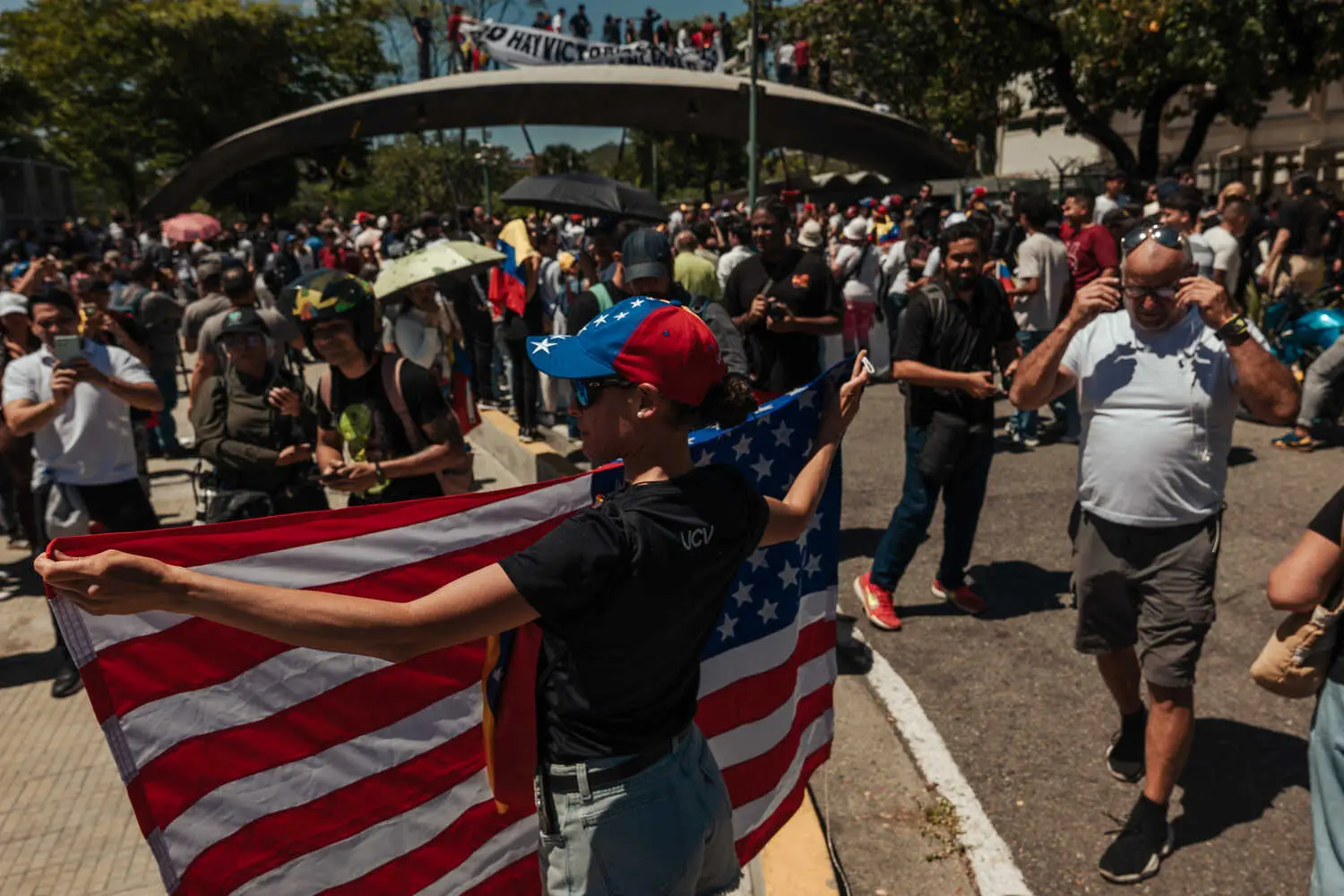
In Latin America, Beijing could not have liked the U.S. military’s removal of Nicolás Maduro from power in Venezuela, especially because it came the day after a Chinese Foreign Ministry entourage visited him in Caracas. China had a close economic and diplomatic relationship with Maduro’s Venezuela, including heavy investments in the country’s oil sector. Xi is likely somewhat reassured that the Trump administration chose not to foment a pro-democracy revolution in Venezuela. But a remaining potential problem for Beijing is the idea that Washington’s bold move in Caracas could be part of a broader effort to reduce Chinese influence in Latin America, as Trump’s 2025 National Security Strategy suggests. Already in late February, the U.S. State Department had leveled travel bans against Chilean officials who had been drafting an agreement to build an undersea telecommunications cable between Chile and Hong Kong. Such actions, if they continue, will cause larger frictions with Beijing, which has enormous economic stakes throughout South America. Over the last 25 years, China has replaced the United States as the region’s biggest trading partner and made enormous infrastructure investments there, including the development of a major port in Peru that facilitates shipments to Asia.
Although a recent Supreme Court decision prevents Trump from authorizing certain punitive tariffs under the International Emergency Economic Powers Act, he has other threatening tools at his disposal—particularly when it comes to China, which the U.S. government has already found culpable for an array of violations of fair-trade norms and intellectual property protections. The administration could still raise tariffs on a large number of Chinese imports under existing congressional authorizations, such as Section 301 of the Trade Act of 1974, which allows the Office of the U.S. Trade Representative to impose penalties on countries it deems to have violated trade accords, without a high risk of triggering resistance from U.S. courts.
WHAT’S WRONG WITH BEING CONFIDENT
The external pressures on the 2025 truce are not the only dangers to its durability; they merely add to the weaknesses of the agreement itself. Nowhere in the official statements about the Busan meetings was there an acknowledgment of the knotty issue of the transshipment tariffs that Washington has threatened to levy on third countries importing intermediate Chinese goods for use in final products exported to the United States. The United States exerted economic pressure along these lines on Mexico, for instance, after which Mexico City placed 50 percent tariffs on its imports from China in early January to avoid higher U.S. tariffs. Weeks later, Trump made similarly coercive threats against Canada after it negotiated a trade deal with Beijing. If those threats continue, a more confident China might retaliate against the countries that cave to U.S. pressure, or against the United States. Such countermeasures, whose possibility was not addressed by the Busan truce, could easily rekindle the economic tensions that the truce temporarily tamped down.
Problems may also arise around rare earths and fentanyl. Although Beijing agreed to renew exports of rare earths and tighten restrictions on the export of fentanyl precursors as part of the Busan truce, the two countries did not specify exact timelines or clear criteria for progress. The Trump administration may therefore be disappointed by the limited flow of rare-earth exports or the continued flow of fentanyl precursors from China, which might trigger the restoration of higher U.S. tariff levels on imports from China.
The external pressures on the 2025 truce are not the only dangers to its durability.
Beijing, for its part, may be disappointed that Washington is not more willing to sell China more high-end semiconductors and semiconductor manufacturing equipment. The Trump administration may have whetted an overconfident China’s appetite by using semiconductors as bargaining chips in past trade negotiations. In early 2025, the Trump administration restricted exports to China of Nvidia’s H20 chips, which the company had designed specially for the Chinese market to comply with earlier national security restrictions on higher-end semiconductor technologies put in place by the Biden administration—only to reverse those controls in late 2025, apparently in exchange for Beijing’s pledge to increase exports of rare-earth magnets to the United States. The Trump administration thereby blurred the line between security-related export bans and economic tools for establishing leverage in trade negotiations such as tariffs. This distinction became even cloudier when, in December, it agreed to sell a limited number of much more advanced H200 chips to China. If Washington dashes Beijing’s expectations of more technology concessions in future negotiations, China may be far less willing to faithfully implement or extend the commitments on rare earths and fentanyl that it made in Busan.
Finally, the meeting in Busan did not address Beijing’s and Washington’s long-running differences on Taiwan. China has already made clear that it wants to discuss Taiwan during the upcoming summit. According to the official Chinese readout of a February 4 phone call between Trump and Xi, the Chinese leader emphasized that Taiwan is “the most important issue in China-U.S. relations.” Xi may push Trump to revise the wording of official U.S. policy on cross-strait relations in such a way that could undercut Taiwan’s morale, and he will certainly urge Trump to limit arms sales and other forms of U.S. security cooperation with the island. But a large new U.S. arms sales commitment to Taiwan seems likely in 2026.
Along with all the other potential sources of U.S.-Chinese tensions outlined above, arms sales or broader U.S. cooperation in bolstering Taiwan’s defense preparedness could provide another incentive for Beijing to limit rare-earth exports and reduce drug enforcement cooperation. What the two sides achieved in 2025 was an important step in resetting U.S.-Chinese relations, but what was left unaddressed could derail the gains of the Busan accord and further escalate bilateral tensions.
Loading…