Tehran:
Few analogues in history have been organised on such a scale, size, and import as the mass funeral that Iran’s theocratic regime is preparing to hold for its former supreme leader, Ayatollah Ali Khamenei, who was killed in the US-Israeli strikes at the beginning of the war on February 28. Khamenei’s remains arrived in Tehran for the mega ceremonies planned in at least five cities across Iran and Iraq, starting Friday.
The Saturday funeral is expected to draw tens of millions of people, including a coterie of foreign dignitaries, government officials have said.
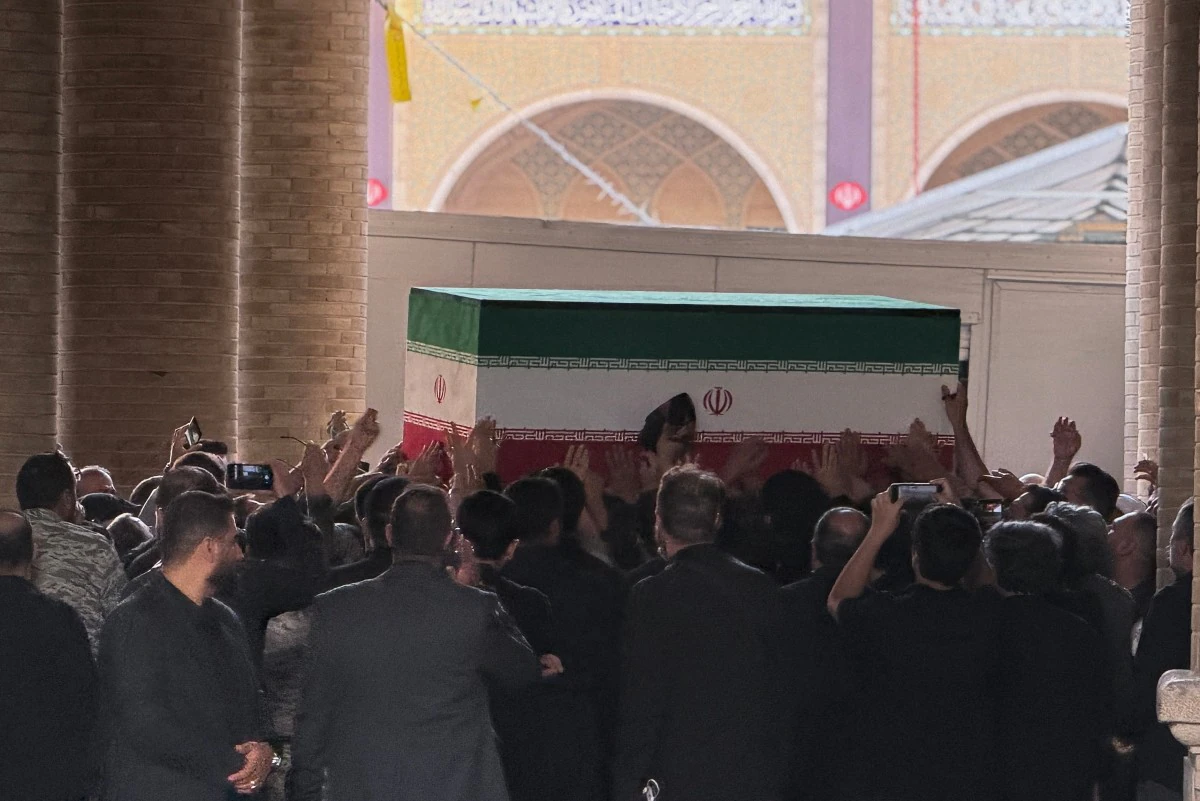
Photos in Iranian media and international agencies showed mourners carrying Khamenei’s coffin, emblazoned with Iran’s tricolour flag, into the Grand Mosalla, one of the Islamic republic’s most important ceremonial venues. Others showed crowds at a pre-funeral ceremony clad in black, as the coffin is set down against a backdrop of red flowers and white butterflies hanging in the air.
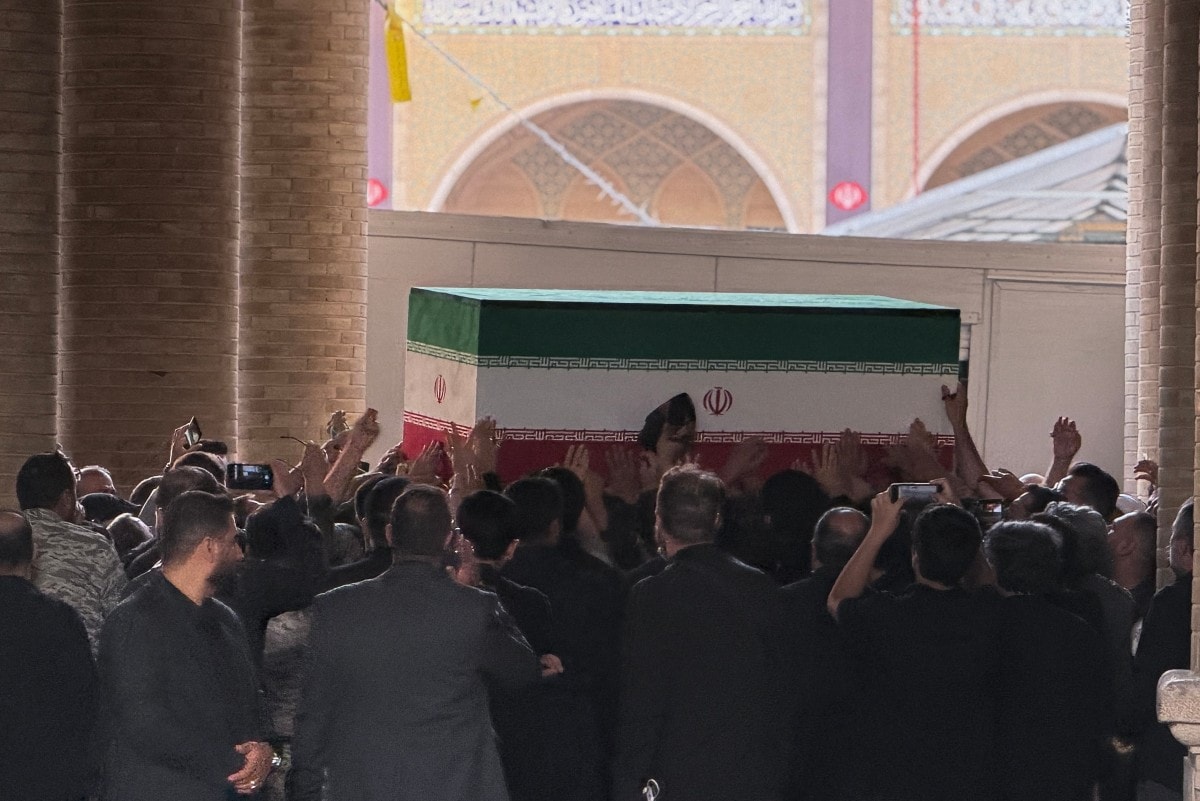
Photo Credit: AFP
The Spectacle
Preparations for Khamenei’s public funeral, initially delayed at the height of the war, are taking place in Tehran, with mass processions planned next week in Qom and Mashhad and ceremonies in Iraq. The ceremonies came as Iran and the United States observe a fragile ceasefire after signing a preliminary deal to halt the conflict.
Pakistan, a key mediator in the US-Iran talks, said its Prime Minister Shehbaz Sharif would attend the ceremony. Bihar governor Syed Ata Hasnain and Minister of State for External Affairs Pabitra Margherita will represent India at the ceremony.
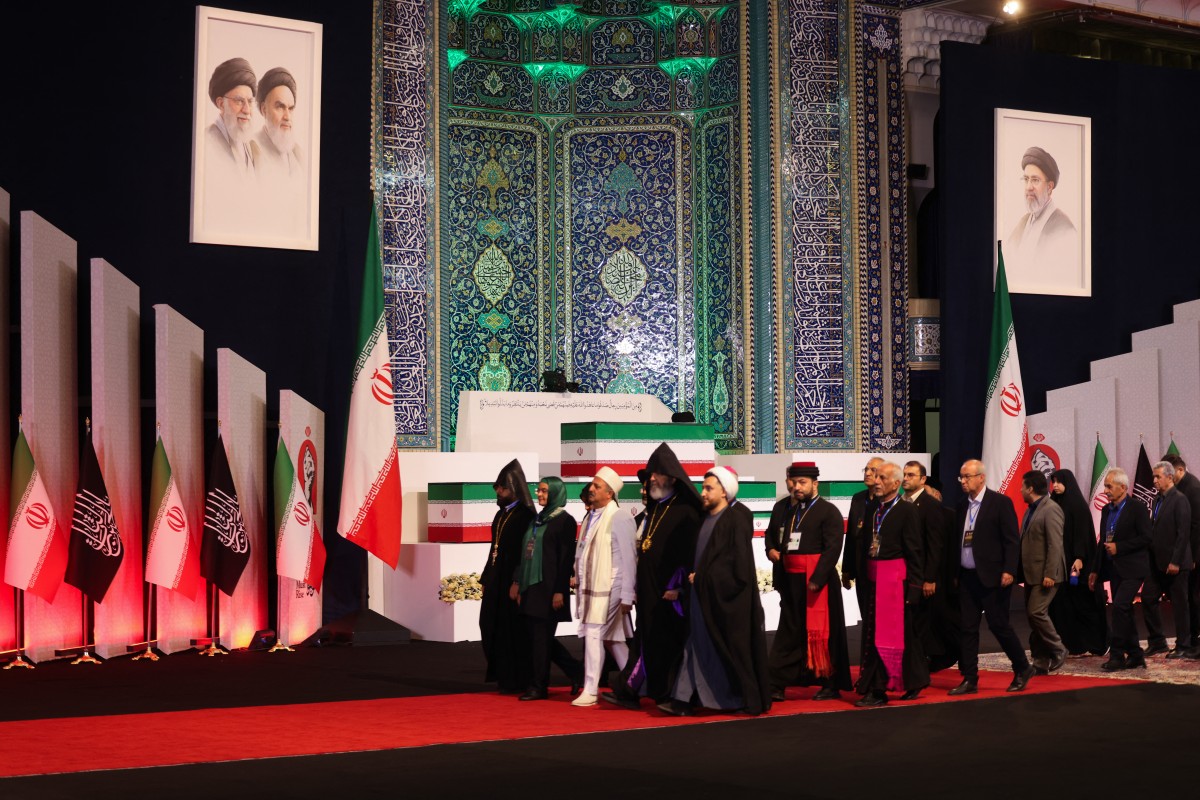
Photo Credit: AFP
China, Afghanistan and Iran’s neighbours in the Caucasus region also said they would be sending representatives.
Khamenei, a spiritual figure for many Shias, was killed at the age of 86 in strikes on his compound in the centre of the Iranian capital. He will lie in state for three days at the colossal Grand Mosalla, which has been draped in banners featuring images and quotes of Khamenei. The bodies of his dead relatives will also be presented at the ceremony, making it the biggest state funeral in the country’s history.
Following the ceremonies in Tehran, Khamenei’s body will be taken to the Iraqi holy cities of Najaf and Karbala before his burial on July 9 at the shrine of Imam Reza in the northeastern Iranian city of Mashhad, his birthplace.
The Referendum
But, perhaps more striking than the complexity and scope of the funeral — that comes over four months after Khamenei’s death– is its symbolism at this moment. Iran’s ruling clerics are treating it as a show of public devotion to the Islamic Republic and proof that its revolutionary fervour still burns strong.
“The large public turnout at the funeral procession of the martyred leader and the other martyrs will, in effect, be another referendum for the Islamic Republic,” Qom Friday prayer leader Ayatollah Mohammad Saidi declared to state media.
If they do see it as a referendum, authorities are not leaving the result to chance. The Iranian ruling regime hopes to mobilise 15 and 20 million supporters to flood Iran’s cities, laying on transport, accommodation, and food, to proclaim the might of their theocratic state after it survived what they saw as an existential war.
Khamenei’s death and the succession of his son Mojtaba as Iran’s third supreme leader, in a conflict with its greatest foes Israel and the United States, mark an epochal moment in the Islamic Republic’s 47-year history. Mojtaba, dangerously wounded in the strike that killed his father, has not been seen in any new image since the war began. It was reported that he will not attend the funeral of his father amid continued threats to his life.
The Thinning Trust
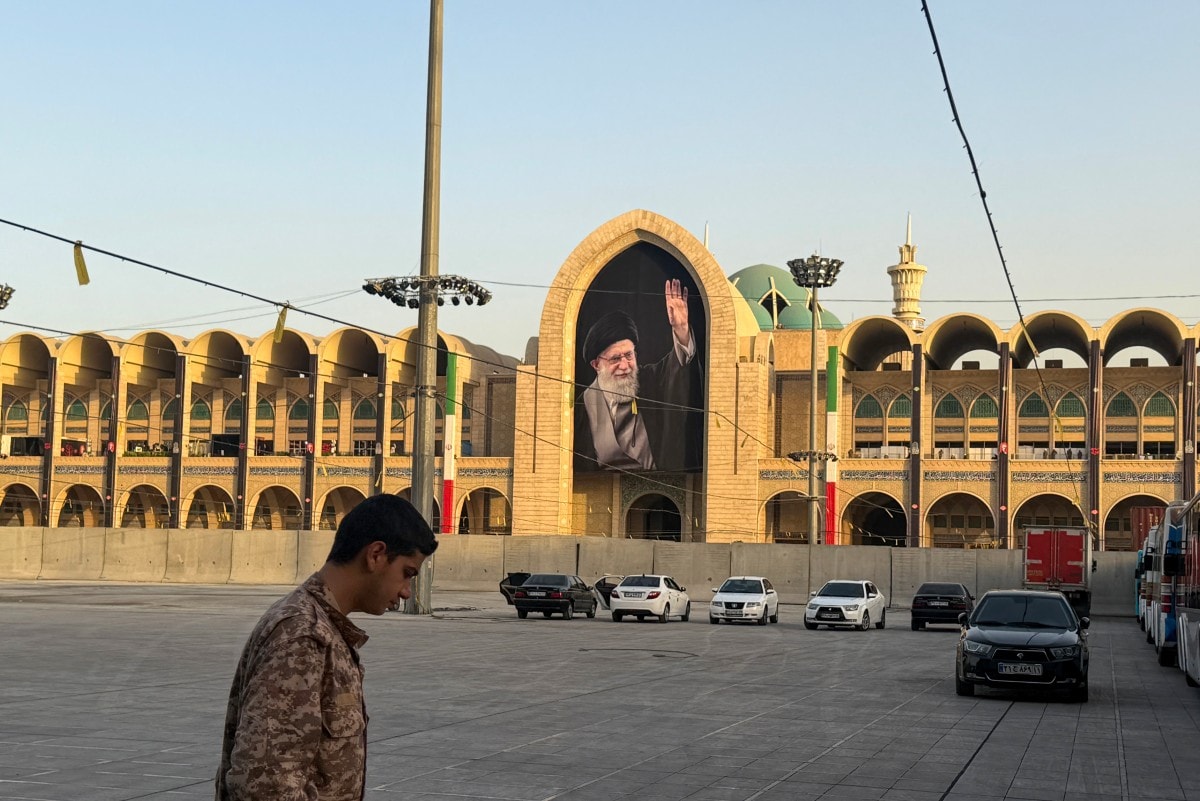
Photo Credit: AFP
But behind the veneer of unity and devotion, analysts have observed that public support for the Islamic Republic has worn paper thin. Across the country, many Iranians are tired of decades of sanctions throttling their economy and angry at the repression meted out in the name of a 1979 revolution that only older people in a mostly young population can remember.
When people poured onto the streets in December and January in demonstrations triggered by inflation, many were chanting for the death of Khamenei, and authorities could only crush the unrest by shooting thousands of protesters. After news of Khamenei’s killing began to circulate in the first days of the war, Tehran residents reported sounds of cheering erupting from behind the windows of houses and apartments in parts of the city.
The Ayatollah’s Stature
But Ayatollah Khamenei was not just a regular head of state. He was also an authoritative Shiite Muslim cleric with devotees in Iraq, Pakistan, Lebanon, and other Asian nations, where his portraits are often seen at Shiite rallies. Khamenei was considered a “marja” in the ranking of Shiite clergy. This meant his religious jurisprudence was a source followed by many Shiites around the world.
Though many Shiite scholars consider Grand Ayatollah Ali Sistani in Iraq the sect’s most important clerical authority, Khamenei held unparalleled political influence thanks to the alliances his theocratic government fostered with Shiite militant groups around the Arab world. He also commanded the Islamic Revolutionary Guards Corps, an ideological military force that backed Shiite forces like Hezbollah in Lebanon.
The Call For Show
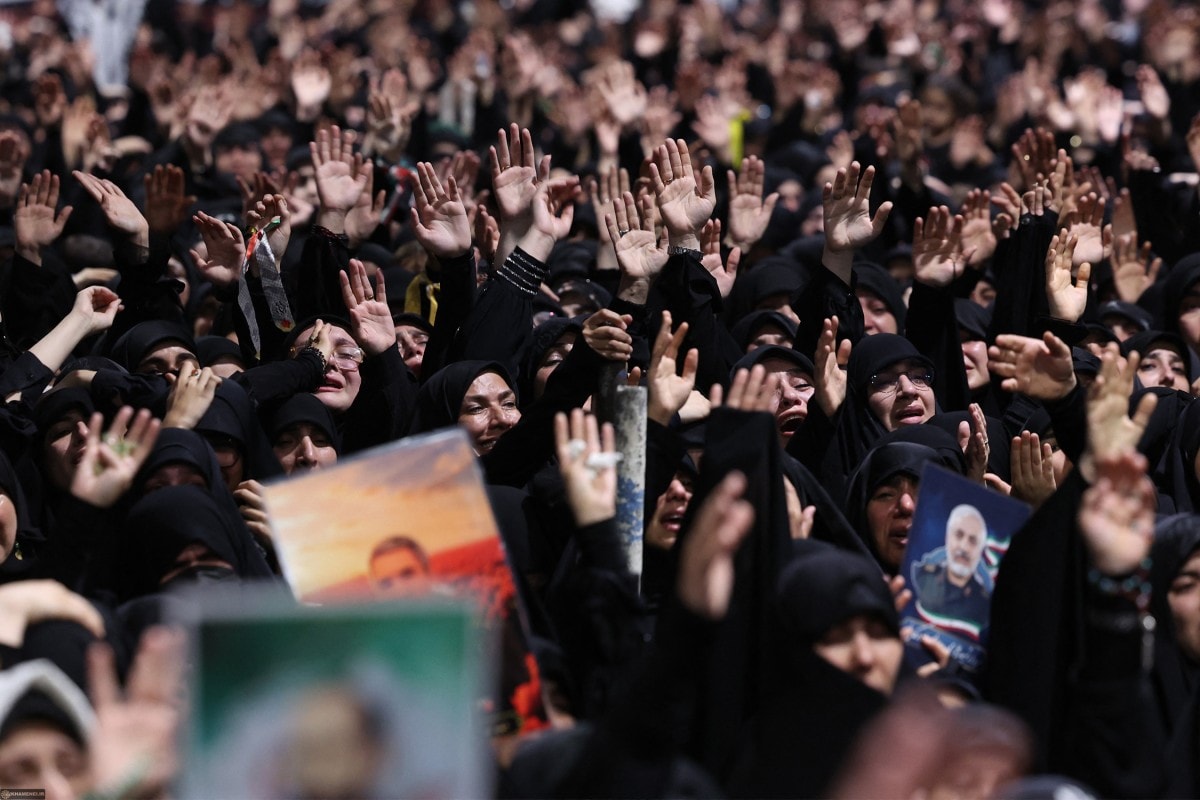
Photo Credit: AFP
Tehran’s chief negotiator Mohammad Bagher Ghalibaf has called for “all the Iranian people…to write a glorious page in the history of Islamic Iran through your presence.”
“The nation’s call for vengeance must ring in the ears of the whole world,” Ghalibaf, who is also Iran’s parliament speaker, added in a statement.
Iran’s president, Masoud Pezeshkian, also urged Iranians “of every ethnicity, religion, preference, and political tendency” to attend the funeral.
“Your widespread presence will be a decisive response to the logic of terrorism, violence, and bullying and a clear message to the world that the Iranian nation stands united and in solidarity in defending its independence and dignity,” Pezeshkian said in a statement on Thursday.
Why The Funeral Was Delayed
Khamenei’s burial is being held over four months after his death, a highly unusual delay as per Islamic culture. The delay was an indicator of the extraordinary circumstances that Iran faced after his death, amid weeks of heavy US-Israeli bombardment.
There have been rumours that his body was temporarily buried, but Iranian officials have insisted the delay was due to severe, volatile conditions of the active war with the United States and Israel.
They also said the Ayatollah’s body was kept in accordance with religious requirements. Islam generally discourages chemical embalming.
Counterterrorism expert Dr Mohammed Omar told Fox News Digital that the Ayatollah’s remains were “almost certainly refrigerated cold storage, not embalming, as Islam bars chemical embalming.”
“Shia law allows delayed burial and preservation by cold in exceptional cases, and a clerical exemption for a supreme leader is easy to get,” he said.
“Iran’s forensic morgues already hold bodies for months, so four months in freezing is not exotic. That is what ‘religious and legal standards’ cover,” Mohammed added.
Show Of Resistance
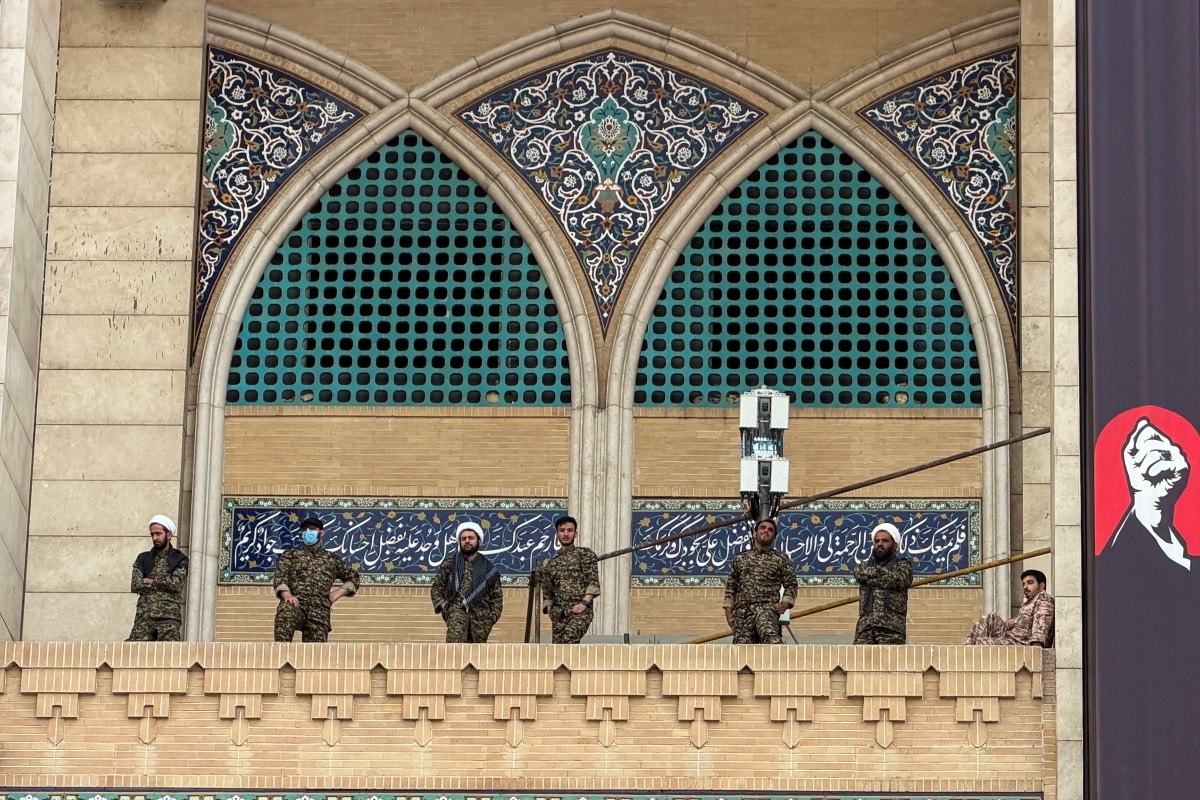
Photo Credit: AFP
Now, Iran’s government is seeking to present the funeral as a moment of national unity and shared grief. The emblem of the funeral, shared by the official planning body, is Ayatollah Khamenei’s closed fist alongside a slogan: “We must rise.”
But Tehran is tense and quiet, a sharp contrast with the emotional last burial of a supreme leader — the father of the revolution, Ayatollah Ruhollah Khomeini.
Then, millions of sobbing people mobbed Khomeini’s funeral procession, and some climbed on the ambulance, the dead leader’s naked leg spilling from his shroud as Revolutionary Guards battled to push back the crowd.