HONG KONG — With the surprise capture of Venezuelan leader Nicolás Maduro, President Donald Trump declared U.S. authority over the entire Western Hemisphere — and warned China that it’s not welcome in America’s backyard.
Trump administration officials have cited the need to counter China’s growing influence in the region as a justification for the attack on Venezuela, which counts the country as its biggest customer for oil.
“We’re not going to allow the Western Hemisphere to be a base of operation for adversaries, competitors and rivals of the United States,” Secretary of State Marco Rubio told NBC News this week.
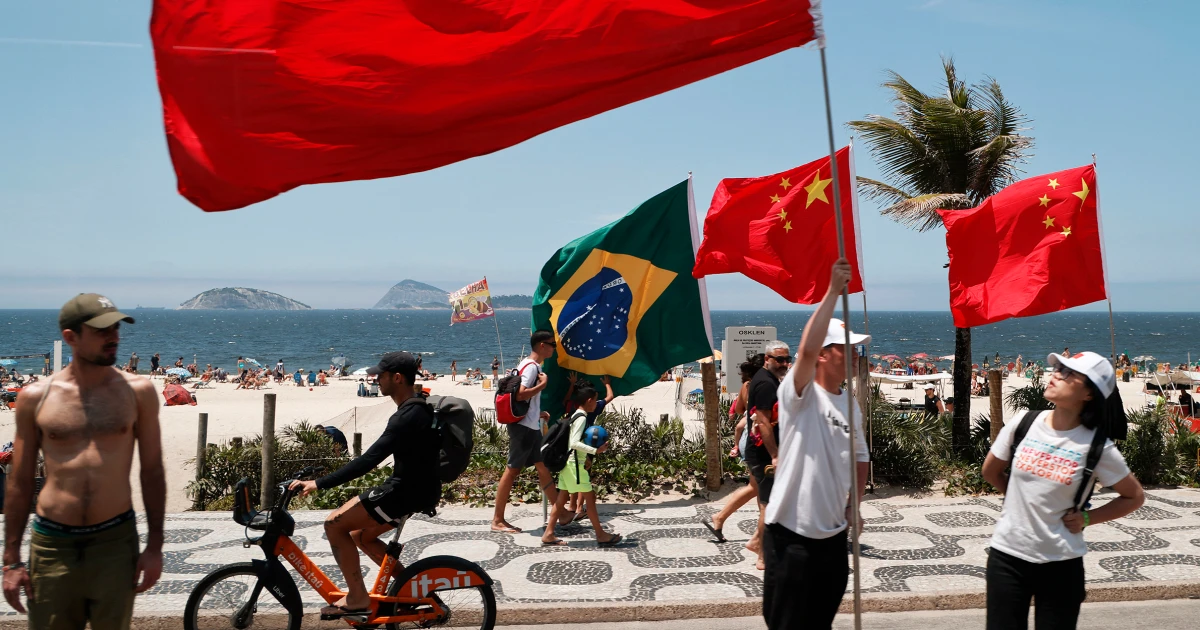
Experts say China, the world’s second-largest economy, is not likely to be dislodged from Latin America, where it has been investing and cultivating ties for more than 20 years as U.S. attention was focused elsewhere.

Though the Trump administration has reportedly ordered Venezuela to sever economic ties with Beijing, Energy Secretary Chris Wright told Fox News on Thursday that the U.S. was “not going to cut off China” from Venezuelan oil, and the country would continue to buy it, “just like the rest of the world.”
China is far from dependent on Venezuela for oil. While Beijing buys the majority of Venezuela’s crude oil exports, they make up only a single-digit percentage of all Chinese oil purchases.
Nonetheless, Beijing has strongly condemned the U.S. strike on Venezuela and its claims to the country’s oil, saying, “The legitimate rights and interests of China and other countries in Venezuela must be protected.”

“The United States’ reckless use of force against Venezuela and its demand that Venezuela dispose of its oil resources under the principle of ‘America First’ constitute bullying behavior,” foreign ministry spokesperson Mao Ning said Wednesday.
Venezuela’s interim leader, Delcy Rodríguez, has welcomed the support, saying Thursday that she had met with Chinese Ambassador Lan Hu.
“We value China’s firm and consistent stance in strongly condemning the serious violation of international law and Venezuelan sovereignty,” Rodríguez said in a post on Telegram, according to Reuters, referring to the U.S. capture of Maduro.
Though Venezuela is China’s only “all-weather” strategic partner in Latin America, the relationship had deteriorated during Maduro’s 12-year rule, with bilateral trade and Chinese investment dropping off as Venezuela fell behind on billions in Chinese loan repayments and faltered on oil production.

China also has no security commitments to Venezuela, meaning its support was mostly rhetorical as U.S. military forces massed in the months leading up to Maduro’s capture.
Despite China’s investment interests, “I’m not sure they would want to be part of a conflict that, from the outside, doesn’t seem to involve them,” said Bárbara Fernández Melleda, an assistant professor of Latin American studies at the University of Hong Kong.
In the wider region, Beijing’s focus has also been mostly economic, and it overtook the U.S. as South America’s top trading partner in 2010. In its annual report on the Chinese military last month, the Pentagon said Beijing was expanding its influence in Latin America through “infrastructure and energy development, economic assistance, and trade.”
One of the splashiest projects is the Chancay port, a large deep-water port in Peru that opened in 2024 and “has put South America on the map in a big way,” said Carol Wise, a professor of international politics at the University of Southern California who specializes in Latin America.

