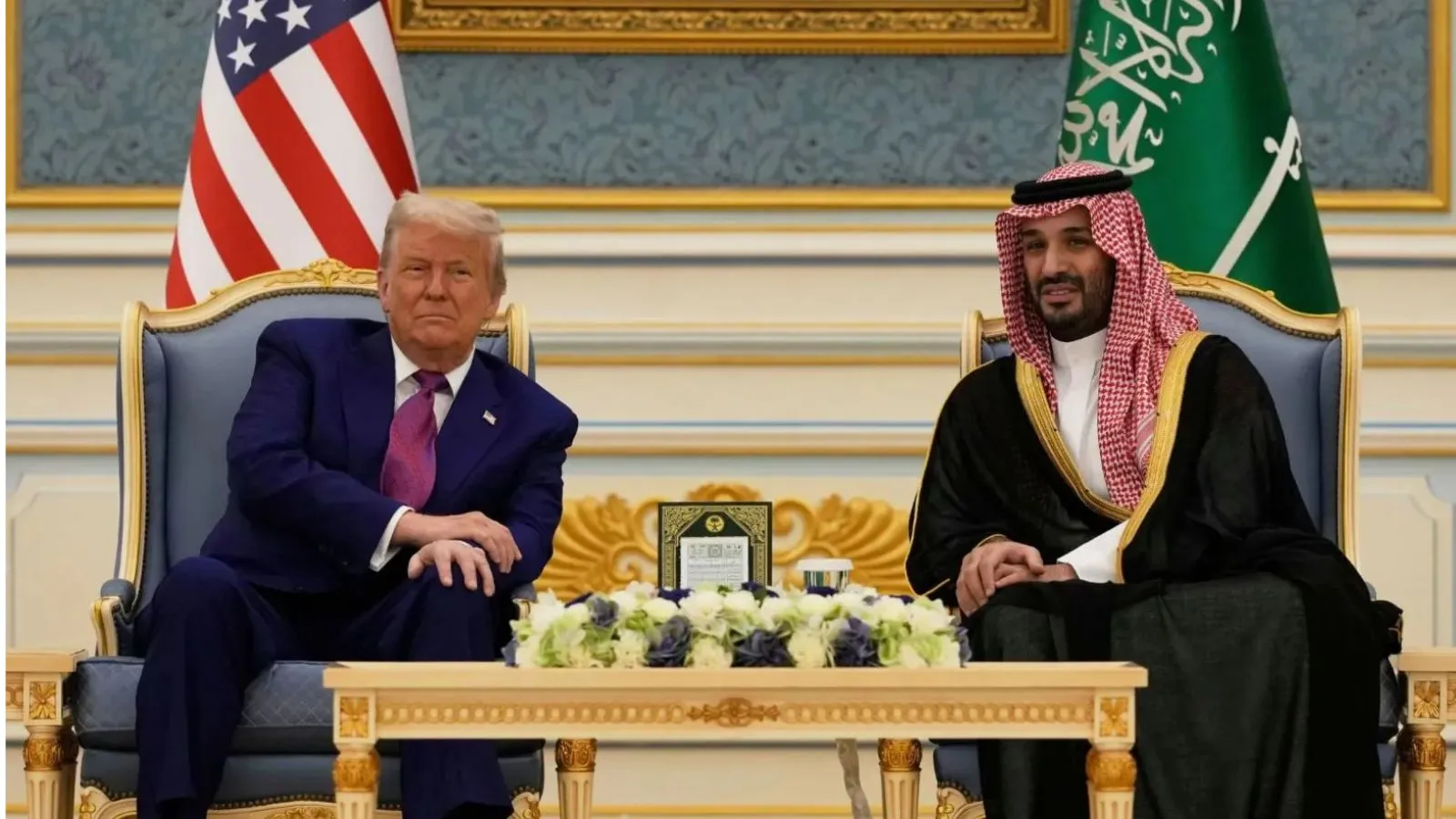
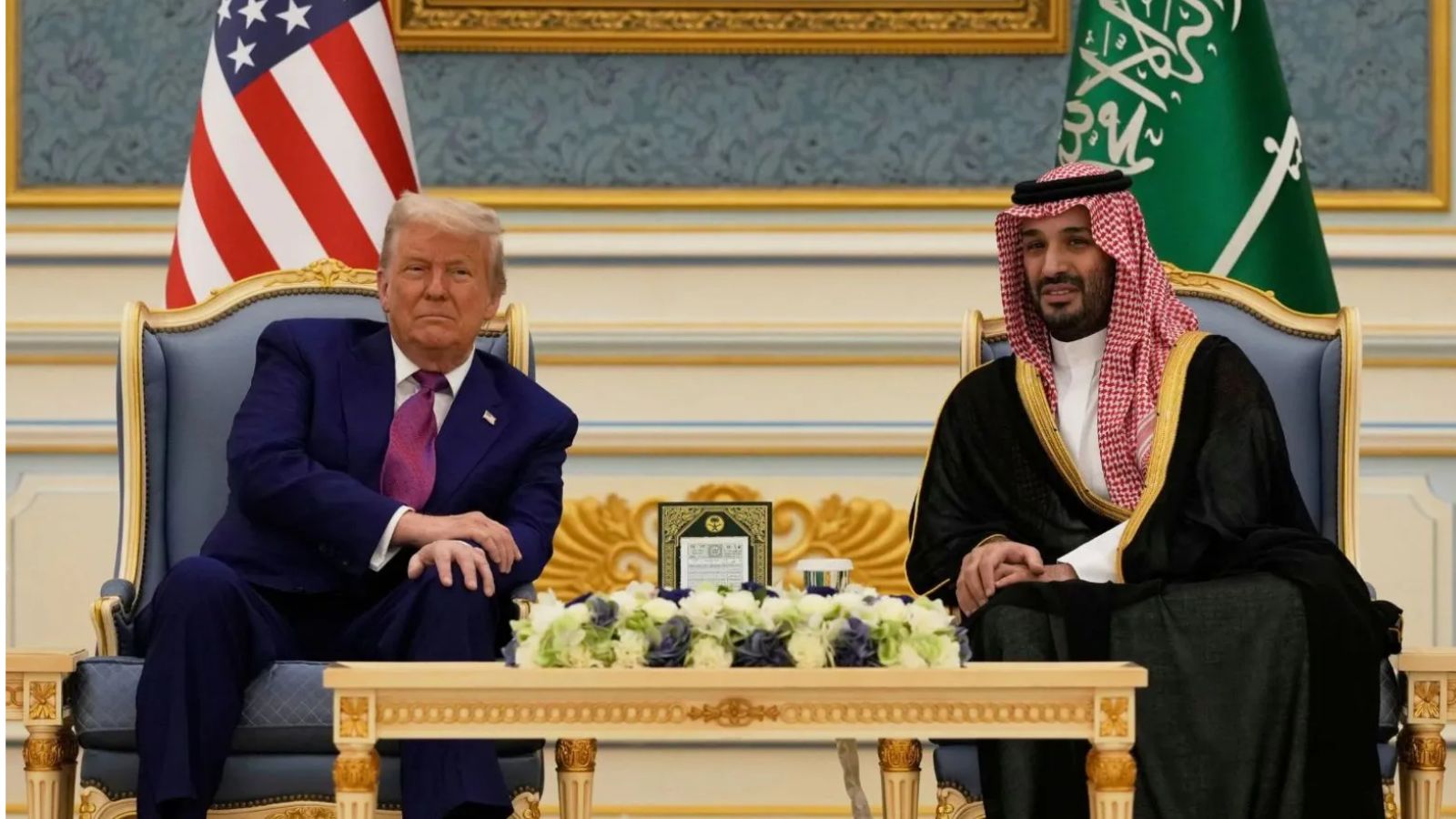
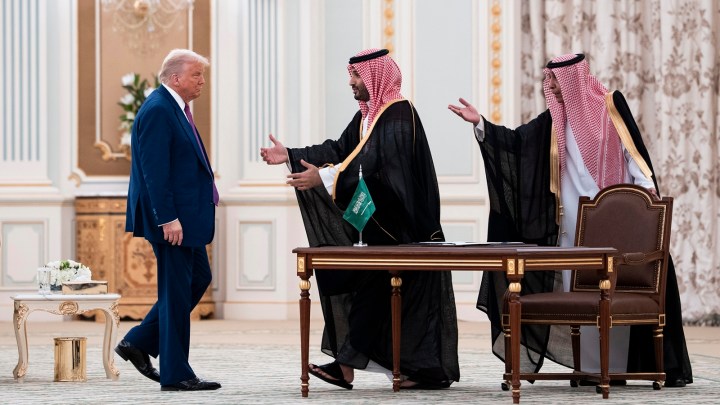
 US President Donald Trump and Saudi Crown Prince Mohammed bin Salman. (File Photo)
 The Trump administration has agreed to allow Saudi Arabia to enrich uranium on its own soil, sidestepping the tough international safeguards countries normally must accept to keep nuclear weapons development in check, according to sources and documents reviewed by CNN.
Trump still hasn’t signed off on the draft deal covering Saudi Arabia’s civilian nuclear programme, even though the US and Saudi negotiating teams finished hammering out terms back in October 2025.

Why is the deal stuck?
The nuclear deal traces back to Crown Prince Mohammed bin Salman’s Washington visit on November 18–19, 2025, when he and Trump signed a series of agreements at the White House. The centerpiece was the US-Saudi Strategic Defense Agreement, under which Trump designated Saudi Arabia a “major non-NATO ally” and approved a defense package including future F-35 fighter jet deliveries and nearly 300 American tanks.
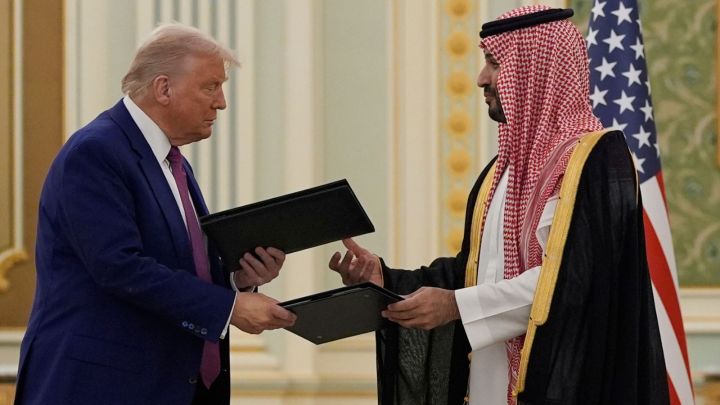
The two leaders also issued a joint declaration finalizing negotiations on civilian nuclear energy cooperation, alongside deals on AI chip exports and critical minerals, while Saudi Arabia pledged to raise its US investment commitments to nearly $1 trillion. That November summit followed an earlier visit by Trump to Riyadh in May 2025, where the two sides signed a $142 billion arms deal and a broader strategic economic partnership.
Two sources told CNN the ongoing war with Iran a conflict Trump has said was partly meant to stop Tehran from weaponizing enriched uranium has contributed to the delay in his signature. Some lawmakers also believe the administration is stalling because the agreement could trigger a bipartisan disapproval resolution capable of blocking it outright.
Story continues below this ad
What worries experts about the terms
The agreement includes a provision letting Saudi Arabia enrich uranium and potentially reprocess plutonium on its own soil something one source called unprecedented for this kind of deal. Enrichment and reprocessing are the two primary pathways to producing bomb-grade material, and most nations instead import already-enriched uranium from suppliers such as the US or Russia rather than producing it domestically.

The draft also skips the IAEA’s Additional Protocol, an enhanced safeguards standard, relying instead on a bilateral US-Saudi oversight arrangement. That marks a break from the 2009 US-UAE deal, in which the UAE accepted the Additional Protocol and gave up enrichment and reprocessing entirely a framework nuclear experts regard as the “gold standard.”
Kelsey Davenport of the Arms Control Association told CNN the Additional Protocol was created precisely to give the IAEA deeper access, after standard safeguards proved insufficient to stop countries from inching toward weapons capability.
Andrea Stricker of the Foundation for Defense of Democracies said this is the wrong moment to loosen the rules, since skipping the Additional Protocol would limit the IAEA’s ability to inspect undeclared sites.
Story continues below this ad
She warned there’s no safe way to permit enrichment or reprocessing on Saudi territory, even under US oversight, citing the risk that Saudi Arabia could later nationalize such a facility or that trained personnel could carry their expertise elsewhere pointing to how Pakistan’s own weapons programme is believed to have started with centrifuge knowledge acquired abroad.
Not every expert agrees the risk is severe. Dan Joyner, a nuclear law professor at the University of Alabama, told CNN that the absence of the Additional Protocol isn’t inherently alarming, and that the deal’s adequacy hinges on terms not yet made public. He argued the commercial and strategic upside of partnering with Saudi Arabia outweighs the residual proliferation risk, noting that Russia or China could otherwise offer Riyadh a laxer deal.
Why does this matter beyond Saudi Arabia?
Davenport cautioned that granting Saudi Arabia a customized safeguards arrangement could set a precedent other powers exploit, questioning how Washington would react if Russia began offering similar bilateral safeguards deals in place of stricter IAEA oversight elsewhere.

Saudi Crown Prince Mohammed bin Salman has previously said he would pursue his own nuclear weapon should regional rival Iran obtain one raising the stakes over exactly how tightly the final agreement is written.