
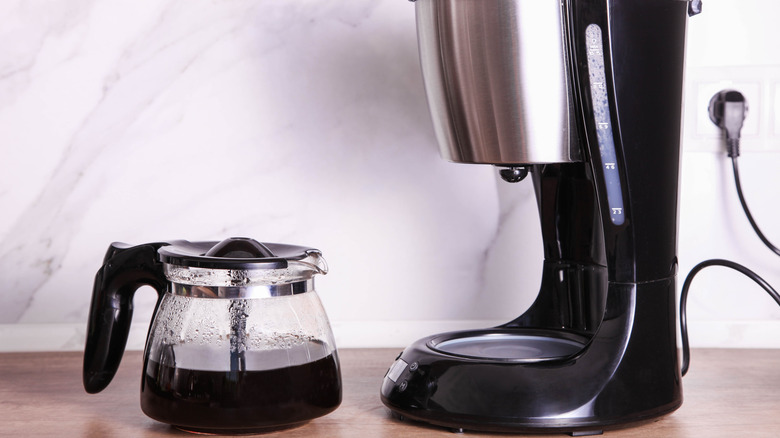
Home coffee machines are often made of varying amounts of plastic. But with the presence of plastics come concerns about microplastics — microscopic pieces of plastic thought to be linked to a wide range of health concerns. Unfortunately, they’re everywhere; a reverse osmosis filter can remove microplastics from tap water, but you’d have to look at your coffee machine too.
Microplastics fall off plastic components as a natural consequence of everyday use, worsening as the plastic wears down from use. This can happen anywhere plastic touches water or coffee, including the water tank, internal tubing, gaskets, the brewing chamber, drip spout, and, if applicable, coffee pods. Microplastic contamination increases from components exposed to heat and pressure.
Unfortunately, nearly all commercially available electric coffee makers incorporate plastic or rubber at some point in the brewing process, from the cheapest drip machines to a top-of-the-line espresso station. A few boutique companies claim to sell electric coffee makers with a 100% plastic-free brewing process, but without spending high-end money for a fundamentally simple machine, look to traditional methods like pour-overs, moka pots, and French presses.
Brewing coffee with reduced microplastics
For perhaps the best possible microplastic-free brew method, it helps to look to the aficionados. Celebrity chef Alton Brown’s coffee process is an exact science relying on the pour-over method: Line a funnel with a filter, place coffee grounds inside, and slowly pour hot water over. Though it’s worth noting that coffee filters may contain microplastics, this method is easy to do with at-home tools, or sets sell for about $15 and up.
Another good method is the humble yet stylish moka pot, an all-metal Italian design that uses pressurized steam to extract a robust drinkable coffee from the grounds. Liquid may make minimal contact with silicone or rubber gaskets, but it’s still one of the better options for reduced plastic coffee. Their original maker still sells them for about $38, but they can get expensive — a commemorative Dolce & Gabbana edition costs over $2,600.
A final option for a plastic-free brew is the French press, one of the best coffee-making methods in general. It provides total control over brew strength without having to slowly pour water by hand. It’s common for French presses to incorporate plastic somewhere, though there are some plastic-free models. A Crate & Barrel exclusive from the popular company Bodum costs $49.99, but more sophisticated options can run into the hundreds of dollars.

