Football has long been about much more than just the 11 players representing a side. From the manager to the owner, the kit man to the chief executive, Premier League clubs are made up of multiple components all working together behind the scenes in pursuit of a common goal.
So, who is the most important person at your top-flight team? We asked our club reporters for their thoughts.
Arsenal
Mikel Arteta
Arteta has been the engine at the heart of Arsenal’s revival in recent years.
The Arsenal manager is into his seventh season in charge of the north London side, and the transformation since he was appointed in December 2019 has been dramatic. Arsenal take a collaborative approach to leadership, but no single figure has had more of an impact than their Spanish former midfielder and captain.
The 43-year-old’s influence has extended into almost every department of the club. He is meticulous about detail — from fan activation around big games, to dressing-room decor.
It’s Arteta’s Arsenal. We’re all just living in it.
James McNicholas
Aston Villa
Unai Emery
Why? Isn’t it obvious?
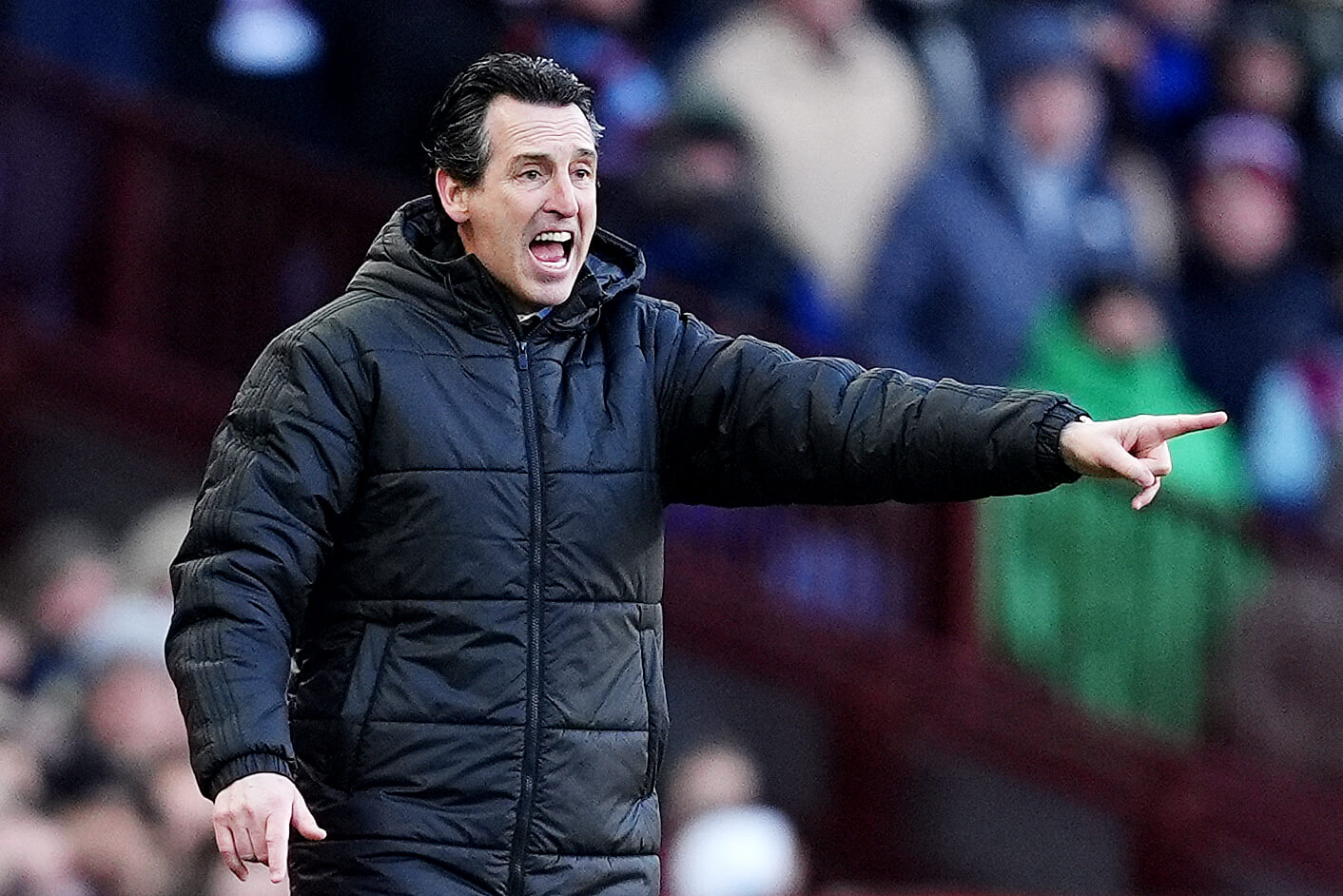
Emery is the all-knowing, all-seeing, all-powerful figure at Aston Villa. The present-day club has been built around their manager. He has a contingent of fellow Spaniards within the organisation that totals more than a dozen people and has complete authority on who is appointed within any football position.
The 54-year-old’s coaching expertise has elevated Villa and, frankly, holds up a club who have fragilities underneath.
Jacob Tanswell

Unai Emery is all-powerful at Aston Villa (Martin Rickett/PA Images via Getty Images)
Bournemouth
Andoni Iraola
It was a fast but slow start to life at Bournemouth for Andoni Iraola, but once he got his team playing his way, they kicked on and have become a thorn for so many Premier League sides.
His first season as Bournemouth’s head coach, 2023-24, brought a club-record top-flight points haul of 48. In year two, they bettered that with 56. Though 2025-26 has not always gone to plan, that’s no surprise given the turnover in the squad, with their players getting signed for big fees by superclubs such as Real Madrid, Liverpool, Paris Saint-Germain and Manchester City.
The biggest and best in Europe want Bournemouth’s star players — and it feels like only a matter of time before a top club comes chasing after their 43-year-old coach, too. Until then, the Spaniard is their biggest asset of all.
Caoimhe O’Neill
Brentford
Matthew Benham
Brentford owner Matthew Benham was given control of the club by supporters’ trust Bees United in 2012, when they were still a League One side. They were promoted to the Championship in 2014 after two decades in the third and fourth tiers and became an established second-division club over the next seven years, before reaching the Premier League in 2021 — the first time since the 1940s that the west London club had been in the top flight.
Benham’s statistical approach to recruitment — at organisational, coach and player levels — had its detractors at first, but its effects have been impressive and have contributed to a revolution in the game’s use of data. Brentford have avoided becoming a “yo-yo club”, bouncing between divisions, thanks to shrewd planning across the board.
That has been most evident this season with the current side managed by Keith Andrews — replacing Thomas Frank after his move across London to be Tottenham Hotspur head coach — pushing to qualify for European football next season, which would be another first for Brentford. Striker Igor Thiago has successfully followed in the footsteps of Bryan Mbeumo, Yoane Wissa, Ivan Toney, Ollie Watkins, Neal Maupay and Said Benrahma — all of whom were sold for massive profits that were cleverly reinvested — to rack up 16 goals in the 22 league games so far.
Anantaajith Raghuraman
Brighton & Hove Albion
Tony Bloom
The choice is obvious. Where would Brighton be without the generosity and nous of the owner-chairman?
A boyhood Brighton fan, Tony Bloom has invested more than £400million ($544m at the current rate) of his personal fortune during nearly 17 years in charge, transforming the club from a third-tier outfit without a permanent home ground into savvy Premier League regulars.
The sports betting leader operates a private syndicate made up of anonymous individuals, placing bets on their behalf based on data gathered by Starlizard, a data company established by Bloom. His secret algorithm is also the starting point for a global recruitment operation which is a lesson in the art of identifying talented players, often at low cost, who are then developed and sometimes sold on for enormous profits.
Andy Naylor
Burnley
Alan Pace
Ever since purchasing the club in December 2020, Alan Pace has been a hands-on owner, taking on the position of chairman.
There have been a lot of changes at Burnley since the American arrived, with Pace attempting to modernise and develop the Lancashire club. Results on the pitch have been inconsistent, with two relegations from the Premier League and two promotions back to it in four full seasons, and there has always been scepticism about the initial leveraged buyout.
The 57-year-old is passionate about making Burnley a success. Pace and his family moved to the area, and he can regularly be seen on home matchdays, walking around their Turf Moor stadium, checking on operations and speaking to fans, but he also steps in when big decisions need to be made.
Pace has built, and is surrounded by, a team of people who have day-to-day responsibilities in specific areas, but everything goes through him.
Andy Jones
Chelsea
Reece James
Sure, you can make a strong argument for those in charge of the club, as they are the ones in control of Chelsea’s overall strategy.
I have gone for Reece James, though — and not just because he is a rather good footballer. It is about what the 26-year-old represents at Chelsea.

Reece James is Chelsea’s homegrown captain (Steve Bardens – AMA/Getty Images)
James is a rare breed at Stamford Bridge in that he is a holdover from the Roman Abramovich ownership era of 2003 to 2022, the only player still at the club from the 23-man matchday squad that beat Manchester City in the Champions League final five years ago.
And when it remains as tough as ever for an academy kid to make it through to the senior side, having a homegrown player as captain of the first-team continues to send a message to those lads that anything is possible — even at a time when Chelsea are signing many young players from across the world.
Simon Johnson
Crystal Palace
Steve Parish
The Crystal Palace chairman has been the central figure at Selhurst Park since bringing together the consortium which bought the club out of administration in 2010.
Of the four general partners — alongside the Americans Josh Harris, David Blitzer and Woody Johnson — Steve Parish is the man on the scene, running the club day-to-day. He sanctions player purchases and managerial appointments, and dictates their strategy off the field. He also gives Palace their voice at Premier League meetings, where he has established himself as a figurehead of sorts, fighting the corner of ‘The Other 14’ clubs, excluding the established top six.
Dominic Fifield
Everton
Angus Kinnear
Manager David Moyes wields significant power at Everton, taking responsibility for coaching and having the final say on transfers. In a football sense, there is not much that happens without the Scot’s say-so. But chief executive Angus Kinnear’s remit is even broader. Having joined from Leeds United at the end of last season, he has been tasked by new owners The Friedkin Group with leading a rebuild of the club.
Kinnear oversees the everyday running of Everton and was responsible for the change in structure that saw director of football Kevin Thelwell depart and the club move away from that operational model. He then led the subsequent search for replacements, bringing in long-time colleagues Nick Hammond (head of trading) and Chris Howarth (head of strategy).
Patrick Boyland
Fulham
Shahid Khan
Since buying them in 2013, owner and chairman Shahid Khan has ploughed more than £800million ($1bn) into Fulham. His immense financial backing has helped stabilise the west Londoners, perhaps turning them from a “yo-yo club” into “just a yo club”. That was the vision of his son, Tony, who also acts as vice-chairman and director of football operations.
Together with chief executive Alistair Mackintosh, the Khans control the club’s daily operations. A test of their influence and negotiating skills is heating up — can they persuade head coach Marco Silva to extend a contract which expires at the end of this season?
Justin Guthrie

Shahid Khan at the 2018 Championship play-off final, where Fulham beat Aston Villa to earn Premier League promotion (Clive Mason/Getty Images)
Leeds United
Paraag Marathe
Daniel Farke has more control at Leeds than most managers and head coaches in the Premier League, but it is Paraag Marathe, the club’s chairman and chief decision-maker, who controls his fate. Robbie Evans runs the day-to-day operation as managing director, but he reports to Marathe, who ultimately pulls the trigger on all of the big calls. Transfers, for example, will not be processed unless he signs off the cheques.
On the investor side, Marathe is at the head of Leeds’ majority owner, 49ers Enterprises, ensuring shareholders are happy with how their investment is being spent and even convincing them to put more money in when the time comes.
Beren Cross
Liverpool
Virgil van Dijk
It has to be Liverpool’s talismanic captain.
The club broke their transfer record when they made Van Dijk the most expensive defender in the world with a £75million move from Southampton eight years ago this month. The Dutchman has proved to be worth every penny — there is a strong case to be made that he is their most transformative signing of the Premier League era.
Van Dijk’s arrival addressed a glaring weakness in Liverpool’s back line and his commanding presence has been integral to a list of triumphs that includes two Premier League titles, as well as the Champions League, Club World Cup, UEFA Super Cup, FA Cup and two League Cups.
Since the summer of 2023, the centre-back has worn the captain’s armband, and his leadership has been a huge help for both Jurgen Klopp and Arne Slot in the dugout. It is Van Dijk who sets the standards in the dressing room on a daily basis with his professionalism and he commands the respect of his team-mates. He is also incredibly durable, rarely missing a game since returning from an October 2020 anterior cruciate ligament (ACL) knee injury.
Turning 35 this summer, he is entering the twilight years of his career, but he remains so integral to how Liverpool function on and off the field.
James Pearce
Manchester City
Pep Guardiola
Manchester City have an admirable club structure — they seem to have transitioned very well from long-term director of football Txiki Begiristain to last summer’s successor Hugo Viana — and they have a pool of extremely talented players, but the biggest difference-maker remains their manager.
Only Guardiola and Sir Alex Ferguson have made their teams so dominant over a significant period of time during the Premier League era, with all of the other successful sides coming and going over the course of many years.
For all that City have put into being in a position to be successful, the single biggest figure in them doing so is Guardiola, who over the past nine-and-a-half years has fostered the kind of standards and winning mentality that only the very best can achieve.
Sam Lee
Manchester United
Bruno Fernandes
‘Importance’ suggests that, without this person around, things would be at risk of going to pot. And in that respect, there can only be one answer at Old Trafford, because where would Manchester United be without Bruno Fernandes?
Practically an ever-present since joining the club six years ago this month, the Portugal international midfielder has consistently been United’s best and most influential player, and is unequivocally their outstanding signing of the post-Alex Ferguson era.

Bruno Fernandes has been practically ever-present since joining Manchester United (Carl Recine/Getty Images)
Fernandes provided a combined 18 Premier League goals and assists last season. Nobody in the division created more chances than his 91. United still finished 15th. It could have been so much worse without him.
Which is why, when Old Trafford officials received lucrative offers from Saudi Arabia for their club captain last summer, they were not immediately accepted. The money was significant, but United told Fernandes they would go along with his wishes. He decided to stay.
How many other 30-somethings would be given that option when their club has an opportunity to cash in? It spoke to just how integral Fernandes is.
Mark Critchley
Newcastle United
Eddie Howe
Newcastle’s Saudi Arabian-led takeover in October 2021 was transformative — but their on-field success has been made possible primarily because of Eddie Howe.
Not only has their head coach repeatedly shown his capacity for developing players and turned previous poor performers, such as Joelinton and Jacob Murphy, into mainstays of a European-level side, he has twice taken Newcastle to Champions League qualification and won their first major domestic trophy since the 1950s in last season’s Carabao Cup.
Howe managed to unite the entire club after the end of the Mike Ashley ownership era, recreating an extremely strong bond between the team and the fans, and also has significant clout throughout St James’ Park.
Given the executive-level churn at Newcastle, Howe’s achievements and longevity have allowed him to cement a firm power base. The head coach was consulted on Ross Wilson’s recent appointment as sporting director, while Andy Howe, his nephew, is influential as assistant head of recruitment.
Chris Waugh
Nottingham Forest
Evangelos Marinakis
The Nottingham Forest owner demonstrated his ambition and intent again in the summer, as he gave the green light to a £200million, 13-signing recruitment campaign.
But the speed of that recruitment, along with the swift deterioration of Nuno Espirito Santo’s relationship with the newly appointed head of global football, Edu, was the first domino to fall at the start of a chaotic season.
Following Nuno’s September departure from the City Ground came the ill-fated eight-match tenure of Ange Postecoglou.
Marinakis had less of a role to play in the appointment of Sean Dyche as the third manager of the season but, if the former Burnley and Everton boss cannot sustain an improvement in Premier League form, Marinakis may at some point find himself having to make another big decision, over whether to stick or twist.
Marinakis was a key figure in helping to end Forest’s 23-year exile from the top flight. The decisions he makes over the next few months may hold significant influence in whether they retain their seat at the top table.
Paul Taylor
Sunderland
Granit Xhaka
Sunderland’s resurgence, from being thumped 6-0 by Bolton Wanderers in third-tier League One this week four years ago to now sitting 10th in the Premier League, has been a collaborative effort. It is hard to pinpoint one individual whose removal would see it crumble — 28-year-old chairman Kyril Louis-Dreyfus has imposed a bold, impressive strategy, but it would be nothing without several people below him doing their jobs so effectively.
How strange, then, to pinpoint someone who was not even a Sunderland player six months ago.

Granit Xhaka celebrates Sunderland’s FA Cup third-round win against Everton (Carl Recine/Getty Images)
Yet in Xhaka, Louis-Dreyfus and company have found an inspired captain, one whom this season’s wonders would surely not have materialised without. He is at the heart of everything both on and off the field, driving standards and leading by example.
Sunderland are not in a relegation battle following last season’s promotion. They might have been without Xhaka.
Chris Weatherspoon
Tottenham Hotspur
Vivienne Lewis
The Lewises have been majority shareholders in Tottenham Hotspur since 2000, but it is only since chairman Daniel Levy’s dismissal in September that they have had real control of the club. Now everyone is looking to them for guidance, not least Vivienne, billionaire Joe Lewis’ daughter, who has become the family’s most visible presence in the directors’ box.
The daily running of the club is in the hands of chief executive Vinai Venkatesham, who arrived at the end of last season. But there are so many big questions about Spurs in 2026: their direction, their strategy, their priorities, their plans. And these can only be answered by the Lewis family themselves.
Jack Pitt-Brooke
West Ham United
James Saban
It would be easy to go for club captain Jarrod Bowen here, but it is important to highlight someone behind the scenes at West Ham who many of you are not familiar with.
James Saban, commonly known as Jamo, is West Ham’s kit manager. He has been at the club since October 2007, and is a popular member of staff behind the scenes. He goes above and beyond in his role, as ex-academy director Tony Carr recalled in 2021, and is a key part of the team spirit, as this video shows.
— jwhufc (@jameswhu01) February 24, 2025
If Saban were to leave, his departure would affect many key personnel in the first-team squad.
Roshane Thomas
Wolverhampton Wanderers
Nathan Shi
He had never set foot inside Wolves’ Molineux stadium or Compton Park training ground a few months ago but their interim executive chairman, appointed by Chinese conglomerate Fosun at the end of 2025 to replace namesake Jeff Shi as their man on the ground in the UK, appears to have a pivotal role in the next phase of their ownership of the club.
Nathan Shi will report back to his bosses in China on what is needed for Wolves to make an immediate challenge to bounce back from the relegation out of the Premier League that seems inevitable already. While they will have the final say on big financial decisions, he has the autonomy to make day-to-day decisions, including over which players come and go.
It is unclear how long he will remain in the post but, given he has arrived at a crucial moment in Wolves’ history, he will have a key role to play for however long he stays around.
Steve Madeley