On the eve of U.S. President Donald Trump’s visit to China, the UK’s Financial Times revealed on Thursday, April 23 that the White House is accusing China of stealing American artificial intelligence (AI) technology on an “industrial scale” and is warning that it will intensify crackdowns to curb such activities.
According to the report, Michael Kratsios, Director of the White House Office of Science and Technology Policy, stated in an internal memorandum that U.S. intelligence indicates certain entities, primarily based in China, are deliberately using “distillation” techniques to extract core capabilities from advanced American AI systems in order to train their own models.
“Distillation” refers to the process of using outputs from large AI models to train smaller models.
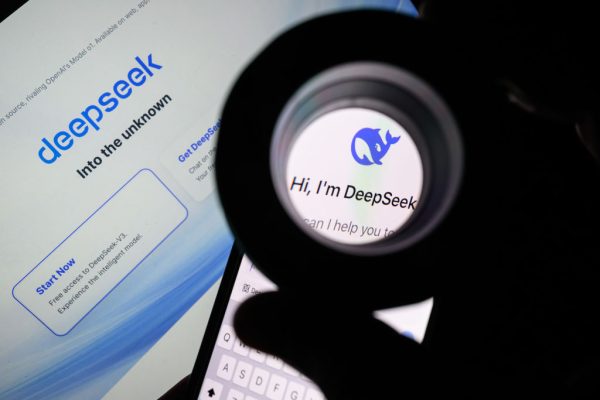
One major focus of public concern is Chinese AI company DeepSeek, which has been accused of using distillation methods to build high-performance models at lower cost, narrowing the gap with U.S. firms.
The memo also noted that these activities allegedly involve tens of thousands of proxy accounts to evade detection, as well as “jailbreaking” techniques to access protected model information. The U.S. government said it plans to share intelligence with domestic AI companies, coordinate countermeasures, and explore accountability mechanisms.
Success
You are now signed up for our newsletter
Success
Check your email to complete sign up
Chris McGuire, a technology security expert at the Council on Foreign Relations, said Chinese firms are using such tactics to compensate for limitations in computing power and may even replicate critical capabilities of U.S. AI models. He recommended that the United States further restrict China’s access to advanced models and impose sanctions on organizations involved in distillation activities.
Major U.S. AI companies, including OpenAI and Anthropic, have also recently voiced concerns, arguing that such practices are undermining the technological advantage the United States has established through semiconductor export controls.
In February, Anthropic accused several Chinese companies—including DeepSeek, Moonshot, and MiniMax—of conducting distillation attacks on its models. Earlier, OpenAI also stated that there was evidence DeepSeek used outputs from its GPT models to train its own products, in violation of usage terms.

Additionally, U.S. companies fear that models created through distillation may lack essential safety protections, such as safeguards against use in biochemical weapons development or cyberattacks, thereby posing potential national security risks.
On April 22, the U.S. House Foreign Affairs Committee passed several related bills, including measures that would consider placing entities involved in distillation activities on the “Entity List.” If implemented, this would restrict U.S. companies from exporting key technologies to those organizations, further tightening limits on China’s AI development.