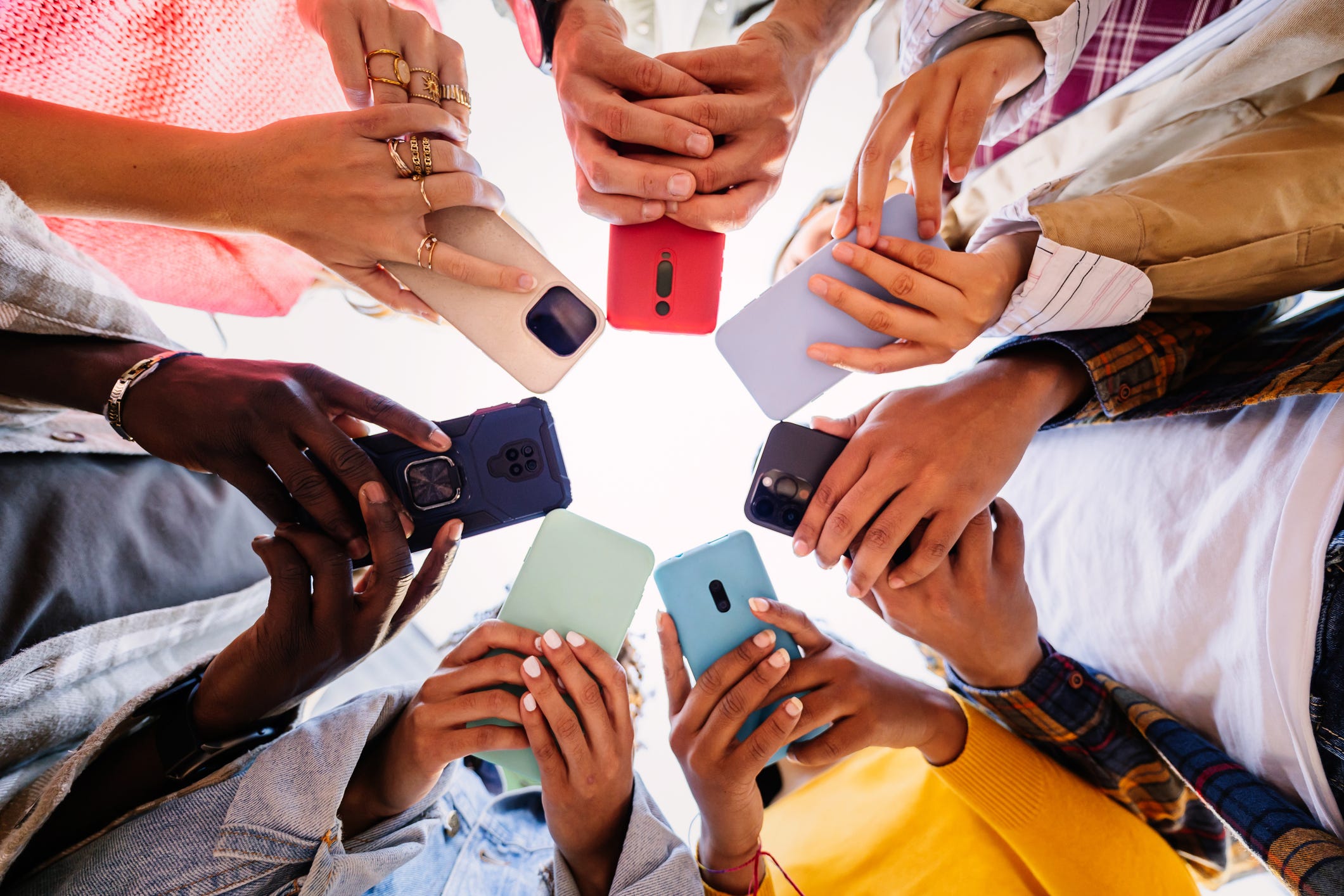
In late January, Analy leaders presented a plan to the school board to ban cell phones during the whole school day, from the first bell to the last one each day. This move followed the signing into law of California Assembly Bill 3216, “The Phone Free School Act,” which requires schools to restrict cell phone use in school by July 1, 2026.
Analy’s current cell phone policy already meets the requirements of the law, but school administrators were looking to go above and beyond. Citing concerns over mental health, distraction and learning degradation, the board was presented with a plan to fully ban cell phones (and other devices, like earbuds or smartwatches). The presentation garnered a lot of support from teachers and administrators who were present at the meeting. (See our article on this decision here.)
Few of the people most affected by this plan—the students—were even aware this was happening. Based on interviews with over 100 students across all four grade levels, whose names were kept anonymous, several themes emerged.
You can read the Sebastopol Times’ coverage of this board meeting.

Analy leaders resolute about bell-to-bell cellphone ban for next year
Many students felt the current system, which requires putting phones away during class, would work fine if actually enforced. “It’s unrealistic to get rid of phones completely,” one student, a sophomore, said. “I think the current phone caddy system is perfectly fine,” another student continued, saying, “I am okay with it being enforced more to prevent cheating on tests, but it currently strikes a good balance between distance and accessibility.”
One of the most prevalent criticisms from students about this new cell phone ban was simply the lack of communication from the school administration. Students expressed that for something that would drastically alter their experience at Analy, there was less communication than they expected—mostly through the site council and the district’s student advisory team. Students described how they learned of this plan from rumors and concerned texts from friends. Most of the students who did know about this change got it from the Jan. 24 Sebastopol Times article or from friends who, in turn, heard it from other friends. And even fewer students knew this was on the table for discussion at the meeting; they would have needed to read the school board agenda to know this presentation was going to be happening. Even weeks after the school board meeting, a large number of students didn’t know this plan to ban cell phones even existed, and close to none knew the full extent of the plan. This was a major criticism of the school, as students felt left out of conversations that would ultimately affect them the most.
The current proposition is a system that would involve individual locked pouches. Students would put their phone in the pouch, lock it, and then keep the pouch with them. That way, they would have their phone with them but couldn’t use it. Designed by a company called Yondr, these pouches are used by schools in all 50 states and have been proven to help reduce phone usage drastically. However, Yondr pouches do have drawbacks. Primarily, they are very expensive, costing around $30 per student. Individuals familiar with the matter informed me that Analy would spend around $50,000 in order to fully implement the Yondr system.
Some students wondered why we couldn’t implement a simpler and less expensive system, such as keeping phones in backpacks during the whole day. Middle and elementary schools across Sonoma County use similar systems: phones must be away at all times (like in students’ backpacks) while school is in session, but they don’t need to be in specialized pouches like Yondr. Students, especially freshmen who recently graduated from systems like those, found it strange that Analy was skipping over a simple system and right to the complicated and expensive one.
Many students mentioned how useful phones are during the school day, pointing out that completely removing phones would get rid of a lot of good things, too. One student gave the example of having an after-school activity, but forgetting to tell their mom that morning. If that student didn’t have the ability to text their mom about this, it would have caused a lot of stress for both the student and the parent. Multiple students cited safety concerns, noting that many people rely on cell phones in the case of an emergency. And other students pointed out that many of the school’s procedural systems rely on phones: checking in for tutorial periods (an allotted time every Tuesday and Thursday where students can go to any classroom they want to do work), signing in or out for the bathroom in some classrooms, communication over social media about spirit days, and other systems. Other students explained that since there were few activities to do during lunch or break, due to the lack of sports equipment, many students bond over what they see online. These students felt the notion that phones reduce social interaction was not true. They explained how phones allowed people from different groups to find each other and interact more. One student, a freshman, told me that they wouldn’t have nearly as many friends as they do now if social media hadn’t brought them together.
Students also seem to think their parents won’t support the ban in the long run. A group of students told me that although the ban sounded good to their parents on the surface, they reconsidered once they realized they wouldn’t be able to contact their child. Another student, a junior, described what their parents had told them: “You have a phone for a reason; it’s so we can contact you.” The junior explained that their parents did not want to lose that point of contact with their child. Other students described their parents’ reactions when they learned of the phone bans, saying “They think pouches aren’t necessary,” or “They seemed a little bit surprised.” For a ban that might require community support to pass, students seem to think that their parents and the community are on their side.
Some students observed that phones will be a part of their life long after high school, both in their personal lives and at work. While they understood the administrators’ arguments, they felt that some valuable data supporting phones was being omitted. “It’s outdated to think phones aren’t important,” one student said, and described how they use their cell phone to communicate with their boss, friends, and family. Students felt that the administration should be working to teach students how to use phones effectively, not take them away.
A minority were downright defiant of the proposed plan. “I just won’t let them have my phone,” a junior said with a laugh, and another agreed with them, saying, “Kids will get burners, hide phones, and overall get creative on how to sneak a phone on campus.”
“It’s impossible to enforce,” a freshman explained, questioning how much time would be dedicated to enforcing the rule. Other students were already organizing resistance to the ban, collecting anecdotes about phones to present to the board at the next meeting.
Although many students had different justifications for opposing the phone ban, it was clear that few of them supported it. Some believed that the rule would never get implemented, while others explained how useful phones are during the day. Overall, Analy’s students appear apprehensive about this proposed ban.
Lawson Gaylord is an Analy student and publisher of the West County World, Analy’s student newspaper.