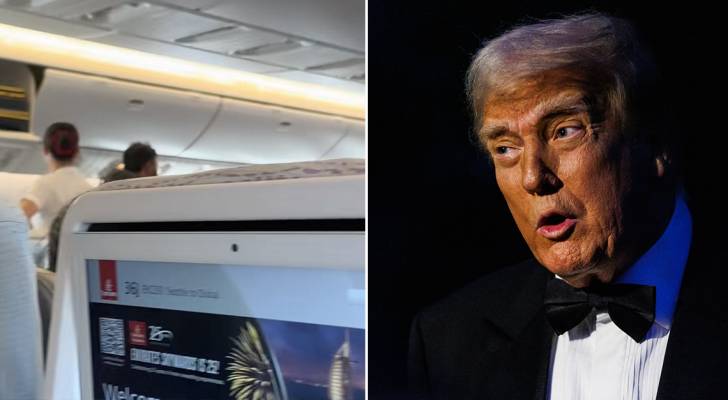
A TikTok from @sreela.r showing anxious travelers stepping off an Emirates jet went viral after news broke of a surprise $100,000 fee tied to new H-1B petitions. The clip captured private panic in public view as workers wondered whether their jobs, start dates and long-planned moves had just been cancelled with the stroke of a pen.
Indian news outlet NDTV reported deplaning and delays as video showed confused and stressed families hastily grabbing their belongings to leave the plane. (1)
Behind the human drama of upended plans lie serious policy concerns about how the H-1B visa program is used — and abused. H-1B visas allow foreign workers with very specialized skills to enter the U.S. and work. The debate has pitted political factions against each other and united former workers.
Supporters of President Trump’s move call it a way to protect U.S. jobs. Critics see it as an unforced economic shock that could stall hiring and reduce American competitiveness, especially in tech and AI.
The H-1B temporary visa for “specialty occupation” roles was created in 1990 by Congress to help companies recruit talent from abroad and fill hard-to-staff skilled jobs while protecting U.S. wages. The visa is initially granted for up to three years and can be extended to six.
Congress set an annual cap of 65,000 new visas, with an additional 20,000 slots for graduates of U.S. master’s degree programs. Employers, not workers, file the petition and must pay the required fees. Approvals, including renewals, peaked in 2022, at 442,425. (2)
More than 70% of new H-1B approvals go to professionals from India. Chinese nationals are the next largest group, accounting for 10% of the total. For years, employers have recruited H-1B candidates from India and China to staff projects, arguing that domestic hiring alone cannot fill high-tech roles that rely on these workers.
At the end of 2024, former Republican presidential candidate Vivek Ramaswamy faced backlash for stating that U.S. culture values “mediocrity over excellence,” which he claimed was why tech companies heavily rely on H-1B visas. (3)
H-1B workers are concentrated in computer occupations and engineering, most commonly within the professional, scientific and technical services sector. USCIS reports that this sector accounted for about half of approved beneficiaries in 2024, with the rest spread across manufacturing, finance, health care and higher education.
Large technology, consulting and finance firms are frequent petitioners. Major sponsors include Amazon, Microsoft, Google, Meta, Apple, big consulting firms, financial institutions and universities.
Read more: US car insurance costs have surged 50% from 2020 to 2024 — this simple 2-minute check could put hundreds back in your pocket
H-1B visas have become particularly controversial in the 21st century as the program has expanded alongside big tech’s push to lower costs and the offshoring of highly skilled labor.
Federal watchdogs have warned that a small share of firms capture a large portion of approvals. Indian staffing giants like Cognizant Technology Solutions, Tata Consultancy Services and Infosys are among the biggest recipients. Three of the top 10 H-1B employers in 2023 were either headquartered or originated from India — down from six in 2016.
Tech leaders argue that the United States faces persistent STEM skill shortages and that attracting global talent is essential for innovation — a view shared by Elon Musk and Microsoft CEO Satya Nadella, both former H-1B visa holders. (4) Major CEOs, including Apple’s Tim Cook, Microsoft co-founder Bill Gates, former Google CEO Eric Schmidt and Meta’s Mark Zuckerberg of Meta, have all called for expanding the program.
Critics counter that corporations exploit the system to cut labor costs. Staffing agencies sometimes submit multiple applications for the same worker under different employers to boost their odds of winning a visa in the lottery. (5)
A Bloomberg report found these staffing firms often pay lower wages to visa holders and crowd out more qualified candidates. (6) The Economic Policy Institute found that most H-1B employers pay migrant workers below market rates and that many H-1B workers are hesitant to report workplace abuse for fear of losing their visas. (7) That dynamic pushes down wages for local workers by 17% to 34% on average.
Unfortunately, the H1-B problem has been decades in the making. While the original goal of attracting offshore talent undeniably fueled American innovation, the reliance on low-cost skilled labor has made it harder for U.S. companies to cultivate homegrown talent. Training in advanced AI, chip design, cybersecurity and specialized software is no longer confined to American universities or research centers.
There’s no quick or equitable fix to the H1-B issue. A sudden $100,000 fee on new petitions adds significant friction to high-skill hiring. And while clarifications have softened the immediate shock, companies and workers still face higher costs, tighter timelines and tougher choices about where critical work gets done.
Unwinding the imbalances built over the first quarter of the 21st century will take time — and could have unintended consequences.
Join 200,000+ readers and get Moneywise’s best stories and exclusive interviews first — clear insights curated and delivered weekly. Subscribe now.
We rely only on vetted sources and credible third-party reporting. For details, see our editorial ethics and guidelines.
NDTV (1); Pew Research (2); KATV (3); Business Insider (4); Bloomberg (5); UC Berkeley (6); EPI (7).
This article provides information only and should not be construed as advice. It is provided without warranty of any kind.