Published Tue, Jun 9, 2026 · 08:57 AM
[WASHINGTON] The US on Monday (Jun 8) added Chinese e-commerce giant Alibaba, Internet search provider Baidu and automaker BYD to a list of companies it believes are aiding Beijing’s military, in a move that could inflame tensions between the countries.
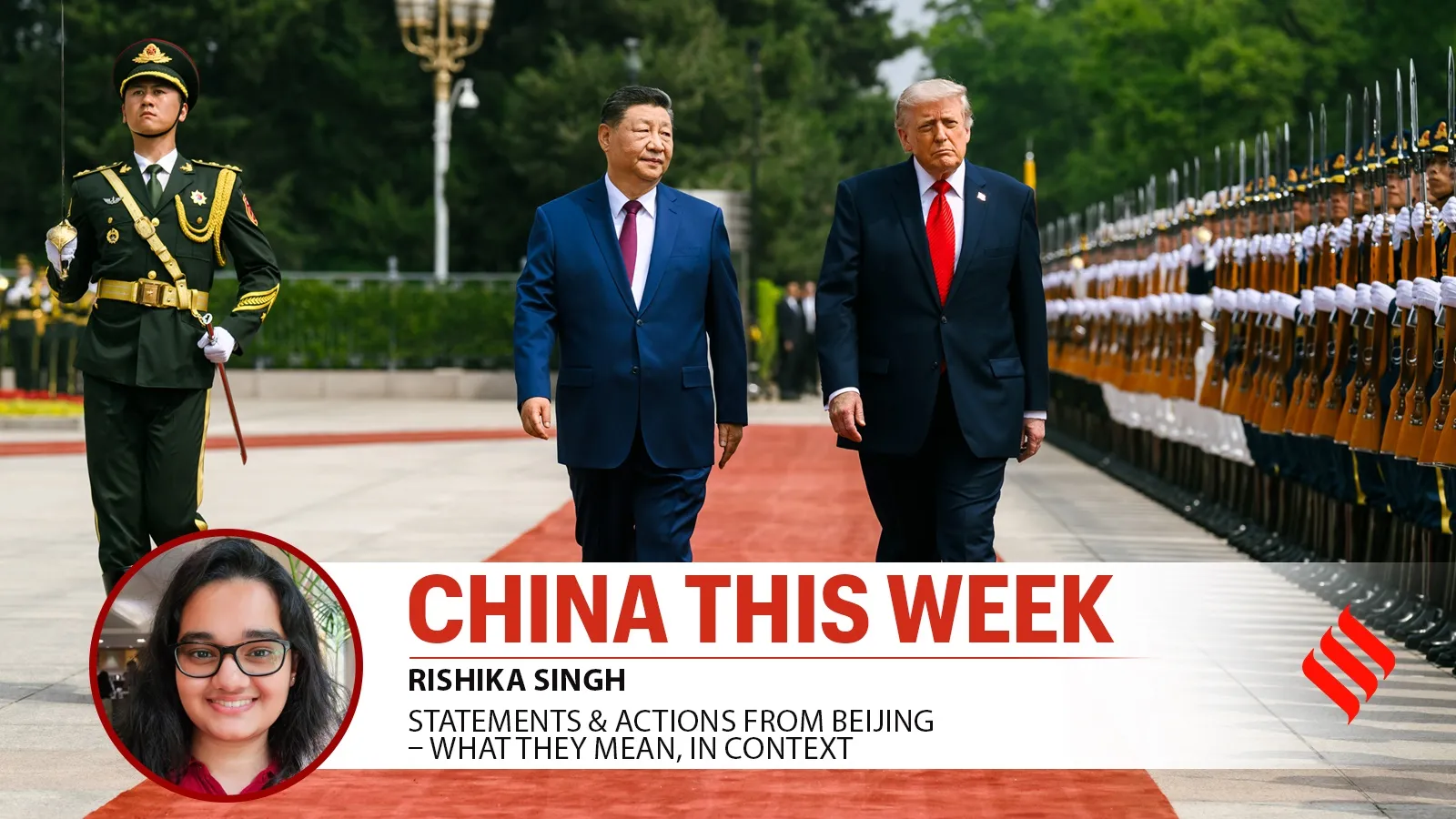
The long-awaited update supersedes a list from early 2025, and comes less than a month after US President Donald Trump met China’s Xi Jinping on a visit to Beijing, where the two leaders maintained a delicate trade war truce.
The list now includes a broad swathe of China’s top technology firms, key to advancing Beijing’s military and industrial prowess, reflecting Washington’s security concerns amid intense geopolitical competition between the countries.
In February, when Trump’s trip to China had been pending, the Pentagon briefly posted an updated list, known as the 1260H or CMC list, but then quickly withdrew it with little explanation.
The new version released on Monday mirrors the withdrawn February list with the exception of the inclusion of China’s top memory chipmakers CXMT and YMTC, two companies that had been removed from the short-lived February index to the ire of Washington’s China hawks.
Other companies added include biotech firm WuXi AppTec, AI-driven robotics company RoboSense Technology and Unitree, a leading Chinese maker of humanoid and quadruped robots. On Jun 1, US AI chipmaker Nvidia said that it plans to work with Unitree to build robots for researchers.
China’s embassy in Washington said that Beijing opposed “making discriminatory lists to go after Chinese companies”, and that its firms observe local laws and regulations.
“The US should stop its wrong practice and create a fair, just and non-discriminatory environment for Chinese companies,” an embassy spokesperson said.
Some companies, including two entities owned by Chinese state-owned oil major China National Offshore Oil Corporation (CNOOC) – CNOOC China and CNOOC International Trading – were removed. However, CNOOC subsidiary China BlueChemical Limited was added, and the department filing noted that CNOOC is directly controlled by China’s government.
SEE ALSO

Companies can at times be taken off, not because the US determines they are not linked to China’s military, but because they no longer operate in the US or because an entity’s name has changed.
Alibaba, Baidu, CXMT, YMTC, Unitree, CNOOC and Nvidia did not immediately respond to requests for comment.
A WuXi AppTec spokesperson told Reuters that the company’s inclusion on the list was “clearly a mistake” and that it would take immediate actions to “correct this erroneous designation”.
The listed firms “qualify for designation as ‘Chinese military companies’”, and operate in the US, the Pentagon said in its filing, which is required at least annually under US law. The companies can petition for removal, it added.
House of Representatives China Select Committee Chair John Moolenaar said that the updated list “is a warning to American businesses, all levels of government, and the American people. These Chinese companies are working with the Chinese military against our national interests”.
The Pentagon also included telecoms equipment maker Baicells, which Reuters reported was under investigation by the FBI and Commerce Department last year. The company did not immediately respond to a request for comment.
US military barred from buying from listed companies
Though the listing does not formally impose sanctions on Chinese firms, under recent US law the Defense Department will be prohibited starting later this month from contracting directly with companies on the list, and from buying their products or services via third parties beginning in 2027.
Those measures could have material costs for the Chinese firms and their partners.
Being added to the list also sends a potentially damaging message to Pentagon suppliers and other US government agencies about the US military’s opinion of the firms, some of which have sued the US over their inclusion.
Craig Singleton, a China expert at the Foundation for Defense of Democracies think tank in Washington, said the publication of the list served as a post Trump-Xi summit reality check on the heightened state of US-China competition.
“Washington is no longer treating these as isolated companies. It is treating the entire technology stack as strategically contested,” Singleton said. REUTERS
Decoding Asia newsletter: your guide to navigating Asia in a new global order. Sign up here to get Decoding Asia newsletter. Delivered to your inbox. Free.