Published on
January 26, 2026

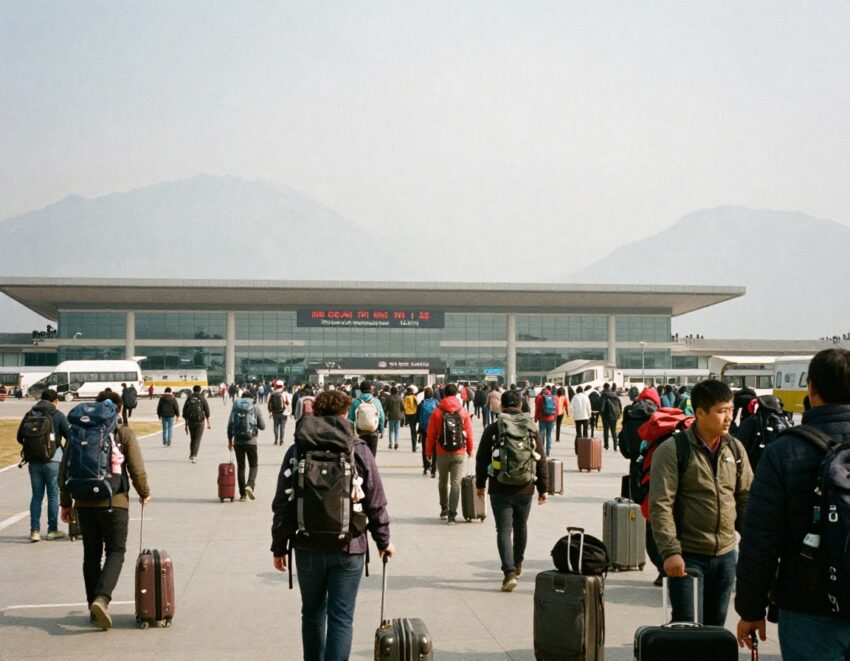
United States, United Kingdom, Australia travelers are returning to Nepal in growing numbers, drawn by the magnetic pull of Mount Everest, sacred heritage sites, and once-in-a-lifetime Himalayan journeys, placing the country firmly back on the global travel radar after a strong post-pandemic recovery. Visitor arrivals from these long-haul markets rebounded sharply through 2025, reflecting renewed confidence in Nepal as a high-value destination for adventure, spirituality, and cultural exploration. Yet behind this resurgence lies a complex reality shaping the traveler experience and the business strategies of global airlines and hotel brands alike. Kathmandu’s Tribhuvan International Airport, the nation’s primary gateway, is operating beyond its intended capacity, affecting flight schedules, passenger flow, and connection reliability at a time when premium travelers expect seamless journeys. International carriers serving North American, British, and Australian travelers continue to see solid demand, while major hospitality groups record rising occupancy across Kathmandu and Pokhara, especially during peak trekking seasons. The contrast is striking: a destination with unmatched natural and cultural assets facing operational constraints that directly influence how travelers arrive, stay, and move within the country. This tension between soaring interest and strained infrastructure now defines Nepal’s tourism moment, shaping decisions for airlines, hotels, and travelers planning their next Himalayan escape.
United States, United Kingdom, Australia Travelers Love Everest—But United Airlines, British Airways, and Hilton Face a Harsh Reality at Kathmandu Airport
Nepal has always occupied a rare place on the global travel map. It is one of the few destinations where spiritual heritage, extreme adventure, and living culture coexist within a compact geography. For travelers from the United States, the United Kingdom, and Australia, Nepal represents something deeply aspirational. It is the land of Mount Everest, the birthplace of Buddha, and the gateway to the Himalayas. Yet despite rising demand from these high-spending markets, Nepal’s tourism potential remains constrained by infrastructure gaps that directly affect airlines and the hospitality industry.
International arrivals recovered strongly in 2025, reaching over 1.15 million visitors and nearly matching pre-pandemic levels. The fastest rebound came from long-haul markets such as the United States, the United Kingdom, Australia, and Western Europe. These travelers are drawn not only by Everest and trekking routes, but also by heritage cities, religious landmarks, wildlife reserves, and immersive cultural experiences. However, the reality on the ground, particularly at Kathmandu’s only international gateway, is challenging airlines, hotels, and tour operators alike.
Advertisement
Advertisement
Advertisement
Advertisement
This is the paradox shaping Nepal’s travel narrative today. Demand is strong. Interest is rising. But capacity, connectivity, and coordination are struggling to keep pace.
United States, United Kingdom, Australia Travelers Love Everest—Why Nepal Still Tops Their Bucket Lists
For American, British, and Australian travelers, Nepal offers experiences that few destinations can rival. Everest Base Camp treks remain among the most searched adventure journeys globally. Lumbini attracts spiritual travelers seeking Buddhist heritage. Chitwan and Bardia appeal to wildlife enthusiasts. Pokhara draws leisure travelers with lakeside luxury and mountain views.
Advertisement
Advertisement
These markets also bring higher per-capita spending. Long-haul travelers typically stay longer, book premium hotels, use licensed guides, and spend more on domestic flights and curated experiences. In 2025, visitors from the United States ranked second among all source markets, while the United Kingdom and Australia remained consistently within the top ten.
Yet these travelers also arrive with high expectations. Smooth airport transfers, predictable flight schedules, reliable hotel standards, and efficient domestic connectivity matter more than ever. When these expectations are not met, satisfaction drops, even when the destination itself is extraordinary.
United States, United Kingdom, Australia Travelers Love Everest—How Airlines Are Feeling the Pressure
Airlines play a central role in Nepal’s tourism ecosystem, and they are among the first to feel the strain of infrastructure limits. Kathmandu’s Tribhuvan International Airport handles nearly all international traffic, despite operating beyond its designed capacity. In 2024 and 2025, passenger volumes exceeded eight million annually, pushing terminals, runways, and air traffic systems to their limits.
For international carriers such as United Airlines, British Airways’ partner airlines, and major transit carriers from the Middle East and Asia, this congestion translates into delays, limited landing slots, and reduced flexibility. Most long-haul travelers from the United States and Australia reach Kathmandu via one-stop connections through hubs in Doha, Dubai, Istanbul, Singapore, or Delhi. While flight demand is strong, schedule reliability remains inconsistent during peak seasons.
Domestic airlines also face challenges. Travelers heading to Lukla, Pokhara, or Bharatpur often experience weather-related delays compounded by airport congestion. For adventure travelers on tight itineraries, missed connections can disrupt entire journeys.
Airlines are eager to expand routes and frequencies. Demand data supports it. But without faster upgrades to airport infrastructure and airspace management, growth remains constrained.
United Airlines, British Airways, and Global Carriers Face Kathmandu’s Capacity Crunch
Kathmandu Airport’s limitations are not just about space. Single-runway operations, limited parking bays, and aging terminal layouts create bottlenecks during peak arrival and departure windows. Long-haul travelers arriving from Europe or North America often land during early morning or late-night hours, when congestion is highest.
This affects airline turnaround times and operational efficiency. It also impacts passenger experience. Long immigration queues, baggage delays, and crowded arrival halls are common complaints among premium travelers. For airlines positioning Nepal as a high-value destination, these challenges complicate brand perception.
New international airports in Bhairahawa and Pokhara are expected to ease pressure, but full-scale international utilization remains limited. Until these airports operate at capacity with regular long-haul and regional flights, Kathmandu will continue to bear the bulk of the load.
Hilton, Marriott, and Nepal’s Hospitality Industry See Rising Demand and Uneven Delivery
The hospitality sector tells a similar story. International hotel brands such as Hilton, Marriott, Radisson, and Hyatt have expanded their presence in Kathmandu and Pokhara in recent years. Occupancy rates improved steadily in 2024 and 2025, particularly during trekking seasons and festival months.
Luxury and upper-midscale hotels benefit most from long-haul travelers, especially those from the United States, the United Kingdom, and Australia. These guests prioritize comfort, safety, and service consistency. They also drive demand for wellness offerings, curated dining, and experiential travel.
However, uneven infrastructure outside major hubs limits the sector’s ability to scale. Power reliability, road access, waste management, and skilled labor shortages affect hotel operations in emerging destinations. While rooms fill up in Kathmandu and Pokhara, secondary cities struggle to attract branded hospitality investment.
For hotel groups, the opportunity is enormous, but so is the risk if supporting infrastructure does not improve.
United States, United Kingdom, Australia Travelers Love Everest—But Domestic Connectivity Shapes Their Experience
Once inside Nepal, domestic travel becomes the defining factor of a visitor’s journey. Flights from Kathmandu to Lukla, Pokhara, and Bharatpur are essential for travelers with limited time. Road journeys, while scenic, can be unpredictable due to terrain and traffic conditions.
Tourists increasingly plan multi-destination itineraries that combine trekking, culture, and leisure. A typical long-haul visitor might arrive in Kathmandu, fly to Lukla for trekking, return to Pokhara for relaxation, and end in Chitwan for wildlife. When domestic flights are delayed or roads are congested, these itineraries collapse.
Airlines and tour operators are responding with buffer days and flexible schedules, but this increases costs. Travelers pay more, stay longer than planned, or miss experiences altogether.
Airline Routes, Transit Hubs, and What Travelers Should Know Before Booking
For travelers planning a trip to Nepal, understanding flight routes is essential. There are no direct commercial flights from the United States, the United Kingdom, or Australia to Kathmandu. Most travelers connect through major hubs.
From the United States, common transit points include Doha, Dubai, Istanbul, and Delhi. From the United Kingdom, Doha, Istanbul, and the Gulf hubs dominate. Australian travelers typically transit through Singapore, Kuala Lumpur, Bangkok, or the Middle East.
Choosing airlines with reliable connections and generous baggage allowances is critical, especially for trekkers carrying gear. Travelers should also allow sufficient layover time, particularly when transferring through busy hubs.
Domestic flights within Nepal operate under strict weather conditions. Morning departures are generally more reliable, especially for mountain airports
United States, United Kingdom, Australia Travelers Love Everest—Hospitality Choices Matter More Than Ever
Hotel selection plays a major role in managing expectations. International brands in Kathmandu and Pokhara offer consistent standards and reliable amenities. Boutique hotels and lodges provide authentic experiences but vary in comfort levels.
For trekking regions, lodges remain basic but functional. Travelers accustomed to luxury should adjust expectations or opt for premium trekking packages that include upgraded accommodations where available.
The hospitality industry is adapting by investing in training, sustainability, and digital services. Online check-ins, concierge apps, and curated experiences are becoming more common in upscale properties.
Travel Tips for Tourists Visiting Nepal in 2026
Timing matters. The best seasons remain spring and autumn. Booking flights and hotels early is essential during peak trekking months. Travel insurance that covers flight delays and altitude-related issues is strongly recommended.
Currency access has improved, but travelers should carry multiple payment options. Credit cards are widely accepted in urban hotels but less so in remote regions.
Respect local customs, especially at religious sites. Dress modestly and follow photography guidelines. Hiring licensed guides supports local communities and enhances safety.
United States, United Kingdom, Australia Travelers Love Everest—Why Infrastructure Is the Missing Link
Nepal’s tourism story is not one of lack of demand. It is a story of unmet capacity. Airlines want to fly more. Hotels want to expand. Travelers want to explore beyond Everest. Infrastructure remains the bottleneck tying them together.
Airports, roads, air traffic systems, and destination services must evolve together. Without coordinated development, growth will remain uneven, and opportunities will be lost.
The Future Outlook for Airlines, Hotels, and Travelers
Despite the challenges, optimism remains strong. New airports, digital tourism services, and growing private-sector investment signal progress. International airlines continue to maintain routes despite operational hurdles. Global hotel brands continue to expand cautiously.
For travelers from the United States, the United Kingdom, and Australia, Nepal remains one of the world’s most rewarding destinations. For airlines and hospitality players, it remains one of the most promising, yet complex, emerging markets.
Nepal has the assets. The world is watching. Turning potential into performance now depends on how fast infrastructure can catch up with imagination.

