Published on
January 22, 2026

United States Joins Hong Kong, Australia, Singapore, India, Thailand, Vietnam, Poland And United Arab Emirates In Rolling Out Game-Changing Airports That Will Electrify Travel, Unlock New Adventures, And Redefine The Way The World Flies. This monumental effort marks a turning point in global aviation. Across continents, these countries are actively reshaping the future of travel. Airports are no longer simple transit points. They are powerful engines designed to boost tourism, commerce, and international connectivity.
Moreover, each airport project is game-changing. From cutting-edge technology to futuristic design, these developments will electrify travel for millions of passengers worldwide. They unlock new adventures, providing seamless connections between cities, countries, and continents. Travelers can expect a redefined experience that blends comfort, efficiency, and sustainability. In addition, these airports serve as cultural gateways, highlighting the unique identity of each nation while supporting global tourism flows.
Furthermore, the projects demonstrate strategic vision. The United States, Hong Kong, Australia, Singapore, India, Thailand, Vietnam, Poland, and the United Arab Emirates are investing billions in infrastructure, technology, and passenger experience. This collaborative approach ensures that the way the world flies will evolve dramatically. Airports will integrate retail, hospitality, and transport, creating urban ecosystems that support local economies and attract international tourists.
Finally, these initiatives redefine the travel landscape. By rolling out these game-changing airports, the countries involved will not only elevate tourism but also stimulate business travel, trade, and regional development. Passengers will enjoy faster, smarter, and more enjoyable journeys. The world of travel is shifting, and these airports are leading the charge. Together, they unlock new adventures and redefine the way the world flies, making global exploration more accessible, efficient, and exhilarating than ever before.
Advertisement
Advertisement
Kingdom of Saudi Arabia: King Salman International Airport, Riyadh
King Salman International Airport, situated in the heart of Riyadh, is set to become one of the world’s most transformative aviation hubs. Spearheaded by the Public Investment Fund (PIF) and King Salman International Airport Company (KSIAC), this sprawling mega-aerotropolis covers approximately 57 square kilometres, blending aviation infrastructure with urban, retail, and residential spaces. Designed as a central component of Saudi Vision 2030, the airport positions Riyadh as a strategic gateway bridging East and West, while also serving as a global logistics hub for cargo, tourism, and business travel.
The airport’s design emphasises biophilic architecture, integrating gardens, natural light, and green spaces within terminals to enhance passenger experience and wellbeing. Sustainability is central, with plans for LEED Platinum certification, renewable energy integration, and eco-friendly transport links. Six parallel runways and 12 square kilometres dedicated to commercial and residential facilities aim to create a self-sufficient urban aviation ecosystem.
Projected to serve 120 million passengers by 2030 and 185 million by 2050, the airport is more than a transport hub—it is an economic and cultural driver. By improving accessibility, it is expected to boost luxury tourism, business travel, and cultural exploration, offering seamless connections to Riyadh’s historical sites, urban centres, and international destinations. The airport will also play a pivotal role in regional tourism circuits, encouraging inbound and outbound travel across the Middle East and beyond.
United Arab Emirates: Al Maktoum International Airport (Dubai World Central)
Al Maktoum International Airport, located in Dubai, is envisaged as the world’s ultimate aviation hub. Managed by Dubai Aviation Engineering Projects (DAEP) and Dubai Airports, the facility spans 70 square kilometres and incorporates five parallel runways designed for simultaneous landings and takeoffs. Its infrastructure includes a West Terminal and four satellite concourses, capable of accommodating over 400 aircraft, positioning Dubai at the forefront of global air travel.
With a staggering projected capacity of 260 million passengers annually and 12 million tonnes of cargo, the airport is engineered to handle global aviation growth over the next 50 years. Expansion phases approved in 2024/2025, valued at $35 billion (AED 128 billion), reflect Dubai’s ambition to remain a global tourism and business epicentre.
DWC is more than an airport; it is a hub for international commerce, regional connectivity, and luxury tourism. Ultra-efficient cargo handling strengthens logistics networks, while passenger-focused design enhances the city’s attractiveness for business travellers and tourists alike. With its integration of world-class facilities, cutting-edge technology, and sustainable planning, Al Maktoum sets a global benchmark for future airport megaprojects.

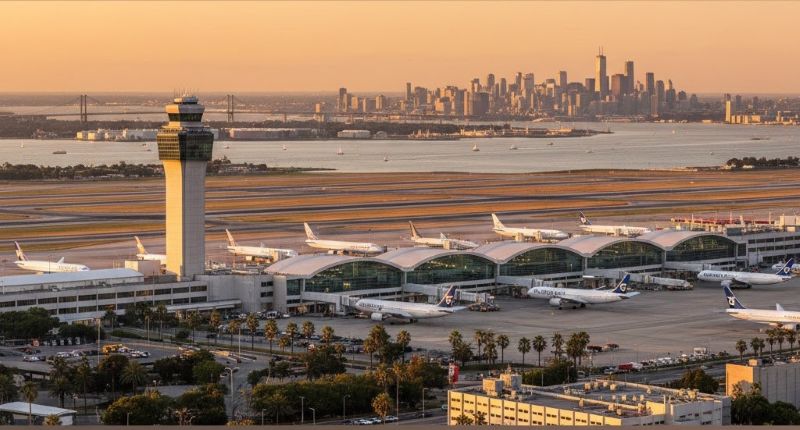
United States: JFK International Airport Redevelopment, New York
The $19 billion redevelopment of JFK International Airport in New York is transforming a historically fragmented terminal layout into a cohesive, world-class gateway. Overseen by the Port Authority of New York and New Jersey (PANYNJ), New Terminal One (NTO) spans 2.4 million square feet, replacing Terminals 1, 2, and 3 at a cost of $9.5 billion. Terminal 6, with a budget of $4.2 billion, connects seamlessly to Terminal 5 and features ten modern gates.
The airport prioritises passenger experience and operational efficiency, incorporating high ceilings, natural light, indoor green spaces, and advanced security systems. Phased openings are scheduled from 2026.
JFK’s redevelopment has significant implications for travel and tourism. It will streamline international arrivals, reduce congestion, and improve connectivity to New York City’s cultural, business, and leisure offerings. Enhanced facilities support luxury tourism, business travel, and global trade, reinforcing New York’s status as a premier international destination.
Singapore: Changi Airport Terminal 5, Changi East
Changi Airport’s Terminal 5, part of the Changi East expansion, represents Singapore’s ambition to maintain its status as a top global aviation hub. Spanning 1,080 hectares—nearly equal to the current airport—it is designed to handle 50 million passengers annually, increasing total airport capacity to approximately 135 million.
The terminal integrates modular, resilient design to withstand future crises, incorporating contactless processing, advanced ventilation, and systems to segregate high-risk passengers. A dedicated ground transportation centre connects rail and bus networks, ensuring smooth urban mobility. Environmental sustainability is central, with Green Mark Platinum Super Low Energy certification.
Terminal 5 is expected to significantly enhance tourism by providing world-class passenger experience, boosting Singapore’s global reputation for efficiency, safety, and connectivity, while stimulating economic activity in hospitality, trade, and business travel sectors.
India: Noida International Airport, Jewar, Uttar Pradesh
Noida International Airport is India’s first net-zero emissions greenfield airport, located in the Delhi-NCR region. Developed by Noida International Airport Limited (NIAL) and Yamuna International Airport Pvt Ltd (YIAPL), it is conceived as a multi-modal hub with integrated rail, road, and aviation networks.
Phase 1 will serve 12 million passengers annually, expanding to over 70 million by 2050. Advanced technologies, including biometric DigiYatra systems, will streamline passenger processing. Architecturally, the terminal fuses Indian cultural motifs with Swiss engineering precision, creating a functional yet visually striking space.
The airport alleviates pressure on Indira Gandhi International Airport, promotes regional tourism in Uttar Pradesh, and supports the growth of the Delhi-NCR region. It is expected to catalyse business travel, cultural tourism, and international connectivity, making India a more accessible destination for global travellers.
Poland: Centralny Port Komunikacyjny (CPK)
Centralny Port Komunikacyjny, strategically located between Warsaw and Łódź, is designed as a central European air-rail hub. Managed by CPK Sp. z o.o. and designed by Foster + Partners, the airport’s woven roof reflects both architectural elegance and functional connectivity.
The initial phase will accommodate 40 million passengers, with expansion to 65 million by 2032. Integration with Poland’s high-speed rail network enables seamless transfers between air and rail, improving access to major cities and regional tourism hotspots.
CPK will stimulate domestic and international travel, enhance business logistics, and foster economic development in Central and Eastern Europe, positioning Poland as a central gateway for travellers throughout the continent.

Vietnam: Long Thanh International Airport, Ho Chi Minh City Region
Long Thanh International Airport, managed by Airports Corporation of Vietnam (ACV), replaces Tan Son Nhat as Southern Vietnam’s primary international gateway. With a projected total capacity of 100 million passengers and 5 million tonnes of cargo, the airport will dramatically increase Vietnam’s aviation capabilities.
Phase 1, featuring one runway and terminal, accommodates 25 million passengers and incorporates AI-driven operations and biometric check-in systems. Commercial operations are scheduled for mid-2026.
The airport is a strategic driver for regional tourism, attracting international airlines, boosting business travel, and positioning Ho Chi Minh City as a Southeast Asian aviation hub. It is expected to accelerate economic growth, leisure travel, and investment in Vietnam’s tourism sector.
Australia: Western Sydney International (Nancy-Bird Walton) Airport
Western Sydney International is a curfew-free, 24/7 airport designed to serve the Western Parkland City and alleviate congestion at Sydney Airport. Managed by WSA Co under the Australian Government, it will initially handle 10 million passengers, scaling to 82 million by the 2060s.
The airport incorporates natural light, intuitive design, and landscape integration reflecting Australian identity and heritage. Its emphasis on freight and logistics supports domestic and international trade.
Tourism benefits include increased access to Sydney and regional destinations, while business travellers and cargo operators gain from expanded operational capacity. The airport will act as a catalyst for regional economic growth and travel infrastructure development.
China (Hong Kong): Hong Kong International Airport Three-Runway System
Hong Kong International Airport’s three-runway system, commissioned in November 2024, expands capacity to 120 million passengers and 10 million tonnes of cargo. Managed by the Airport Authority Hong Kong (AAHK), the project reclaimed 650 hectares for a third runway, a new concourse, and an upgraded automated people mover system.
The integrated “Airport City” concept connects aviation with regional commerce and the Hong Kong-Zhuhai-Macao Bridge, reinforcing Hong Kong’s role as a global travel, logistics, and tourism hub.
Thailand: Suvarnabhumi Airport Expansion, Bangkok
Suvarnabhumi Airport in Bangkok is undergoing significant expansion, including a South Terminal, East Expansion, and a fourth runway. Annual capacity is projected to reach 150 million passengers by 2033. The South Terminal adds 70 million passengers, while East Expansion contributes 15 million.
These upgrades reduce congestion, enhance ASEAN connectivity, and improve access for both luxury and mass tourism. The expansion is expected to stimulate regional economic growth, strengthen Bangkok’s international tourism appeal, and cement Thailand’s position as a leading aviation hub in Southeast Asia.
Global Airport Expansion & Development: 2026 Comparative Research
| Country | Airport Project | Estimated Investment (USD) | Planned Annual Capacity | Primary Status (As of 2026) |
| Saudi Arabia | King Salman Intl (Riyadh) | $100 Billion+ | 120M (2030) / 185M (2050) | Early construction / Master plan 2024-2030 |
| UAE | Al Maktoum Intl (Dubai) | $35 Billion | 260 Million (Ultimate) | Phase 2 approved; 400 gates planned |
| Poland | CPK (Central Transport Hub) | $27 Billion (£21.5B) | 40M (Phase 1) / 65M+ | Terminal construction tender (2025/26) |
| USA | JFK International (New York) | $19 Billion | ~100 Million (Total Complex) | First new gates (T1 & T6) opening 2026 |
| Vietnam | Long Thanh Intl (HCMC) | $18.7 Billion | 100 Million (Ultimate) | Phase 1 operations start mid-2026 |
| Hong Kong | HKIA Three-Runway System | $18.2 Billion | 120 Million | Fully operational (Commissioned Nov 2024) |
| Thailand | Suvarnabhumi (Bangkok) | $7.5 Billion* | 150 Million (2033 target) | 3rd runway open; East/South expansion active |
| Australia | Western Sydney (Nancy-Bird) | $5.3 Billion | 10M (Initial) / 82M (2063) | Construction 95%+; Operational late 2026 |
| Singapore | Changi Terminal 5 | $4.75 Billion* | 50 Million (T5 alone) | Groundbreaking held 2025; Mid-2030s opening |
| India | Noida International (Jewar) | $3.5 Billion | 12M (Phase 1) / 70M+ | Commercial flight launch April 2025 |
Global aviation is undergoing a trillion-dollar transformation, led by the Middle East and Asia-Pacific. Projects like Saudi Arabia’s King Salman International and Dubai’s Al Maktoum are redefining scale, aiming for capacities exceeding 185–260 million passengers. Simultaneously, nations like Vietnam, India, and Poland are launching strategic greenfield hubs to decentralize traffic and boost regional logistics. In the West, the $19 billion JFK redevelopment signals a shift toward modernizing legacy gateways. These “Aerotropolis” projects prioritize net-zero emissions, AI-driven biometrics, and seamless rail integration to shape the future of high-speed global travel.

In conclusion, the world of aviation is entering a new era, and airport megaprojects are at its heart. Across ten countries, from Saudi Arabia to Thailand, these airports are transforming travel, tourism, and global connectivity. Each project demonstrates ambitious planning, cutting-edge architecture, and technological innovation. For example, King Salman International Airport in Riyadh and Al Maktoum International in Dubai show how scale and sustainability can shape the future of aviation. Similarly, JFK in New York and Changi Terminal 5 in Singapore redefine passenger experience with efficiency and comfort.
Moreover, airports like Noida International in India and Centralny Port Komunikacyjny in Poland integrate urban transport, boosting regional and international tourism. Long Thanh in Vietnam and Western Sydney International in Australia highlight how new hubs can drive economic growth and leisure travel. Hong Kong’s three-runway system and Bangkok’s Suvarnabhumi expansion reinforce the importance of connectivity in Southeast Asia.
These megaprojects do not merely expand infrastructure; they actively enhance tourism, business travel, and global trade. By combining design, technology, and sustainability, they offer seamless experiences for passengers and foster economic development. Ultimately, the era of airport megaprojects is reshaping travel, tourism, and international connectivity, setting new benchmarks for the future of global aviation.