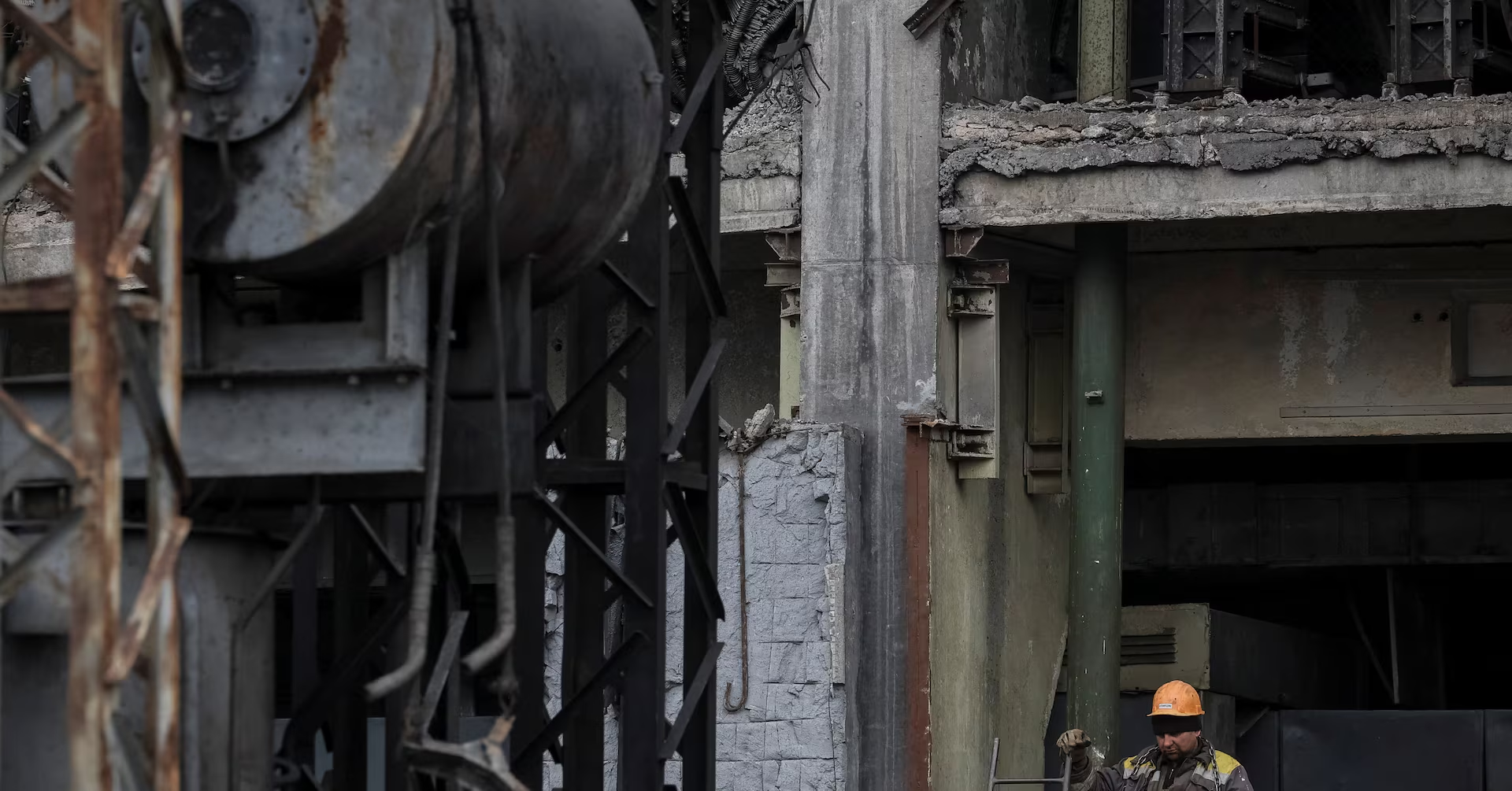
Item 1 of 5 Employees work at a thermal power plant damaged by a recent Russian missile strike, amid Russia’s attack on Ukraine, in an undisclosed location of Ukraine, November 13, 2025. REUTERS/Gleb Garanich
Nov 14 (Reuters) – Standing near the mangled exterior of his thermal power plant, the 53-year-old production manager described the now familiar job of a Ukrainian energy worker: swiftly patching up the workplace during another season of intense Russian air strikes.
“We could have done without this experience in a civilian profession, but we’ve been forced to gain it,” said Oleksandr, authorized to provide only his first name.
Sign up here.
Inside the cavernous facility, twisted metal jutted out into the exposed sky as the scent of charred equipment hung in the air, after a Russian drone and missile attack employees described as the biggest yet.
Media were shown the plant on condition they not disclose its location or discuss specific damage for security reasons.
Facilities like this have been battered repeatedly in Russia’s perennial campaign to wipe out Ukraine’s energy infrastructure and weaken its will to fight on in the war.
SPRAWLING FACILITIES UNDER HEAVY ATTACK
The increased frequency and accuracy of strikes have led some to predict a particularly difficult winter as the war approaches its four-year anniversary and outnumbered Ukrainian troops struggle to hold back Russian forces on the battlefield.
The crackle of welding echoed as employees emptied buckets of rubble. Outside the facility, one worker carried a gnarled piece of a Russian drone.
The strain is written across the smudged faces of plant employees, who still manage to trade laughs on cigarette breaks. Volodymyr, a 53-year-old shift manager, said his team has learned how to stick together, occasionally resorting to dark humour.
PLANT WORKERS FIGHT TO MAINTAIN MORALE
Evacuation plans are closely followed – except for workers on Volodymyr’s team who are tasked with keeping systems running during attacks.
“I think my guys are superheroes because they stayed together, united, did their jobs and supported one another,” he said, recalling the most recent attack. As he spoke, a black-and-white cat – also a survivor of multiple strikes – crept across a stack of sandbags behind him.
“She has her own evacuation route, as you can see,” he added with a smile.
Among the biggest challenges, said Oleksandr, was preventing the facility’s vast maze of giant pipes from freezing.
“With each time,” he said, “we do this work faster, rebuild (and) develop methods to survive.”
Reporting by Dan Peleschuk; Editing by Mike Collett-White and Peter Graff
Our Standards: The Thomson Reuters Trust Principles.

