British Prime Minister Keir Starmer has refused to resign in the face of local election losses for his Labour Party in what is being seen as a ‘midterm’ litmus test for his government. With the Reform Party gaining in English council election results and Labour losing several seats as trends trickled in on Friday (May 8), Starmer is under severe pressure.
UK latest election results: Labour’s heavy losses
Thursday’s elections were the first major polls since Labour’s 2024 general election landslide victory. Dozens of English council results are showing a clear pattern of Labour losses, bringing it down by hundreds of seats. Labour is on course to lose control of multiple local authorities, having lost majorities in Southampton, Wandsworth and Tameside.

Besides heavy drops in traditional strongholds, Labour is projected to lose between 1,500 and 1,900 seats in various elections.
Local elections and Scottish Parliament and Welsh Senedd contests have also been bad for Labour. It could potentially lose the popular vote in Wales for the first time in decades.
Trending Stories
-
&im=FitAndFill=(700,400))
Who will get Ted Turner’s fortune?
-
)
Russia-Ukraine War: Will Zelensky Cross Putin’s Red Line?
-
)
Iran launches missile, drone attacks against UAE after ‘striking’ three US Navy destroyers in Hormuz
-
&im=FitAndFill=(700,400))
Will Vijay become Tamil Nadu Chief Minister? Permutations and combinations as resort politics starts
-
)
South Korean actor Lee Jae Wook, best known for Alchemy of Souls and Extraordinary You to begin military service; agency confirms date
-
)
Not the first time? Before Chandranath Rath, three other Suvendu Adhikari aides died under mysterious circumstances | All details here
-
)
Russia-Ukraine War: Ukraine Unleashes Massive 347-Drone Blitz Near Moscow
-
)
Officials searching for Nancy Guthrie stumble upon human bones. They turn out to be very, very old
-
)
Riteish Deshmukh reveals actors did not charge a penny for Raja Shivaji: ‘Everyone has worked for free’
-
)
Tamil Nadu political crisis: TVK threatens mass resignation as governor blocks Thalapathy Vijay from forming government
-
)
TCS sexual abuse and ‘conversion’ case: Key accused Nida Khan arrested from a flat in Maharashtra
-
&im=FitAndFill=(700,400))
‘Draft Limits’: Why the USS Abraham Lincoln cannot enter most ports
-
)
Bought an iPhone for AI Siri? Apple may repay you up to $95: Check how to claim refund
-
)
Trump dismisses Iranian attack on three US warships in Strait of Hormuz as ‘a trifle,’ insists ceasefire still in place
-
)
‘Let them impose President’s Rule’: Mamata Banerjee refuses to resign again even as post-poll violence engulfs West Bengal
-
)
‘TMC chor’: Mahua Moitra alleges harassment onboard IndiGo flight, blames ‘BJP culture’
-
&im=FitAndFill=(700,400))
‘Max Trap’: Why the USS Abraham Lincoln forces pilots to dump expensive fuel
-
)
Ameesha Patel safely reaches Mumbai after flight diversion amid Middle East tensions
-
)
How can Vijay become Tamil Nadu CM despite TVK not getting majority? 4 options EXPLAINED
-
)
India releases documentary film on Operation Sindoor | WATCH
-
)
Maharashtra’s biggest arms bust: Nearly 5,000 weapons seized in Nanded
-
)
Trump’s ‘Project Freedom’ gets boost as Saudi Arabia, Kuwait lift curbs in Strait of Hormuz: Report
-
)
200+ American targets in the Gulf hit by Iran, much more than acknowledged by the US, claims report
-
)
‘Verify, think before sharing,’ says Giorgia Meloni after her AI-made image in lingerie goes viral
-
)
Trump calls Iran conflict an ‘incursion’, compares its duration with Vietnam, Korea, Iraq and World Wars
-
)
Shocking ticket scandal behind moving IPL 2026 final from Bengaluru: BCCI Secretary
-
&im=FitAndFill=(700,400))
Why defense analysts believe China’s Chengdu J-20 stealth fighter program has entered a dangerous new era
-
&im=FitAndFill=(700,400))
New Friday OTT Releases (May 8, 2026): Lukkhe, Dacoit, Unconditional- Watch 6 movies and TV shows on Netflix, Prime Video, JioHotstar and more
-
&im=FitAndFill=(700,400))
‘Brass Screws’: How the USS Abraham Lincoln pushes 100,000 tons
-
)
Satellite images show mysterious movement at Iranian site near Natanz nuclear facility: Report
-
&im=FitAndFill=(700,400))
Why China is investing billions into the Chengdu J-20 stealth fighter jet program
-
&im=FitAndFill=(700,400))
‘Bigger than two US states’: The secret reason Ted Turner bought 2 million acres
-
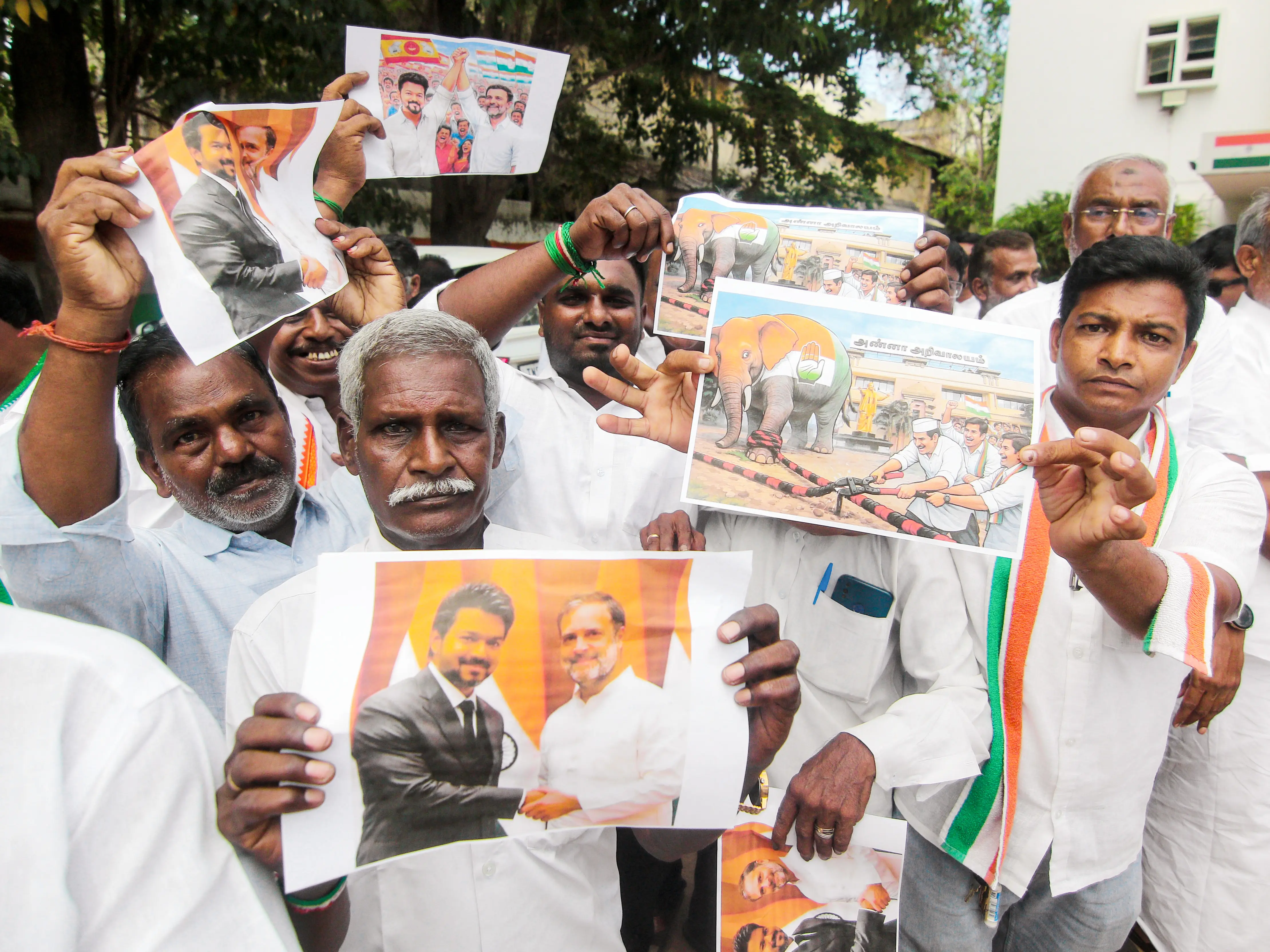)
Congress calls for statewide protest as Vijay’s TVK scrambles for the ‘final five’ to form government in Tamil Nadu
-
)
Avatar director James Cameron hit with lawsuit over alleged unauthorized use of actress’s features
Starmer holds firm amid bad local election results
There is internal Labour unease amid Reform UK’s surge, which has put Starmer’s leadership under question. He could face further troubles in the coming months.
Starmer called the results tough, but refused to leave. Speaking in Ealing, west London, Starmer said: “The results are tough, they are very tough, and there’s no sugarcoating it. We have lost brilliant Labour representatives across the country… And that hurts, and it should hurt, and I take responsibility.” But he insisted he will carry on, saying such days “don’t weaken my resolve to deliver the change that I promised.”
Rise of Reform UK as Labour loses even in strongholds
Meanwhile, Nigel Farage’s Reform UK is enjoying a surge, winning up to 300 seats in early count projections. This includes strong showings in so-called ‘Red Wall’ areas like Hartlepool, where they won most seats. Reform UK took control of at least one council and made breakthroughs in working-class northern and eastern areas too.
Reform appears to have capitalised on discontent over taxes, immigration, winter fuel payments, and the cost of living.
Conservatives, the other traditional major party, also lost seats but held some ground in places.
Liberal Democrats and Greens had modest to solid gains in certain areas.
Polls are dire for Labour, but Starmer feels he will survive
Recent opinion polls, including an early May YouGov survey, favoured Reform at 25 per cent, against Labour at 18 per cent. Starmer’s net favourability was deeply negative at -45, with his government also recording poor ratings.
Some Labour MPs and figures like Ed Miliband are allegedly suggesting a departure timeline for Starmer. No obvious successor is ready to unify the party, with some fearing that such a leadership challenge would cause more damage to the party.
Starmer still has time, but for how long?
Starmer said he will continue to lead, saying: “I had a five-year mandate to deliver change. I intend to get on with what I was elected to do, which is deliver that change.”
But he has a tough road ahead unless he turns things around quickly for the Labour government and addresses voter concerns.
Starmer’s confidence is probably coming from the fact that British general elections aren’t due until 2029, unless of course, he resigns.
Some Labour leaders had survived bad local elections, like Tony Blair did in 1999.
Labour allies have been firmly behind Starmer, who said he wouldn’t accept any ‘timetables’ for resignation. Some of his cabinet ministers warned against a leadership challenge, citing possible chaos.
Removing a PM requires a serious internal revolt or no-confidence mechanisms that aren’t on the immediate horizon. But if Labour’s poor performance continues, along with more election losses and economic woes, Starmer’s position could become untenable later this year or in 2027.