KYIV, Ukraine — Ukrainian President Volodymyr Zelenskyy said Thursday that his country would work with the United States “on the provisions of the plan” to end the nearly four-year war with Russia.
“We are ready for constructive, honest, and efficient work,” Zelenskyy wrote on social media.
His statement came after details of a proposal aimed at ending the war in Ukraine emerged earlier this week — with a person familiar with the matter telling The Associated Press that the plan calls for major concessions from Kyiv, including granting some demands the Kremlin has made repeatedly since its full-scale invasion of its neighbor in 2022.
It was not clear what, if any, concessions the proposal asks of Russia. The same person confirmed that promises from Moscow of no further attacks are part of the framework.
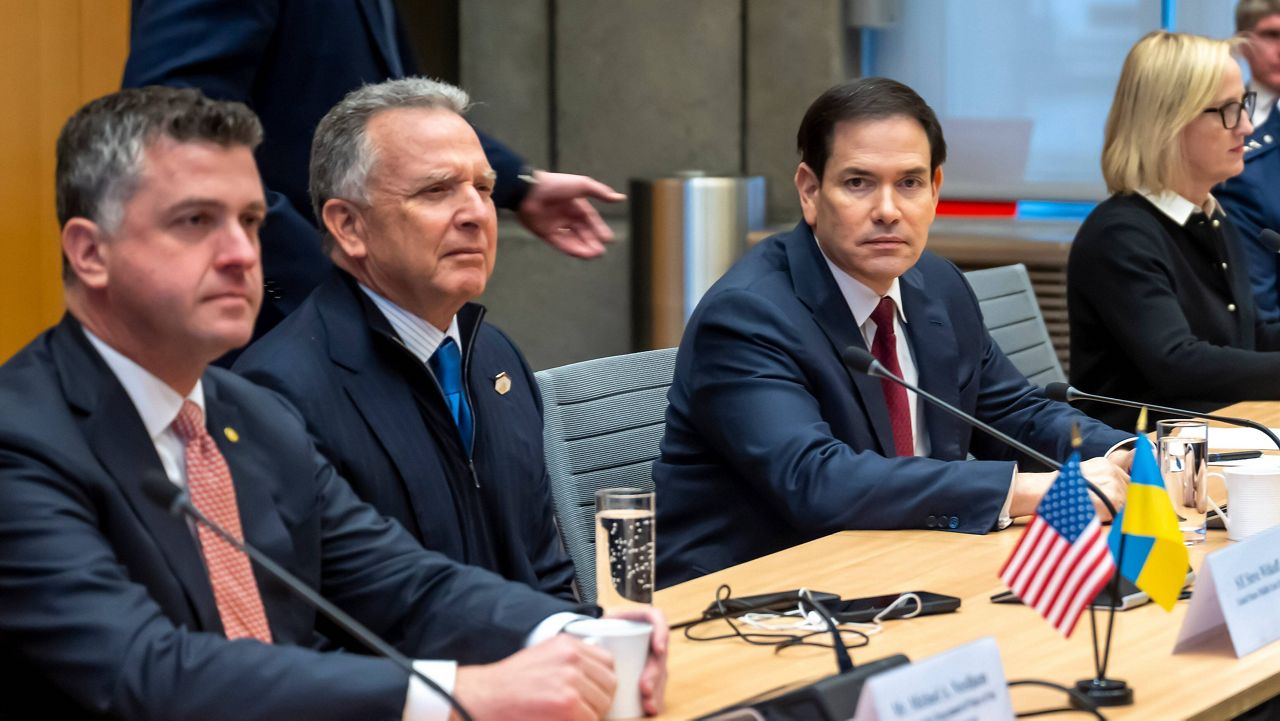
On Friday, White House press secretary Karoline Leavitt confirmed that U.S. special envoy Steve Witkoff and Secretary of State Marco Rubio have been “quietly” working to negotiate an agreement for the past month.
“They’ve been engaging with both sides, Russia and Ukraine equally, to understand what these countries would commit to in order to see a lasting and durable peace,” Leavitt told reporters.
The press secretary said that President Donald Trump supported the plan and declined to provide details about the framework.
“We believe that it should be acceptable to both sides, and we’re working very hard to get it done,” Leavitt said.
When asked about Russia’s involvement in the drafting of the proposal, the press secretary noted recent talks between U.S. and Ukrainian officials, including Zelenskyy’s meeting with Army Secretary Dan Driscoll Thursday in Kyiv.
U.S. officials said Driscoll’s visit along with several other high-ranking Army officials was intended to give a new push to peace efforts and to assess the reality on the ground in Ukraine.
The talk of a potential peace plan piled more pressure on Zelenskyy, who is marshaling his country’s defenses against Russia’s bigger army, visiting European leaders to ensure they continue their support for Ukraine and navigating a major corruption scandal that has caused public outrage.
Zelenskyy’s office said that he expected to talk to Trump in the coming days about diplomatic opportunities and what was needed for peace in a statement, which also underlined Ukraine’s main conditions for peace.
As reports of the plan emerged, blindsided European diplomats insisted they and Ukraine must be consulted.
European leaders have already been alarmed this year by indications that Trump’s administration might be sidelining them and Zelenskyy in its push to stop the fighting. Trump’s at-times conciliatory approach to Russian President Vladimir Putin has fueled those concerns, but Trump adopted a tougher line last month when he announced heavy sanctions on Russia’s vital oil sector that come into force Friday.
“For any plan to work, it needs Ukrainians and Europeans on board,” EU foreign policy chief Kaja Kallas said at the start of a meeting in Brussels of the 27-nation bloc’s foreign ministers. She added: “We haven’t heard of any concessions on the Russian side.”
German Foreign Minister Johannes Wadephul said he talked by phone Thursday with Witkoff and Turkish Foreign Minister Hakan Fidan to discuss “our various current efforts to end Russia’s war of aggression against Ukraine and thus finally put an end to the immeasurable human suffering.”
The conversations “also focused on specific ideas that are currently being discussed,” Wadephul said in a statement. He did not elaborate.
Plan would give Russia control of the Donbas
It was not clear whether the foreign ministers had seen the peace plan, which was first reported by Axios. The proposal was drawn up by U.S. and Russian envoys, and was said to include forcing Ukraine to cede territory, a prospect Zelenskyy has ruled out.
The Trump administration’s diplomatic efforts this year to stop the fighting have so far come to nothing.
The proposal, which could still be changed, calls in part for Ukraine to cede territory to Russia and to abandon certain weaponry, according to the person who had been briefed on the contours of the plan but was not authorized to comment publicly. It would also include the rollback of some critical U.S. military assistance.
Russia, as part of the proposal, would be given effective control of the entire eastern Donbas region, Ukraine’s industrial heartland made up of the Donetsk and neighboring Luhansk regions, even though Ukraine still holds part of it. Putin has listed the capture of the Donbas as the key goal of the invasion.
Witkoff and Kirill Dmitriev, a close adviser to Putin, have been key to drafting the proposal, according to the person familiar with the matter.
A peace deal that requires Kyiv to hand over territory to Russia would not only be deeply unpopular with Ukrainians, it also would be illegal under Ukraine’s constitution. Zelenskyy has repeatedly ruled out such a possibility.
U.S. Secretary of State Marco Rubio said on social platform X late Wednesday that American officials “are and will continue to develop a list of potential ideas” for a lasting peace agreement which “will require both sides to agree to difficult but necessary concessions.”
Kremlin spokesman Dmitry Peskov said Thursday that there “there are no consultations per se currently underway” with the U.S. on ending the war in Ukraine. “There are certainly contacts, but processes that could be called consultations are not underway,” he told reporters.
EU accuses Russia of insincerity
Though the European diplomats appeared caught by surprise, reported elements of the plan were not new. Trump said last month that the Donbas region should be “cut up,” leaving most of it in Russian hands.
EU diplomats have accused Putin of being insincere in saying he wants peace but refusing to compromise in negotiations while sustaining Russia’s grinding war of attrition in Ukraine.
Kallas, the EU’s chief diplomat, chided Putin’s forces for continuing to target civilian infrastructure in Ukraine, a day after a strike on the western city of Ternopil killed 26 people and wounded 93 others. About two dozen people were still missing.
Kallas said that “if Russia really wanted peace, it could have … agreed to (an) unconditional ceasefire already some time ago.”
Trump has stopped sending military aid directly to Ukraine, with European countries taking up the slack by buying weaponry for Ukraine from the United States. That has given Europe leverage in talks on ending the conflict.