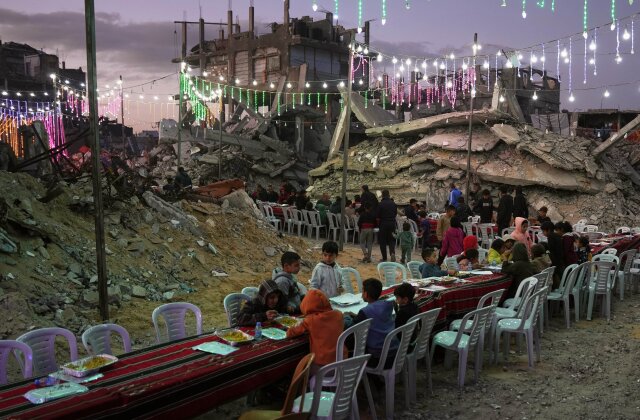
BEIJING — President Donald Trump’s looming meeting with China’s Xi Jinping will face new tensions after U.S.-Israeli strikes on Iran that killed its China-friendly supreme leader.
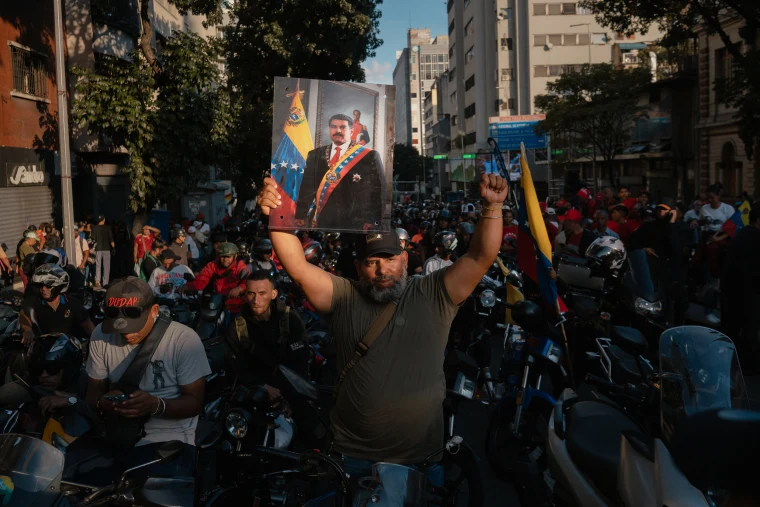
It’s the second time in two months that the United States has taken military action against one of China’s key economic partners, after its surprise capture in January of Venezuelan President Nicolás Maduro.
But China has largely limited its response to stern statements, much as it did after the raid in Caracas despite warm relations with Venezuela.

China is “proving to be a feckless friend for its authoritarian allies,” Nicholas Burns, the U.S. ambassador to China under President Joe Biden, said on X.
Experts say that while China is concerned about the Iran conflict, it may not see it as worth jeopardizing Trump’s upcoming visit, which the White House says is scheduled to begin March 31. Both Trump and Xi are seeking to extend a fragile trade truce between the world’s two biggest economies.
Beijing has not yet confirmed the dates of the trip, which could come as the U.S. is still enmeshed in an Iran operation that Trump has said may last “four to five weeks” or longer.
“I haven’t heard any plan to delay or derail that visit,” Wang Huiyao, founder and president of the Center for China and Globalization, a nongovernmental think tank in Beijing, told NBC News in an interview Wednesday.
If anything, he said, the Iran conflict gives even greater urgency to a meeting between China, the Middle East’s largest trading partner, and the U.S., the region’s largest security partner.
Though China has long opposed Tehran’s pursuit of nuclear weapons, it has served as a lifeline for heavily sanctioned Iran, a “comprehensive strategic partner” with which it signed a 25-year cooperation agreement in 2021. China has since brokered a deal restoring diplomatic relations between Iran and Saudi Arabia.

About 80% of Iran’s crude oil exports go to China, the world’s largest energy importer, helping to keep Tehran’s economy afloat. But China is far from dependent on Tehran, with Iranian oil accounting for only about 13% of China’s total oil imports.
The China-Iran relationship is mainly “practical” in nature, said Peiyu Yang, an assistant professor of Arabic studies at George Mason University in Virginia who studies China’s historical and cultural connections with the Middle East.

“It’s not based on ideological standard or viewpoint,” she said. “It’s more based on economic interest.”
China — which confirmed the death of one of its citizens in Tehran and has evacuated 3,000 others from Iran — has criticized the U.S.-Israeli strikes as a violation of Iran’s sovereignty and international law. Foreign Minister Wang Yi said the killing of Iran’s Supreme Leader Ayatollah Ali Khamenei and the “incitement of regime change” were “unacceptable.”
But so far, China hasn’t offered Iran much beyond rhetoric, underscoring its lack of readiness to challenge U.S. military action around the world.

“These countries are not delusional. They know that China cannot be relied on as a security partner,” said Ahmed Aboudouh, an associate fellow in the Middle East and North Africa program at the Chatham House research institute in London. “They see it as a development partner, economic partner, trade, a technological partner, but not military.”
Beijing has also been critical of Iran’s response to the strikes, which has “direct implications for China’s strategic interests,” Aboudouh said.
In a call Monday with Iranian Foreign Minister Abbas Araghchi, Wang urged Iran to “take into account the legitimate concerns of neighboring countries.”
China has major investments in energy-rich Gulf nations such as Saudi Arabia and the United Arab Emirates, where Iran’s retaliatory strikes have hit civilian targets.
While its Iranian oil imports are easily replaced, China gets about half of its oil from the Middle East as a whole. Iran’s shutdown of the Strait of Hormuz, a narrow shipping route that carries about one-fifth of the world’s oil output, “could be a major shock to China’s oil supply,” Yang said.
China could stand to gain, however, if the U.S. gets bogged down in a prolonged conflict in the Middle East. That could “relieve some of the strategic pressure” from Washington over China’s military build-up in the Asia-Pacific, said William Yang, the International Crisis Group’s senior analyst for Northeast Asia.

A distracted U.S. could leave an opening for a Chinese invasion of Taiwan, the self-ruling island democracy that Beijing claims as its territory. The U.S. is Taiwan’s main arms supplier and international backer, but it has long maintained a policy of strategic ambiguity about whether it would defend the island from a Chinese attack.
A prolonged conflict could also deplete stockpiles of U.S. munitions that serve as a deterrent against Chinese military action, said Yang, who is based in Taipei, Taiwan’s capital.
The war in Iran could also bolster China’s efforts to present itself as an alternative to American global leadership.
The Global South is losing trust in the Trump administration because its actions in Venezuela and Iran show that “coercion is on the table, and it can be used anytime,” Aboudouh said.
For now, experts said, China is taking a wait-and-see approach and will adapt as the situation in Iran evolves.
Although a pro-American regime in Iran could present some challenges, Yang from Crisis Group said, “Beijing will be able to build a pragmatic new relationship with whoever comes into power in Tehran in the end.”
Janis Mackey Frayer reported from Beijing and Jennifer Jett from Hong Kong.