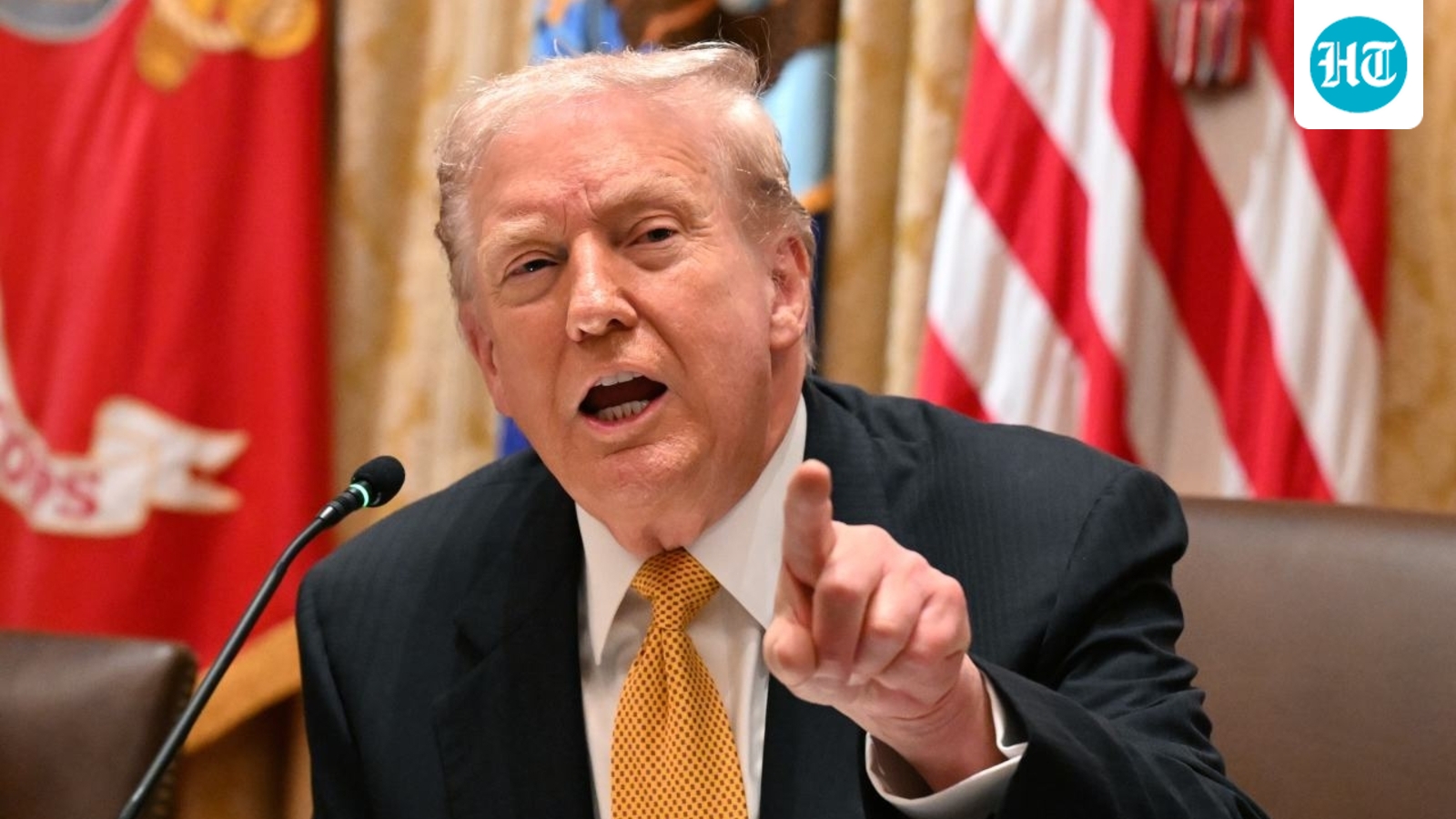
President Trump did the impossible last week. He horrified the neo-isolationist “restrainers” who hoped that his second term would see the U.S. turning away from foreign quarrels to focus on “America first.” And Mr. Trump simultaneously left what remains of the old globalist American foreign policy establishment wringing its hands in despair and chagrin.
While pushing for regime change in Venezuela and launching into nation-building in Gaza, the indefatigable American president got into promoting humanitarian intervention in Africa by repeating his threat to use force against what many in the Trump administration are now calling a genocide of Christians in Nigeria. Would John Bolton have been more ambitious? Did Samantha Power bring more energy to humanitarian interventions overseas?
Not that America’s remaining neoconservatives and liberal internationalists are applauding the president’s global focus. The axis of “fact checkers” was quick to debunk Mr. Trump’s genocide charge, pointing out, accurately, that Nigeria’s ever-deepening crises of instability and poor governance affect Muslims, too. Reducing the witches’ brew of tribal conflict, social disintegration, jihadist insurgency and religious violence afflicting that country to a charge of Christian genocide misses the complexity and scale of the horror.
All fair enough, but in one respect at least Mr. Trump is streets ahead of the NGO drones and aid hustlers who dominate conventional Africa policy conversations. Despite the endless happy talk from the Africa lobby, more African states are moving away from democracy than toward it. The green-energy transition isn’t Africa’s great hope. Africa’s states, by and large, aren’t becoming more competent, more well-established and more secure. Nor is Africa in general or any African state in particular emerging as an important global actor. And the Western NGO complex has no idea how to fix any of these problems.
Brushing aside the feel-good fantasies, Mr. Trump is at least pointing in the general direction of some facts. Competition between Christianity and Islam across the continent is globally important. Religious demography is an inexact science, but some of the least bad and most widely used estimates place the number of Christians in sub-Saharan Africa at roughly 8.5 million in 1910, rising to more than 697 million in 2020. While some of that reflects the natural increase of the African population, the most important African social movement in modern times has been the explosive growth of Christianity across the continent.
Islam also has grown, but more slowly. While Christianity has seen its share of the sub-Saharan population rise from 9.1% in 1910 to 62% in 2020, only 33% of sub-Saharan Africans were Muslims in 2020.
With both faiths industriously seeking converts, competition and outside engagement is inevitable. Global networks of Muslims support Islamic preachers and schools; Christians outside Africa, especially but not only in the U.S., support Christian missionary and educational work. African Christians often (though not always) are instinctively pro-America and pro-Israel. African Muslims often have different views. When they migrate to Europe or North America, African Christians and African Muslims often bring different expectations to their new homes, and their paths toward integration often move in different directions.
While the religious remaking of sub-Saharan Africa is the most important cultural phenomenon in the region, the most important geopolitical story there is, as I’ve written in these pages, recolonization. With most African states unable to manage without outside support, and a declining Europe no longer willing or able to play its traditional role, actors such as China, Russia, Turkey and the United Arab Emirates are filling the gap.
As always with Mr. Trump, it is difficult to separate the signal from the noise, but his approach to Africa policy seems to involve two perceptions. First, the U.S. can’t be indifferent to the new scramble for power in a continent as mineral- and energy-rich as Africa. Second, vocally supporting African Christianity may help the president achieve his goals overseas while shoring up his political support at home.
Abroad, Mr. Trump hopes that he can rally many sub-Saharan African Christians to America’s side by supporting them against both jihadist violence and exploitative recolonization by countries like China. At home, he hopes that the natural sympathy of many American Christians for their African fellow believers can provide political backing for a more engaged Africa policy than most America firsters would instinctively support. As a bonus, support for beleaguered foreign Christians can blunt some of the attacks from the groyper right against his support for Israel.
Mr. Trump is almost certainly nowhere near dispatching Marines to Nigeria. But foreign policy and Africa will likely play a larger role in his second term than many of his supporters and critics thought possible last year.

