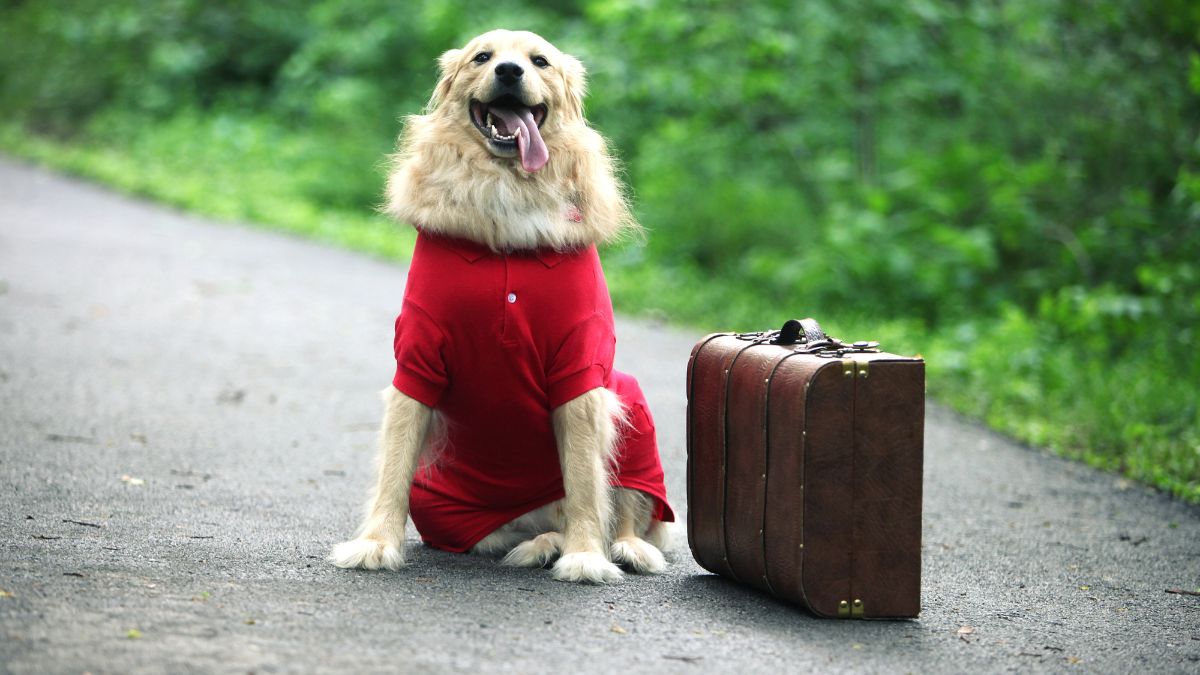
Traditionally, Filipinos treated dogs as guard animals.
These four-legged animals were adopted to protect homes by deterring burglars from going in.
But times have changed.
The era of the stay-at-home guard dog is fading, replaced by a culture where pets are considered as essential members of the family.
Today, the thought of enjoying a sunset in Sagada or riding the waves in Boracay while a loyal companion sits lonely in a kennel is, for many, simply out of the question.
So how can you take your beloved dog or cat with you on your upcoming vacation?
Read on for important guidelines on taking your furry friend on your dream trip.
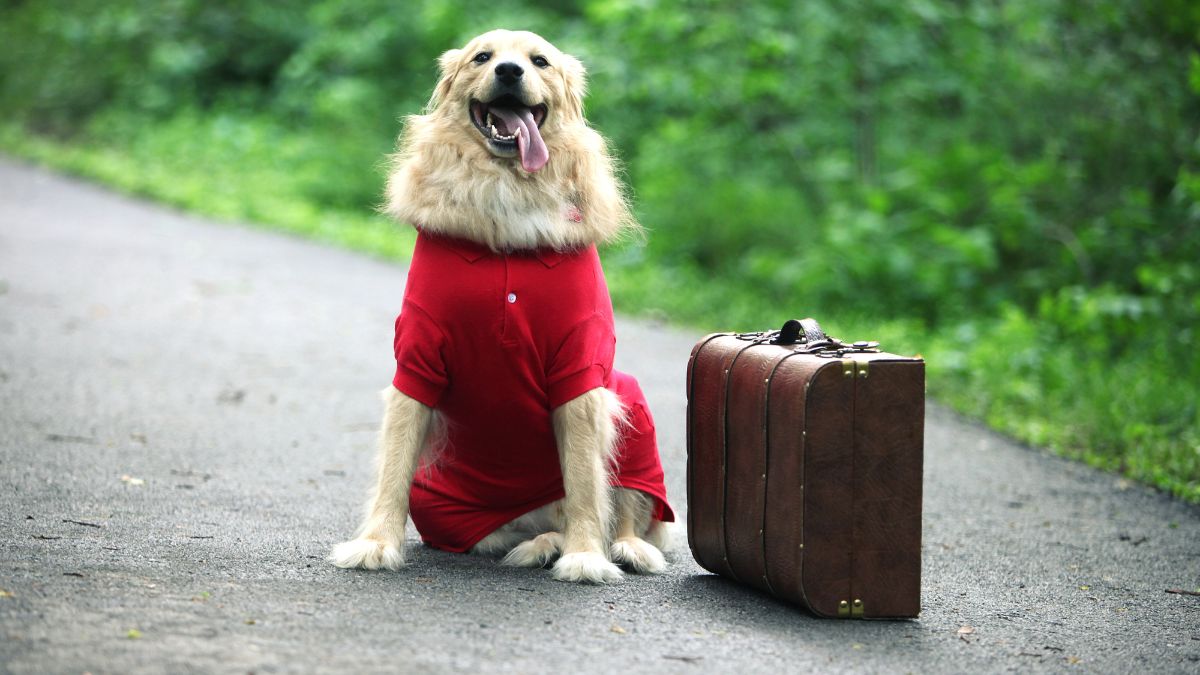
CHECK YOUR DESTINATION
The first thing you need to know is if your preferred destination will allow pets.
It shouldn’t be too hard to find pet-friendly destinations because many tourist spots have already considered this a major concern for some of their guests.
If you’re staying overnight, check with the accommodation if they permit checking in with your companion animal.
Ask about additional fees and requirements so you can be prepared.
You also have to remember to be respectful to the accommodation, by making sure it’s clean and orderly during your whole stay.
Bring a lot of cleaning supplies like tissues and baby wipes, and, if possible, make your pet wear a diaper to prevent accidental spills.
CONSIDER YOUR COMMUTE
Next, you have to plan how to get there with your fur baby.
If you don’t have a car and must commute, do know that it’s not as easy as just showing up to the terminal and boarding right away.
CONTINUE READING BELOW ↓
That’s because transport companies are still allowed to refuse service since the comfort of other passengers is paramount.
“They can refuse any passenger under any circumstance, di ba?” says Jana Sevilla, Sevilla, senior campaigner for PETA Asia in the Philippines, in an interview with PEP.ph (Philippine Entertainment Portal).
“Kung ang sabihin ni bus company, hindi puwede kasi, for example, meron ka palang kasabay sa bus na hikain… Puwede talagang mag-raise ng concern din yung ibang passengers.”
This is why pre-travel preparation is necessary.
The first thing that you can do is to make sure that all your pet’s documents are updated.
These may be the following:
- Pet registration and vaccination records
These must be updated. You can get them from your local veterinary office.
You may get this online using the website of the Bureau of Animal Industry (BAI) by submitting the latest vaccination records, a veterinary health certificate, and a clear photo of your pet Quarantine permit
You may also apply for this through the BAI website.
Take note that your chosen form of commute may not require all or any of these documents, but it is still wise to have them on hand.
BUS TRAVEL
Traveling by bus? Call the bus company early to ask if they allow traveling with your animal companion.
If they say yes, get the full requirements then book the tickets early.
You should also clarify how your pet will be boarded.
Will they be allowed to sit with you inside the bus? Do you need to buy a separate ticket?
If the bus company tells you that your pet will be placed inside the cargo or the baggage compartment, Sevilla advises saying no.
“Puwede silang mahirapan magkaroon ng breathing problems while in cargo, kasi hindi naman, hindi naman controlled yung air pressure sa cargo. Hindi controlled temperature sa cargo. Iyan ang dini-discourage talaga,” she explains.
TRAVEL BY FERRY
What if you want to cross the sea with your pet? That’s easy.
Just find a ferry that allows you to board with your loved one. But don’t expect them to stay beside you during the trip.
Starlite Ferries, for example, will place your caged pet in a designated area, along with other pets.
Aside from a cage, Starlite also requires a permit to travel certificate from the Bureau of Quarantine and a certificate of travel from a licensed veterinarian.
You also have to pay a 500-peso fee for small dogs and cats and a 700-peso fee for large pets.
TRAVEL BY PLANE
The requirements for boarding an airplane with your pet depends on whether you are traveling within the country or overseas.
For trips within the Philippines, air travel companies like Cebu Pacific require the following:
- A quarantine permit from BAI The latest veterinary health certificate
- An updated vaccination certificate that the dog be at least three months old
For overseas trips, you may need additional documents from the country that you want to visit.
The United States, for example, has specific regulations from the US Department of Agriculture and the Centers for Disease Control and Prevention.
Contact the embassy of your destination country to know the specific regulations, before you even plan your trip.
Do note that pets are usually placed in the cargo area, unless they are officially registered as service or emotional support animals.
Prepare a safe and sturdy pet carrier so your dog or cat is comfortable during the flight. It is also wise to check if your pet’s breed is safe to travel by air.
Snub-nosed cats and dogs, for instance, are prone to breathing problems so they are not allowed to fly.
KEEPING YOUR PET COMFORTABLE
Through all this, the safety and comfort of your beloved furry friend should be your main priority.
Sevilla suggests that you feed and walk your dog at least two hours before the trip.
“Kunwari, pakainin mo siya mga two hours before ng biyahe, yung last meal niya.
“And then after an hour, ilakad, padumihin bago isakay doon sa public transport para pag nasa loob na ng public transport, nakainom na, nakadumi na. Hopefully, natunaw na yung kinain, hindi na rin magsusuka,” she says.
She also recommends placing a hanging water bottle inside the cage to ensure your pet stays hydrated.
You can also put their favorite blanket and toy to reduce their stress.
If you want, you can also cover the cage with a blanket to avoid sensory overload.
In the end, you have to really consider if you want to travel with your animal companion. Dogs and cats love familiarity, so bringing them to new places may not be what’s best for them.
“I want to say na transport your pet or your companion animals only when it is needed. Kasi yung transportation talaga, it’s not something that all animals or all dogs and cats enjoy, especially cats,” claims Sevilla.
Cats may get anxious during travel, because they don’t like being in confined spaces, like carriers or cages.
“Wala pa yata akong nakitang pusa na talagang nakita kong mukhang masayang-masaya na nagpaasyal. Parang lahat sila takot.
“Even na nasa loob ng stroller na merong mesh, pag tingnan mo sila, hindi naman sila mukhang masaya. Mukha namang takot na takot.”
She adds with a laugh: “Ang masaya lang yung owner kasi nagapasyal nila, picture-picture ganyan. Pero I swear, wala akong nakitang cat na masaya habang pinapasyal.
“It’s also about honoring our companion animals.
“If they are not the type who enjoys in going out leisurely, mga ganyan, wag na lang. Sa bahay na lang where they feel safe and when they are actually safe,” Sevilla says with finality.
For more information about animal travel, you may contact PETA at 0999-888-PETA (7382).
PETA Asia also accepts in-kind donations and cash donations via GCash and Lazada. Please contact Ashley at 0918-669-0829.