
Long before WiFi icons appeared on seatback screens, Airfone promised passengers something amazing: the ability to make a phone call at 35,000 feet.
Emerging in the late 1980s, Airfone was developed by GTE (General Telephone & Electronics) Corporation, under its division GTE Airfone.
At a time when mobile phones were bulky, expensive and often prohibited onboard aircraft, the idea of built-in in-flight phones felt genuinely futuristic.
How Airfone technology worked
Unlike today’s satellite-based in-flight connectivity, Airfone relied on a network of ground-based cellular towers pointed skyward.
Aircraft were equipped with external antennas and onboard switching systems that connected seatback handsets to the terrestrial telephone network. Calls were routed from the aircraft to the nearest ground station, then passed into the wider phone system.
From a technical point of view, Airfone was a pretty remarkable achievement. Maintaining call quality at high speed and altitude, while managing handovers between ground stations, pushed the limits of analogue and early digital communications.
Coverage was largely limited to landmasses, but within those constraints, the system worked rather well.
Airfone in the golden age of business travel
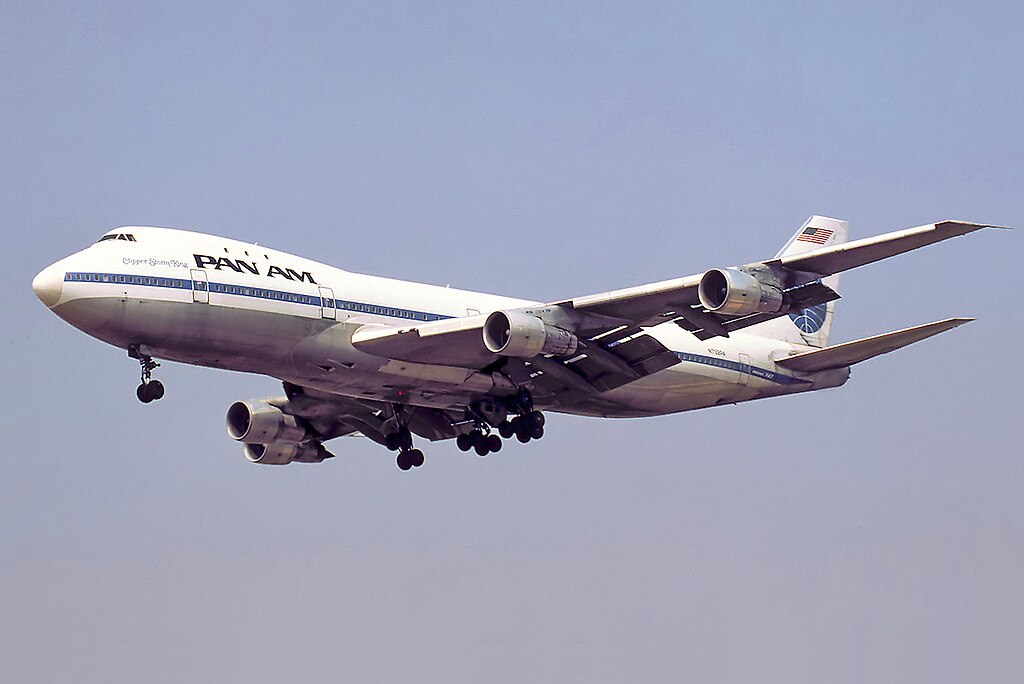
By the early 1990s, Airfone-equipped aircraft were a common sight across many of the major carriers, especially in the US. Seatbacks featured handsets with coiled cords and small screens displaying the Airfone logo.
Airlines promoted the service as a premium amenity, which particularly appealed to business travellers.
The pricing reflected its exclusivity. Calls were billed by the minute, often at rates far higher than normal ground-based calls. This meant Airfone was rarely used just for a chat. Instead, it was mainly for urgent business calls, last-minute changes, or reassuring family members during long-haul flights.
Passenger experience and growing limitations
Despite its promise, the Airfone experience was far from perfect. Dropped calls, background cabin noise and unreliable audio quality were common problems.
Limited coverage over water meant calls over the sea weren’t really possible. The same problems occurred at very high altitudes.
At the same time, passenger attitudes began to shift. While early adopters were impressed, others found inflight phone calls intrusive. Concerns about noise, privacy and cabin comfort increasingly influenced airline decisions about onboard services.
Why did Airfone disappear from aircraft cabins?
The seeds of Airfone’s decline were sown as personal mobile phones became smaller, cheaper and more widespread in the late 1990s.
Satellite communication systems promised global coverage without reliance on ground towers, while passenger demand began to move away from voice calls toward data services.
The technology behind the Airfone was updated in 1992 after a collaboration between two companies that would develop hardware and software separately. The system was named GenStar and was more reliable than the previous system as the rate of dropped calls was reduced. Bigger screens and jacks were also added for fax capabilities.
However, it rapidly became too little, too late. Email, messaging and eventually internet access offered quieter and more flexible ways to stay connected. Airlines also saw opportunities to reduce weight and maintenance costs by removing seatback handsets.
In the very early 2000s, following the 9/11 attacks, Airfone use did see something of a resurgence. But by 2005 it had dropped sharply again, and in 2006 the service was officially shut down.

The legacy of the in-flight telephone
Although Airfone seems like an outdated concept now, it still occupies an important place in aviation history.
It proved that passengers valued in-flight connectivity and were willing to pay for it, paving the way for modern satellite WiFi and onboard communications systems.
The rise and fall of the in-flight telephone is a reminder that in aerospace, innovation succeeds not just on technology, but on timing, economics and passenger experience.
Featured image: Mike Kuniavsky | Wikimedia Commons
