Analysis by David Goldman, CNN

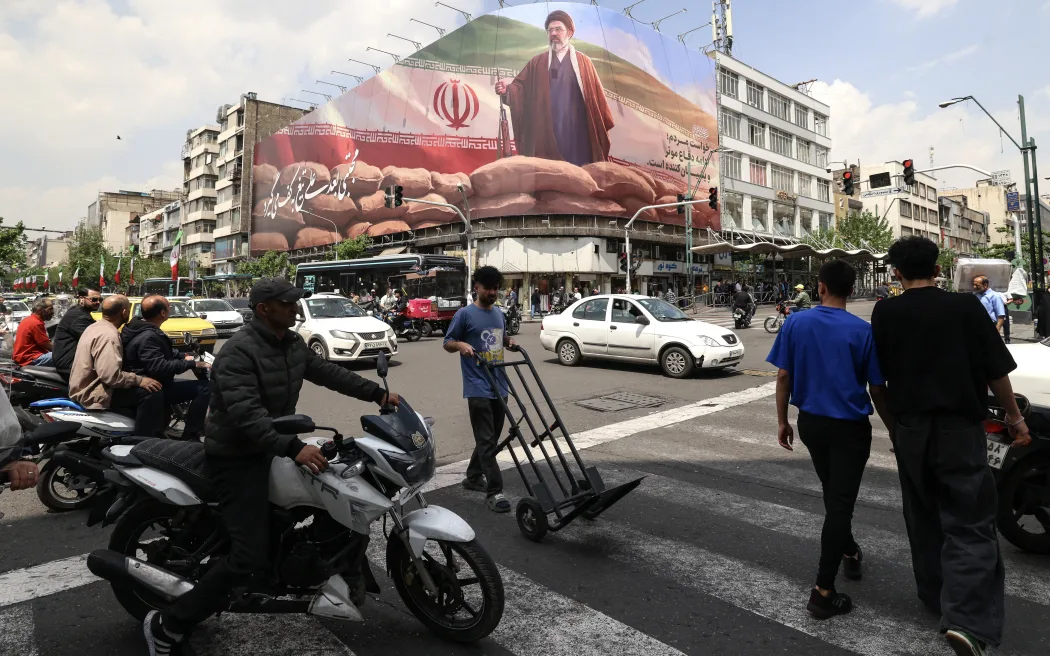
Commuters drive past a large billboard depicting Iran’s Supreme Leader Ayatollah Mojtaba Khamenei on a street in Tehran on April 20, 2026.
Photo: ATTA KENARE / AFP
The longer the Iran war lasts and the more damaging its economic fallout, the better off the global economy may be in the long run.
It’s a hard-to-square possibility, especially with the war’s large number of human casualties. War is ugly, cruel and deeply painful, and the economic harms of this one have hurt billions of people around the globe – many of them in devastating ways.
Nevertheless, the world could undergo some fundamental and necessary changes as a result of the war’s destruction. It is almost certain to harden and diversify its energy supply chain as a result, preventing a single 23-mile-wide waterway from becoming a chokepoint for the global economy and allowing Iran to shut off the global oil market. And the harder the economy falls, the greater the incentive to make those necessary changes.
OPEC may also be smaller or dismantled, potentially reducing oil and gas prices. The energy supply chain could be heartier, with pipelines that bypass the Strait of Hormuz altogether. And the world could accelerate its shift to renewable energy sources, reducing the world’s reliance on fossil fuels.
It’s not at all clear what kind of deal – if any – can be reached to end the war. Iran may not be weakened as much as the United States or Israel hope. It may continue to fund terrorism and threaten the lives and livelihoods of its enemies.
However, economists and military experts agree that some long-term good could come from the deeply unpopular war.
Hardening our energy supply chain

Vessels anchored in the Strait of Hormuz off Bandar Abbas in southern Iran.
Photo: Amirhossein KHORGOOEI / ISNA / AFP
The war exposed significant structural flaws in the global energy supply chain – a complex, interwoven system that balances redundancy and efficiency. The fact that Iran could so easily cut off the world’s access to a fifth of global oil with some mines, makeshift drones and speed boats will require some serious reckoning – and permanent changes.
The likeliest outcome is that the Middle East will build oil and gas pipelines that route through Saudi Arabia and the United Arab Emirates to bypass the strait altogether.
“Countries aren’t stupid: they’re going to develop pipelines and massively increase capacity,” said Jay Hatfield of Infrastructure Capital Advisors. “No one will bet their whole future again on the Strait of Hormuz. That’s an enormous positive.”
That would mean energy supplies could be more secure – and cheaper – in the long run. The world has been paying for high insurance costs built into transit through contentious waters.
“That might not have happened without this war,” said Ross Mayfield, an investment strategist at Baird. “Oftentimes it takes shocks or unexpected exogenous events to reinforce that things need to change.”
We’ve seen these shifts several times this decade alone. After the pandemic, the world’s manufacturing supply chains broke and then were significantly strengthened . Russia’s war with Ukraine changed the way Europe got its natural gas. President Donald Trump’s tariffs resulted in massive shifts in raw materials sourcing.
Resilience in the energy supply chain couldn’t come at a better time: The world’s demand for energy has become insatiable. Tech companies are building power-hungry AI data centers at breakneck speed.
If the world weans itself off Middle Eastern energy, the United States could be well-positioned to help: Natural gas remains the largest power source for electricity production, and America is swimming in it, with increased export capabilities.
“This could very well turn out to be a good thing – despite the temporary economic dislocation – if on the other side of this, freedom of navigation is restored, oil, natural gas and distillates are free flowing and the cartel collapse,” said Joe Brusuelas, chief US economist at RSM. “Those are things you tend to only see 10-20 years later; in the fog of war, it tends to get blurred.”
Change is already happening
Some economic changes are already solidifying.
OPEC – America’s chief fossil fuels competitor – has started to fray. The United Arab Emirates, the second-largest oil-producing member of OPEC, said it would leave the cartel, weakening OPEC’s ability to set the production quotas that keep prices high.

ADNOC Gas, a subsidiary of the Abu Dhabi National Oil Company, facility in Abu Dhabi in March 2026.
Photo: AFP / Ryan Lim
“Diversifying production away from OPEC and toward more reliable suppliers – particularly the United States – should improve global energy security and help stabilize prices over time,” said Rob Thummel, senior portfolio manager ant Tortoise Capital.
The switch to solar is also well under way for many parts of the world because of the oil price shock. Chinese exports of solar technology, batteries and electric vehicles all reached record highs in March, according to energy think tank Ember.
“To have an economy that’s less reliant on one or two types of energy would be a real positive,” said Mayfield.
Not all change is positive
Those optimistic outcomes aren’t a sure bet. The new Iranian regime in place could be even more radicalized and hellbent on harming the United States, Israel and their allies.
“We killed all their leaders,” said Hatfield. “I don’t think they’re our BFF.”
During the war, Iran created a blueprint for global economic leverage, and if the Strait of Hormuz becomes less crucial, Iran and its proxies could threaten other channels and pipelines in the future, noted Heather Long, chief economist at Navy Federal Credit Union.
OPEC’s dismantling may sound like a good thing. But OPEC was producing more oil in recent months, and getting rid of the cartel reduces the likelihood that the world could act in concert during a future global energy crisis.
Changes that come from the Iran war reckoning may be kinder to some than others.
For example, a switch to renewables, particularly in Asia and Europe, could come at the expense of Texas’ Permian Basin, which for decades put the United States in an enviable position because of the shale and fracking revolution. If demand for oil falls in the long -run, oil prices could sink below their pre-war levels, damaging the industry.
“So much of this depends on what’s permanent and what’s temporary,” said Brusuelas.
-CNN