Within four days, Newcastle United’s season has collapsed into obscurity.
Before facing Barcelona on Wednesday, Eddie Howe’s side could dream of a historic Champions League quarter-final, then turn their attentions to securing a first Premier League derby victory in almost 15 years.
Instead, they head into a three-week break following an embarrassing 7-2 loss at Camp Nou, and with little to no hope of qualifying for next season’s Champions League after another dreadful derby defeat.
Both second-half performances were equally lamentable, albeit for very different reasons, and raise serious questions about the club’s direction of travel.
Here, The Athletic identifies eight key issues Newcastle must address.
Sort out the striker situation
Performances — and some results — had been encouraging before those devastating back-to-back defeats, but striker selection has been damning.
Neither of Newcastle’s summer striker signings, recruited for a combined £119million ($159m), has started up front since the 3-2 defeat against Brentford on February 7. Nick Woltemade has not begun a game as the lone centre-forward since January’s 1-1 draw at Paris Saint-Germain in the league phase of the Champions League, and Yoane Wissa has been named in just one of the past 15 starting XIs. Since that loss against Brentford, his previous club, Wissa has played a combined 60 minutes off the bench.
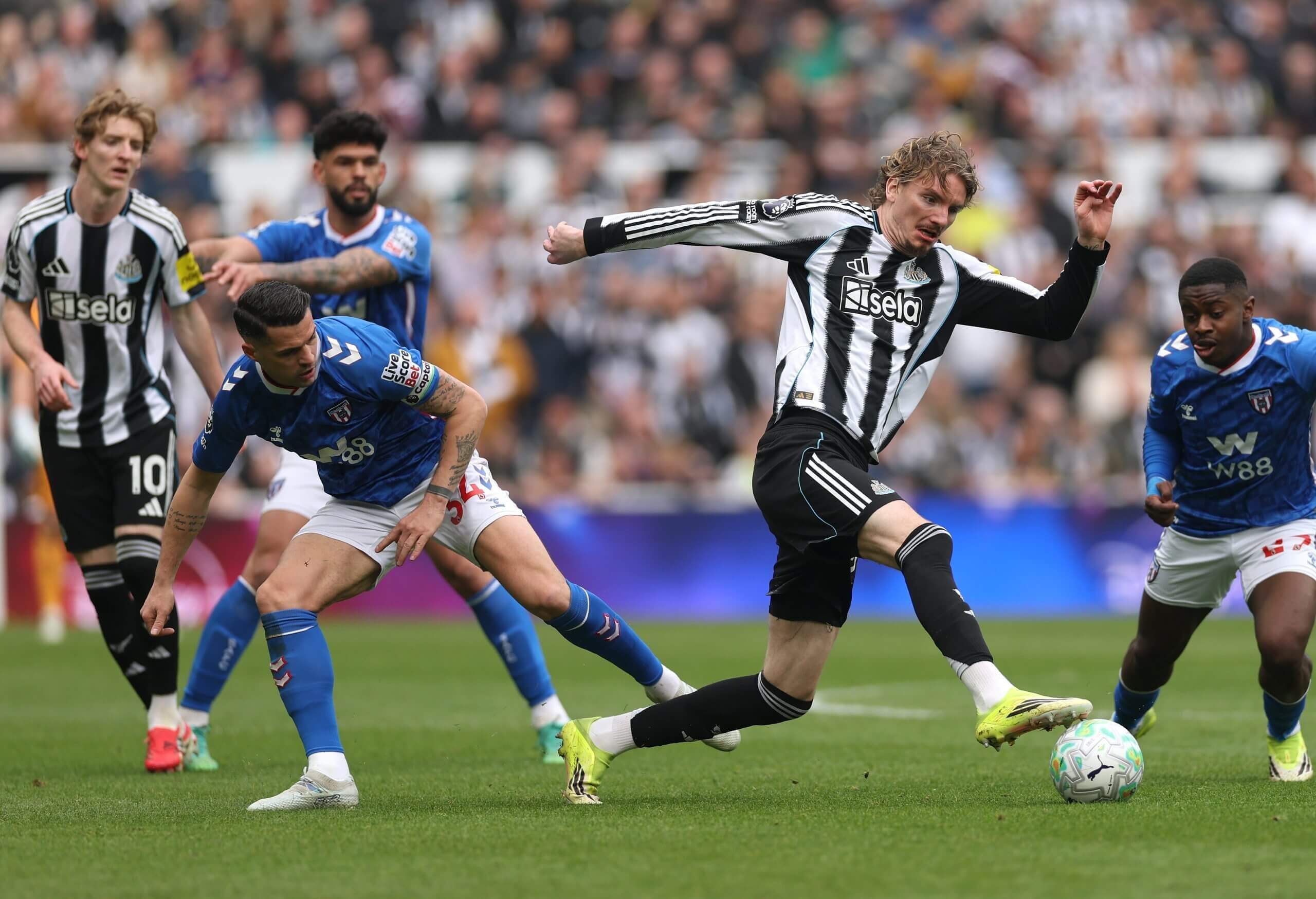
Nick Woltemade on the ball against Sunderland (Stu Forster/Getty Images)
Anthony Gordon has 17 goals this season and has scored in each of the past three Premier League appearances, but during the second half against Sunderland, he missed some decent opportunities. The long-time winger is not yet an out-and-out striker and has clear limitations when being deployed through the middle.
Will Osula was almost sold on deadline day last summer and remains as erratic as when he joined the club in August 2024, but the 22-year-old is deemed better positioned to lead the line for Newcastle than Woltemade (stylistic issues) and Wissa (form and fitness).
Signing another striker, arguably two of them, remains the priority for this summer. Add Alexander Isak to this side, and Howe’s team would probably be in the European positions. His sale to Liverpool on deadline day in September has been catastrophic for Newcastle.
Evolve the goalkeeper department
At both ends of the pitch, Newcastle have been found wanting.
Is it any wonder that they are labouring when, in arguably the two most important positions — striker and goalkeeper — they are fielding players due to the deficiencies of those who should be the first choice, rather than because they warrant selection due to their own quality?
For most of this season, Nick Pope was the out-and-out No 1. He is, in Howe’s opinion, the best goalkeeper in the squad.
But a series of errors, first in November before his groin injury, then in February, meant Pope was dropped in favour of Aaron Ramsdale. The Southampton loanee has performed OK, but his save percentage is just 61.8 per cent, the second-lowest in the Premier League for any goalkeeper who has played more than 600 minutes this season.
Missing out on James Trafford last summer, when he instead rejoined previous club Manchester City from Burnley, was damaging.
The goalkeeper department requires a complete refresh. Newcastle need one who provides surety and actually makes saves.
Determine a clear recruitment plan early and stick to it — for incomings and outgoings
Recruitment is the issue fans keep pointing towards. Despite a £241million outlay last summer, Newcastle ended that window with a weaker starting XI than when they began it.
In Howe’s view, their inability to recruit a single first-XI player across the five preceding windows was even more damaging. “To not recruit for that many windows, I don’t know a team that wouldn’t suffer from that,” Howe told reporters after the Sunderland defeat.
Regardless of how and why Newcastle got themselves into this position, they must adopt a clear recruitment strategy for the coming summer — and, critically, they must then stick to it.
In 2025, until almost the end of the window, the board were adamant that Isak was not for sale. Eventually, they relented and sold the striker for a British-record transfer fee, but only after their inaction had seriously harmed Newcastle’s own recruitment plans.
Sandro Tonali, Bruno Guimaraes, Tino Livramento and Gordon are now being heavily linked with post-season exits. It seems likely one or two of those will be sold and the money reinvested.
Newcastle need to get better at trading players outwards. They must identify who they will entertain offers for, communicate those decisions with those individuals, get their exits sorted early and sign replacements, then ensure they stand strong and do not allow others who may also be in demand to go.

Anthony Gordon after Sunday’s loss to Sunderland (Andy Buchanan/AFP via Getty Images)
Arguably, this is Newcastle’s most important summer window since the 2021 takeover.
There will be a significant squad overhaul, and the blueprint for how that will look needs to be determined early and then carried out to the letter.
Be brutal, not sentimental, during squad overhaul
Newcastle have to be brutal this summer. There can be no room for emotion, even when considering the futures of those players who have lifted the club from relegation fodder to Carabao Cup winners and into the Champions League’s knockout phase.
Kieran Trippier and Fabian Schar, for example, have been tremendous servants, but Newcastle need younger players who can grow with the club. They still require a smattering of experience, but they cannot extend the contracts of players who are on the wane.
Ross Wilson, the sporting director, must be prepared to make tough calls and, where necessary, stomach big financial losses on players who have just not worked out. If Howe does not believe Wissa is part of the club’s future, for example, or if the team is not going to be rebuilt around Woltemade, then one or both should be moved on.
Do not double-down on mistakes. Make bold decisions early and stick to them.
Back Howe publicly — or decide where to go next
The boos were audible both at full time and during the excruciating lap of appreciation afterwards on Sunday. Even if the mood among the fanbase may not have universally turned against Howe, the dissent has grown immeasurably.
Newcastle’s head coach accepted afterwards that he was “disappointed in my delivery (over) the last week” but insisted that he was “fully committed to the job”. Unlike after the Brentford defeat last month, when he was openly questioning his future, Howe did not sound like someone who was about to resign after the loss to Sunderland.

Eddie Howe on the touchline as Newcastle lose at home to Sunderland (Stu Forster/Getty Images)
Until now, Newcastle’s decision-makers have been adamant that Howe is their head coach for the long term.
Should that remain the case, they need to say it publicly — not as the cliched ‘vote of confidence’, which ultimately leads to his dismissal, but because they mean it — and back him by planning properly.
But if those at the top are wavering, they need to use these three weeks before Newcastle play again to make up their minds.
Whether Howe remains their head coach of choice or they want to seek a fresh direction, such decisions require forethought, not a rash end-of-season change.
Turbocharge revenues
David Hopkinson, the chief executive, brought a renewed sense of direction when he arrived in September. His plan to turn Newcastle into one of the world’s leading clubs by 2030 is extremely ambitious, but has also been derided by some as delusional.
The Canadian’s background is in landing commercial deals and he has promised that big sponsorships will arrive.
At least some partnerships are going to be announced before the season is out. They are vital to ensure Newcastle’s income grows substantially, allowing the club to spend more on transfers and wages, and show supporters that Hopkinson can bridge the revenue gap to the game’s elite teams.
Hopkinson needs to prove there was substance behind his big talk.
Inject momentum back into the project with big-ticket announcements
Alongside Hopkinson’s aspirational pronouncements and internal reorganisation of the club’s business division, Wilson’s performance has generally been well received by those on the sporting side.
Following a destabilising summer without an active CEO or sporting director, Newcastle having settled figures in key executive positions is welcome, but a sense of drift continues to pervade the wider ‘project’ under Saudi Arabia’s Public Investment Fund.
Newcastle have identified a site in Woolsington, on the city’s northern outskirts, for a new state-of-the-art training ground, but those plans have yet to be publicised. Planning permission is yet to be granted, too.
The stadium question is even further from being answered. Newcastle are still debating internally whether they will improve and expand St James’ Park or, as is the clear preference of many insiders, build a new ground on Leazes Park next door.
Until the stadium and training ground are actually being constructed, doubts over the commitment of Newcastle’s owners will persist.
End this derby hoodoo
This sounds so small-time — and in many ways, it is — but that is actually why the obsession with Newcastle’s woeful derby record is holding them back.
Their recent league results against Sunderland are pathetic. They have not beaten their arch-rivals in the Premier League in 11 meetings going back to 2011, losing eight, and it is approaching 16 years since their most recent victory against them at St James’.
Psychologically, until Newcastle actually defeat Sunderland in the league again, they will not be able to move beyond the significance of their local rivalry and really establish themselves among the elite.