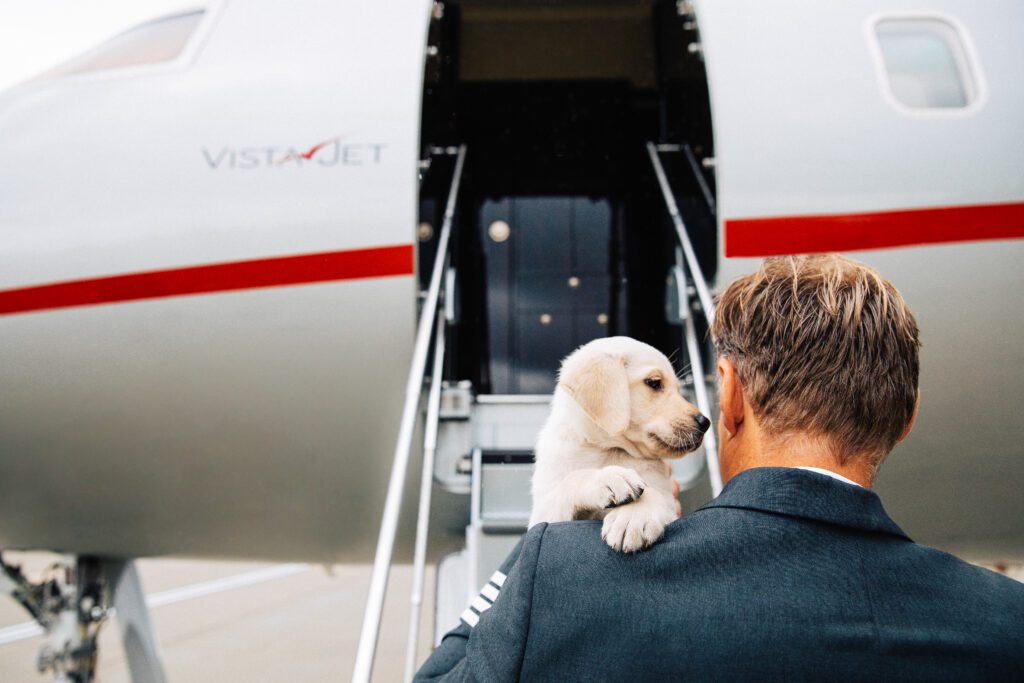

As more travellers choose to bring their pets along for work trips, weekend escapes and extended stays, airlines are slowly adapting to a world where dogs are considered full travel companions rather than cargo.
While UK-based carriers remain firm in their policies — allowing only registered assistance dogs in the cabin — a growing number of European and international airlines now permit small dogs to fly in-cabin under carefully controlled conditions.
Which Airlines Allow Dogs in the Cabin?
A select group of carriers across Europe, North America and the Middle East allow small dogs to travel in the passenger cabin, provided they meet strict size, weight and behaviour requirements. Typically, dogs must:
- Weigh around 8kg or less, including their carrier
- Travel in an airline-approved soft carrier
- Remain under the seat for the entire flight
- Be booked in advance, as pet spaces are limited
Airlines currently permitting in‑cabin dog travel include:
- KLM Royal Dutch Airlines
- Lufthansa
- Air France
- Vueling Airlines
- Aegean Airlines
- Iberia
- Air Canada
- Turkish Airlines
- Qatar Airways
Policies vary not only by airline but by route and aircraft type, so owners are strongly advised to check requirements early in the booking process.
What Dogs Should Eat Before Flying
According to fresh pet food brand Years, diet plays a surprisingly influential role in how comfortably a dog copes with air travel. Changes in cabin pressure, temperature and routine can all affect digestion — and a stressed gut often leads to a stressed dog.
A spokesperson for Years explains:“Flying is unfamiliar for dogs. The goal is to keep the gut calm, stable and predictable before travel.”
Recommended pre-flight foods include:
- Light, easily digestible meals such as lean proteins with simple carbohydrates
- Pre- and probiotics to support gut balance and reduce gas
- Omega‑3 fatty acids, which help regulate inflammation and stress responses
- Small meals served several hours before departure, rather than immediately before boarding
As the spokesperson notes, “Calm digestion often equals a calmer dog. A settled stomach reduces discomfort, restlessness and excessive panting during flights.”
What to Avoid Feeding Dogs Before a Flight
Years also advises owners to steer clear of foods that commonly cause bloating, gas or nausea — issues that can be amplified at altitude.
Foods to avoid include:
- Rich or fatty meals
- Large portions close to departure
- Dairy products
- High‑fibre vegetables such as beans or lentils
- New or unfamiliar treats
- Human leftovers, which can ferment in the gut during flight
“Gas expands at altitude,” the spokesperson explains. “Foods that might seem harmless at home can become very uncomfortable in the air, leading to whining, restlessness or distress.”
A Growing Shift Toward Pet‑First Travel
As pet ownership rises and travellers increasingly expect their dogs to accompany them, airlines are refining their policies rather than relaxing them. The aim is to balance passenger comfort with animal welfare — and to ensure that in‑cabin pet travel remains safe and predictable.
“Airlines are setting clear boundaries around size, weight and behaviour,” says the Years.com spokesperson. “For owners, preparation is everything, from booking early to feeding correctly. When done right, flying with a dog can be calm, safe and surprisingly straightforward.”

