Donald Trump’s latest financial disclosure has opened an unusually detailed window into the scale and pace of trading activity tied to the US president’s investment portfolio.
The filing, submitted on Thursday to the US Office of Government Ethics through two OGE Form 278-T reports, disclosed more than 3,600 transactions executed between January and the end of March 2026.
The cumulative value of the trades ranged from at least $220 million (€188mn) to as much as $750 million (€641mn) as federal ethics disclosures only require broad valuation bands rather than precise figures.
US presidents are not banned from trading financial markets but must disclose personal trades. No charges were made or proven acts of insider trading have been outlined but the revelation still draws ethics scrutiny and a push for trading restrictions.
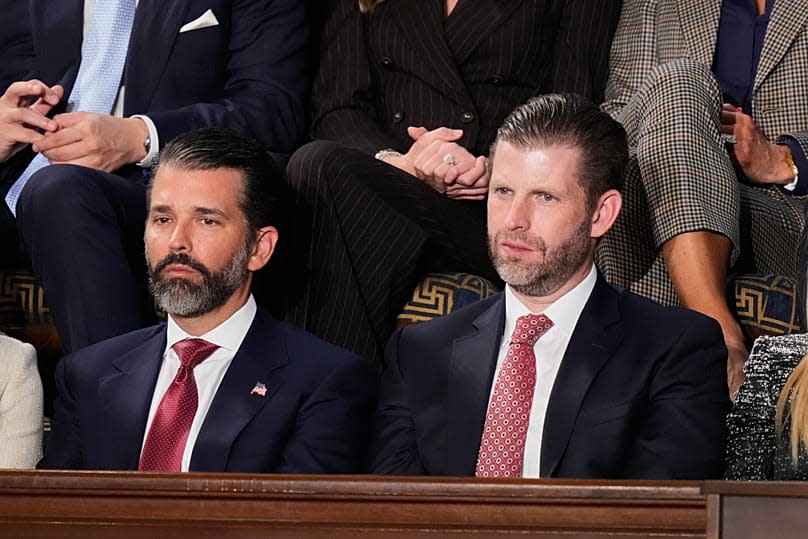
The filings do not specify whether Trump directed the trades. His personal assets and business empire are actively run and managed by his sons Donald Trump Jr. and Eric Trump, but some entries also indicate broker involvement.
The documents reveal extensive exposure to some of Wall Street’s biggest names, particularly in technology and specifically AI.
Individual purchases of Nvidia, Microsoft, Broadcom, Amazon, Apple and others ranged from $1 million (€856,000) to $5 million (€4.27mn) in disclosed value while buy orders of AMD, Intel, Goldman Sachs, Alphabet, Airbnb, DoorDash, Micron, Bloom Energy and others ranged from $500,000 (€427,500) to $1 million (€856,000) in disclosed value.
US President Donald Trump also reported hundreds of stock sales ranging from $15,000 (€12,825) to up to $25 million (€21.37mn).
According to the report, and assuming the holdings have remained relatively the same since the end of March, Trump is 20% or more in profit on almost all of the names indicated here and others.
In particular, Trump is over 100% in profit on AMD, Intel, Iridium Communications, Bloom Energy, Intuitive Machines, Marvell Technology, Penguin Solutions, SanDisk, Seagate, Vishay Intertechnology and other stocks.
Based on the dates of the transactions it is also apparent that Trump heavily bought the price dip in March caused by the start of the Iran war. The S&P 500 dropped over 8% and bottomed at the end of the month, subsequently rising around 19% to record highs.
Related
Efforts to ban public officials from trading stocks
There is currently a live bipartisan push in the US Congress to pass a stock trading ban for public officials, and several proposals are at different stages of the legislative process.