A Minnesota district is going phone-free this school year.
At Stillwater Area Schools, personal devices are no longer allowed during the school day.
That includes cell phones, smart watches and wireless headphones.
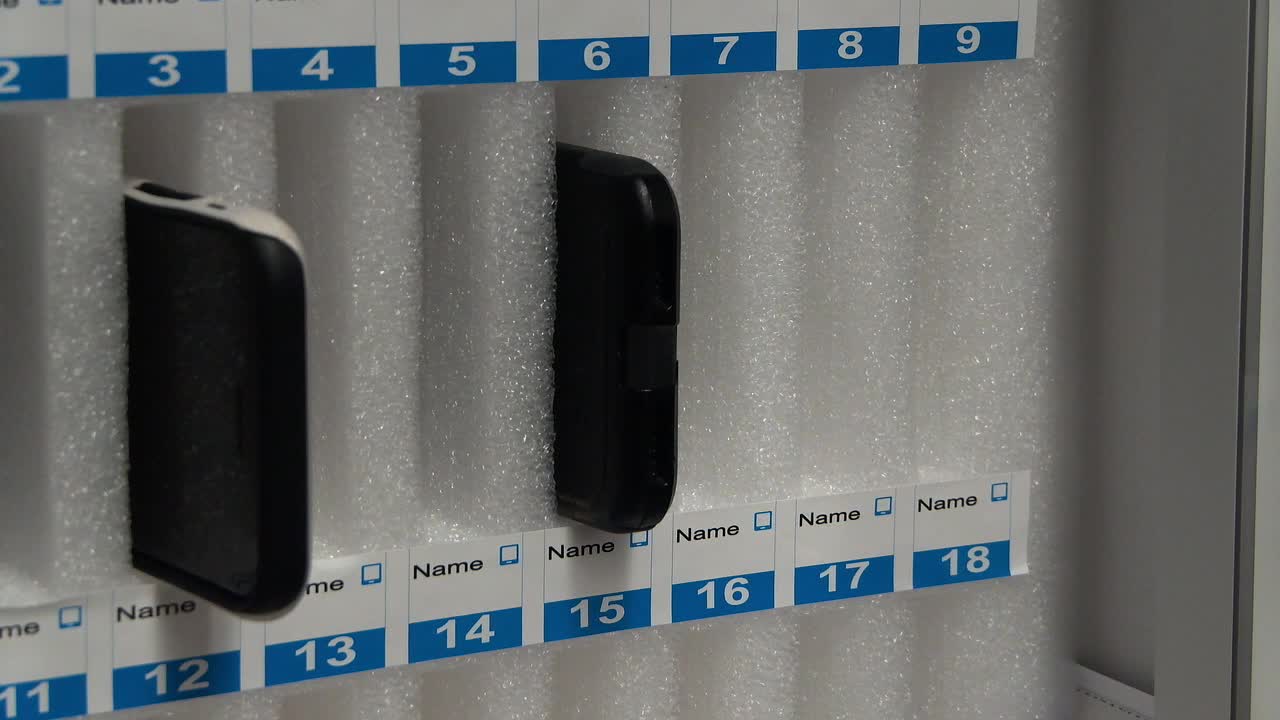
Students are being told to leave their devices at home or put them in designated lock boxes at the start of the day.
A new state law went into effect in March, requiring school districts to create policies surrounding cell phones at school.
It is up to each district to decide how it wants to handle cell phone possession and usage.
A Stillwater Schools spokesperson told 5 EYEWITNESS NEWS they are likely the first district in Minnesota to implement this strict of a policy, where phones cannot even be stored in backpacks or lockers.
The cell phone ban applies to all 11 schools in the district, from elementary to high school.
Students who choose to bring their devices to school are required to turn them in to their last period teacher.
Those teachers have cell phone lock boxes in their classrooms, where phones are stored throughout the day.
When the last bell rings, the teacher gives the phones back to the students.
If anyone is caught with a phone or device during the day, it is taken to the front office and stored in a drawer until the child’s parent comes to pick it up.
“This is about mental health,” said Matt Kraft, assistant principal at Stillwater Area High School. “The research highly indicates that there’s a correlation between social media and mental health challenges. To get the phones away from the students and give them permission to engage with other students, to engage in the curriculum, this is something we thought was important for our community.”
Stillwater started schoool on August 18th, so the new policy has now been in effect for three weeks.
“It is a gamechanger, an absolute gamechanger,” said Kirsten Carter, a high school spanish teacher. “There’s no social pressure to be posting, responding, snapping because no one can do it.”
The high school assistant principal has also noticed a big impact during lunch.
“They’re talking with each other, they’re engaging, there’s a couple tables where they’re actually playing cards. These are things we would normally not see,” Kraft said.
Some parents have voiced concerns about the new policy.
“I do not agree with the policy,” said Dana Loveridge, whose son is a junior. “I want my kid to be able to reach me in case of an emergency, especially with, God forbid, a school shooting or somebody getting bullied.”
Kraft said the district will send out push alerts in case of an emergency or inclement weather impacting afterschool plans.
“We do have timely and appropriate communication that comes from the district if ever there’s an incident where parents need to be notified,” Kraft said, noting also that parents can email their kids on their ChromeBooks during the day if needed.
Students are adapting to the change.
“It’s better than I would have expected it to be,” said 16-year-old Owen Stangl.
Zach Krusemark added, “You get into class and everyone’s talking with each other. It’s kind of nice actually, to get a lot more focused. You can get a lot more work done.”
The high school has confiscated 75 phones so far, which they say comes out to about 97% compliance in the first few weeks of school.