During the Qingming Festival, people across China are heading outdoors to enjoy the spring weather, explore scenic spots, and participate in various cultural and outdoor activities.
The Qingming Festival, or Tomb Sweeping Day, which falls on April 5 this year, is a traditional Chinese festival for people to pay tribute to the diseased and worship their ancestors. The holiday coincides with the peak of spring, inspiring many to step outside and embrace the season’s freshness and vitality.
At Jinsha Lake in Funing County, Yancheng City, east China’s Jiangsu Province, more than 300 kite enthusiasts gathered to launch colorful kites into the sky. The blue sky soon transformed into a vibrant sea of kites, drawing both local residents and tourists to pause and watch.
The event also featured an intangible cultural heritage exhibition, a parent-child kite design area, and specialty markets, allowing visitors to enjoy local delicacies and shop for unique items while taking in the scenery.
“The environment at Jinsha Lake is excellent. Here, we can not only admire top-quality kites from across the country, but also enjoy spring outings,” said a tourist Xiang Limei.
During the Qingming holiday, visitors flocked to the Mianyang Base of China Conservation and Research Center for the Giant Panda in Mianyang City, southwest China’s Sichuan Province. Parents brought their children to watch pandas climb trees and play up close, with the animals’ adorable antics winning widespread attention.
At the same time, it is the migratory bird season, with tens of thousands of seagulls gathering in the coastal wetlands of Beidaihe District in Qinhuangdao City, north China’s Hebei Province. Visitors strolled along the shoreline, fed the birds, and took photos, enjoying close interaction with the wildlife.
“The sight of thousands of birds flying together is truly breathtaking. We came here to relax, enjoy the scenery, and take some photos. The views are beautiful,” said another tourist Li Yingxue.
In Nanling County, Wuhu City, east China’s Anhui Province, students guided by their teachers walked along trails in the vast bamboo forest, carefully learning to identify various native bamboo species.
Meanwhile, at a rural complex in Wuhu, children dug soil, planted rice seedlings, and watered crops, experiencing the rhythms of nature firsthand and gaining a sense of accomplishment through hands-on labor.

Spring outings boom during Qingming holiday in China
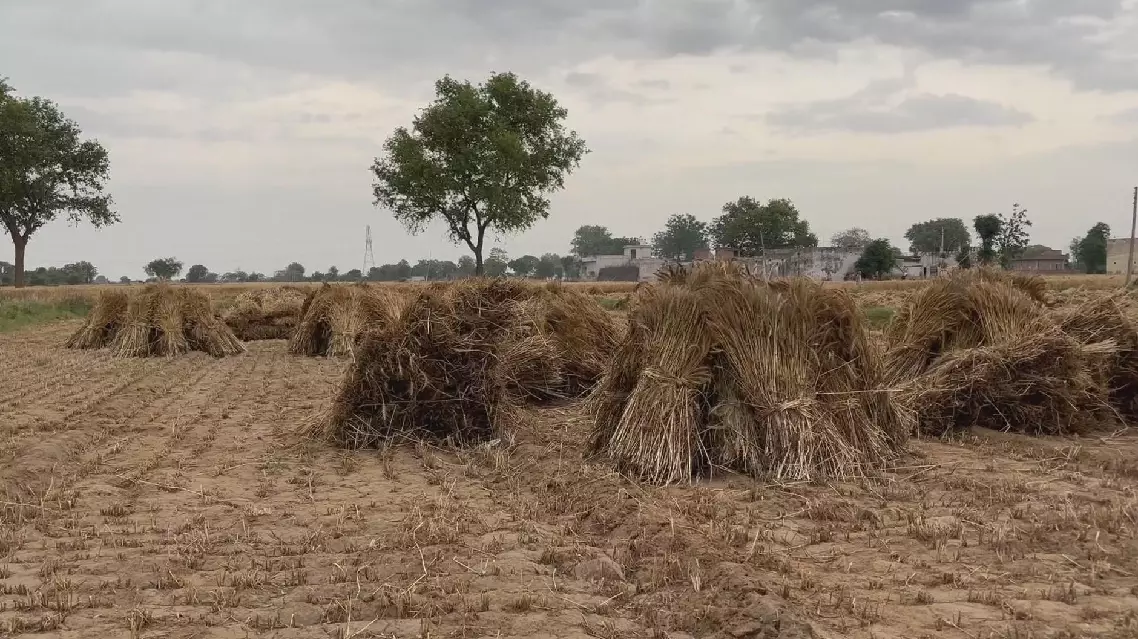
Farmers in India, a major agricultural producer and fertilizer importer, are raising concerns over fertilizer availability ahead of the planting season, as the escalating Middle East conflict and disruptions to shipping through the Strait of Hormuz put global supplies at risk.
The Middle East serves as both a vital energy hub and a major global fertilizer supplier, yet the ongoing U.S.-Israeli war with Iran has heightened risks of disruption to international supplies.
Chand Singh Yadav, a farmer in Haryana, a northern Indian state, said poor crop yields would be disastrous for the country and called on the government to ensure adequate supplies of fertilizers, agrochemicals and seeds to prevent a food crisis. “Without fertilizers, our crops will not grow well, and this would be disastrous for the entire country. If farmers cannot grow crops, people will not be able to buy food in the market. We urge the government to improve the supply system for fertilizers, agrochemicals and seeds to prevent the country and society as a whole from sliding into a food crisis,” he said.
The Indian government is stepping up subsidies for farmers and optimizing fertilizer distribution and allocation to stabilize the supply. Prices have remained broadly stable, but demand is expected to surge ahead of the planting season, potentially exacerbating supply pressures.
“The current situation is worrying for us farmers. Spring sowing has not yet started, and the rainy season has not arrived. Fertilizer prices are temporarily stable, but in two months, demand for agricultural fertilizers will become pressing. Without fertilizers, it will be difficult to properly cultivate various types of crops. Urea and diammonium phosphate are especially critical. Crops can only grow normally when these fertilizers are applied. As these fertilizers are largely imported, if the conflict persists, supplies cannot be guaranteed,” said Santosh Mishra, a farmer in India’s eastern state of Odisha.
Escalating Middle East conflict strains India’s fertilizer supply