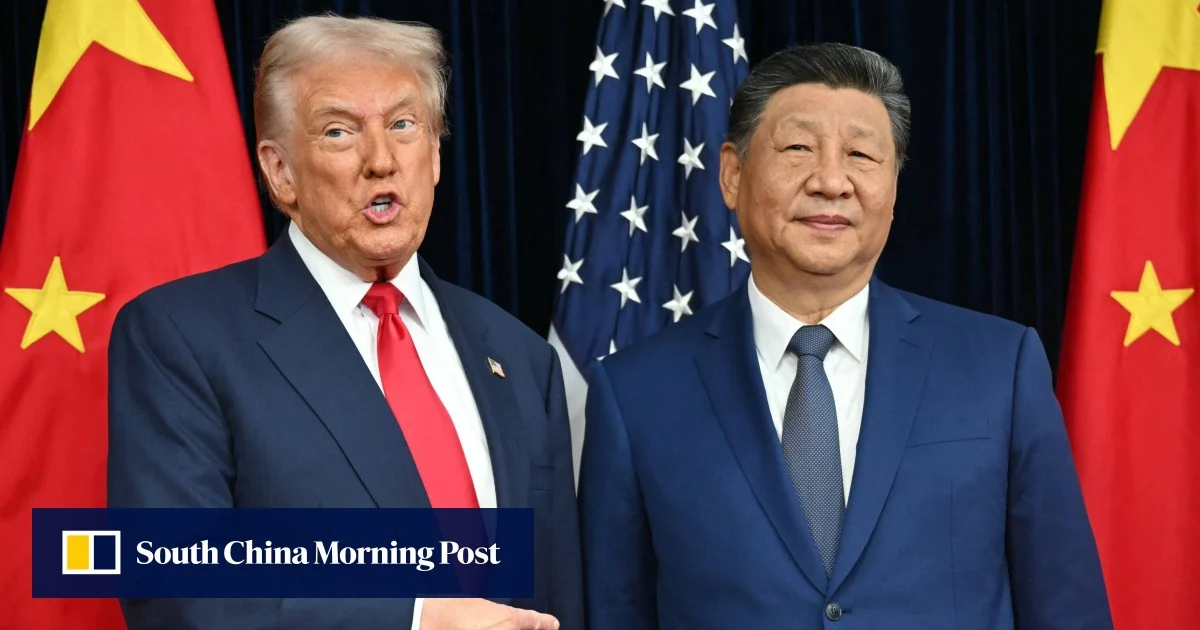
Unlike the competition of the past six years – which was driven by a cold war mindset – future rivalry between the United States and China will not create two opposing, diverging blocs, according to Ni.

‘We have a deal’: Trump claims breakthrough after ‘12 out of 10’ talks with Xi Jinping
‘We have a deal’: Trump claims breakthrough after ‘12 out of 10’ talks with Xi Jinping
“Instead, it may evolve as a contest within a single, shared system,” he said at the Baichuan forum that focused on the evolution and assessment of China’s external environment. The forum, which ran on December 13 and 14, was organised by the Institute for International Affairs, Qianhai (IIA) of the Chinese University of Hong Kong.
According to Ni, while the strategic rivalry will persist and remain straightforward, it is likely to be stable under Trump’s administration, a stability that would benefit Beijing’s strategic planning and allow China to focus on areas yet to be explored.
The US offered advantages such as its market and technology, he said, while stating that China’s greatest strengths lay in its industrial chain and production capacity.
In contrast to its first strategy report, the Trump administration’s national security strategy released on December 4 did not frame China as a systemic challenge with a vision of world order incompatible with US interests, nor did it outline the scope and scale of that challenge.