The prowess of America’s armed forces has been on full display in the skies over Iran. During the 38-day air campaign, warplanes flew more than 13,000 combat sorties, smashing Iran’s armed forces, industrial sites and nuclear facilities. The campaign demonstrated careful planning and tactical brilliance. And all this has been carried out while America’s top brass have also been fighting on a second front—with their own secretary of war.
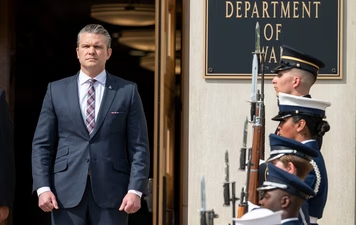
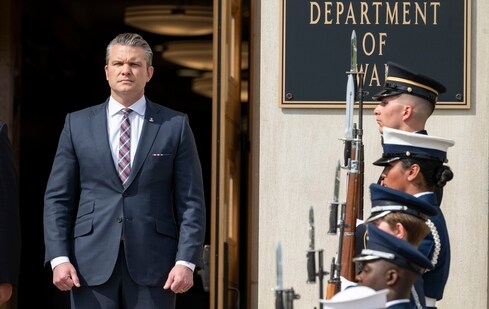
At the Pentagon’s press conferences on Operation Epic Fury, the hair-gelled former Fox News host sometimes appears keener to wage culture wars than the one in Iran. (AP)
On April 2nd Pete Hegseth sacked General Randy George, America’s most senior army officer, and cashiered two other senior leaders. That this was done amid America’s biggest war in decades, with ground troops on their way to the Gulf, is virtually unheard of, say former military officials. Mr Hegseth did not offer a reason for the abrupt dismissals. But, in all likelihood, they are the latest victims of his rolling purge of America’s military leadership.
The Economist has spoken to several former senior military officials, some of whom have felt the impact of the recent purges. They described a Pentagon beset by vindictiveness, politicisation and the secretary’s obsession with instilling a virile, anti-woke “warrior ethos”, which can stretch into disdain for international law. At the Pentagon’s press conferences on Operation Epic Fury, the hair-gelled former Fox News host sometimes appears keener to wage culture wars than the one in Iran. “He’s a 12-year-old boy with a set of army action figures who likes to play war,” sighs one former military official.
Since taking office last year Mr Hegseth has ousted at least 21 generals. Many appear to have been dismissed for no reason beyond possibly their race, sex or suspected political leanings. “It’s unprecedented, there’s nothing like firing 21 senior leaders for no obvious reason,” says Kori Schake of the American Enterprise Institute, a think-tank. “[He] has squandered centuries of talent.” General George, for his part, is reported to have opposed Mr Hegeth’s unusual decision to remove four officers—two black men and two women—from a promotion list last month. Some officers are choosing to retire early or withdraw their names from promotion boards, laments Nancy Lacore, an admiral forced into retirement last year who is now running for Congress in South Carolina.
Their replacements are for the most part well qualified and without any obvious partisan bias. But some selections have raised eyebrows. The elevation of General Christopher LaNeve as General George’s replacement is one. Mr Hegseth’s former military assistant, General LaNeve has thin experience for the role of army chief of staff, a job that involves recruiting, training and equipping soldiers. But the general did call the president hours after his inauguration to welcome him back to office. “Is this man central casting or what?” the president remarked.
A recently retired senior judge advocate-general (army lawyer) worried that the new crop of lawyers were trying to reverse-engineer a legal justification for whatever the administration asked of them. “The Hegseth mindset is victory at all costs,” laments a senior military official. “You’re seeing a real conflict in everything that we thought we stood for as a military.”
Why is Mr Hegseth doing this? “The mistakes that he is trying to correct are likely the things that pissed him off when he was a National Guard lieutenant and captain,” says a former senior military official. Mr Hegseth once described the army as having “spit me out” after his fellow service members flagged him as an “insider threat” due to his Deus Vult tattoo on his arm, a symbol used by white nationalists. Pentagon insiders say the secretary can sometimes appear bemused during briefings. “He may feel like an impostor when discussing strategic matters,” says another former senior military leader.
It is a testament to America’s armed forces that they have performed so well despite all this. For the most part that is down to technological supremacy, decades of experience fighting wars and a nonpartisan culture that Mr Hegseth threatens to undermine. The damage he is doing could last longer than the conflict with Iran.