On-Board Charger Market
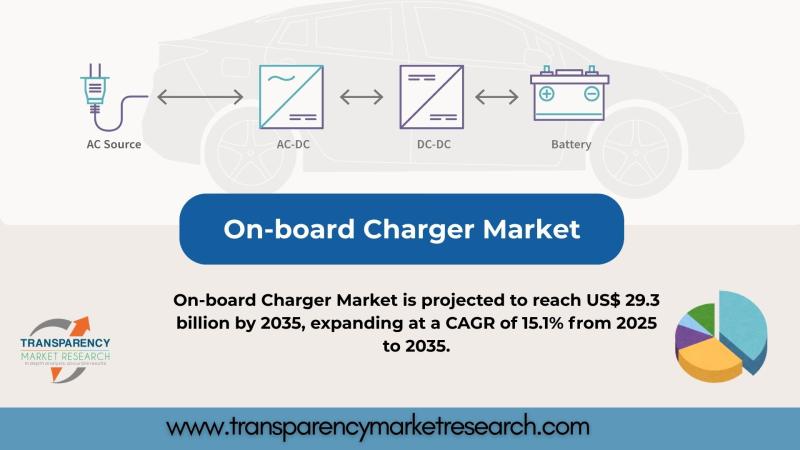
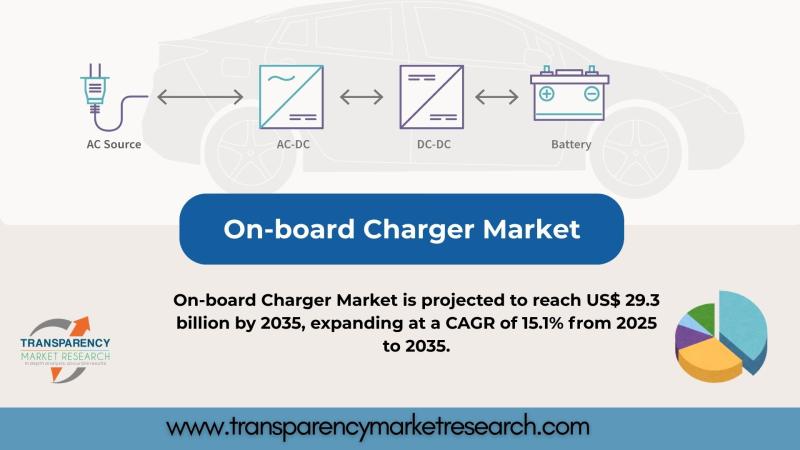
The on-board charger (OBC) market is at the heart of the global electric vehicle transformation. As nations push toward decarbonization and automakers commit to full electrification, the demand for reliable, efficient, and high-performance charging systems has surged dramatically. On-board chargers form the backbone of EV charging, enabling vehicles to safely convert AC power from the grid into DC energy stored in the battery. With growing emphasis on user convenience and the proliferation of home charging setups, OBC technology has become a critical determinant of the overall EV user experience. This rising importance is driving major automotive and semiconductor companies to innovate next-generation OBC architectures that deliver faster charging, improved safety, energy efficiency, and compatibility with global charging standards.
Access key findings and insights from our Report in this sample – /sample/sample.php?flag=S&rep_id=82953
Market Size and Growth
The global OBC market’s growth from US$ 5.7 billion in 2024 to US$ 29.3 billion by 2035 reflects the rapid evolution of the EV industry. A CAGR of 15.1% underscores the increasing value automakers place on integrating sophisticated charging solutions into their vehicles. This expansion is further supported by a global increase in EV sales, influenced by declining battery prices, government incentives, sustainability initiatives, and advancements in electric powertrain design. As more consumers transition from combustion vehicles to EVs, demand for efficient on-board chargers capable of supporting varying grids and power levels grows exponentially. Additionally, commercial vehicle electrification-including delivery vans, buses, and trucks-introduces an entirely new demand segment, reinforcing long-term market growth.
Market Segmentation
The on-board charger market is multifaceted, catering to diverse automotive requirements across vehicle types and power systems. Power segmentation reveals a transition toward higher-power chargers, as EV owners increasingly seek reduced charging times without compromising battery life. Meanwhile, segmentation by vehicle type highlights that passenger EVs currently lead the market, though commercial EVs are anticipated to outpace them in growth rate due to fleet electrification mandates and lower operational costs. Propulsion-based segmentation distinguishes between BEVs and PHEVs, each requiring specific OBC capabilities tailored to battery capacity and charging frequency. Sales channel segmentation, spanning OEM and aftermarket sectors, further illustrates the widespread adoption and replacement needs associated with expanding EV fleets.
Explore our report to uncover in-depth insights – /on-board-charger-market.html
Regional Analysis
Asia-Pacific remains the global leader in on-board charger production and consumption, largely due to China’s dominant EV industry and extensive domestic supply chain. South Korea and Japan contribute significantly as well, leveraging their expertise in semiconductor development and automotive manufacturing. Europe’s market is driven by stringent environmental regulations and aggressive electrification goals, positioning it as a major growth hub for advanced OBC technologies. North America is rapidly catching up, with major automakers investing in new EV platforms and domestic manufacturing capabilities. Emerging markets in Latin America, Africa, and the Middle East are expected to show moderate but accelerating growth as charging infrastructure expands and EV prices become more accessible.
Market Drivers and Challenges
The primary drivers of the OBC market include increasing global EV adoption, technological innovations in high-efficiency power electronics, and government policies aimed at reducing carbon emissions. Consumer preference for convenient home charging and long-range EVs with faster charging capability also boosts demand for advanced OBCs. However, the market faces obstacles such as semiconductor shortages, high costs associated with next-generation charging components, and challenges in standardizing power levels across different regions. Furthermore, integrating bidirectional charging technologies introduces additional complexities related to grid stability and energy management.
Market Trends
Key trends shaping the future of the OBC market include the rising adoption of SiC and GaN semiconductors, which significantly enhance charging efficiency and thermal performance. Another major trend is the growing popularity of bidirectional charging, enabling vehicles to supply energy back to homes or the grid, supporting renewable energy integration and grid resilience. Automakers are also moving toward integrated power electronics systems that combine OBCs, DC/DC converters, and inverters into compact units to reduce cost, weight, and energy loss. The shift toward smart, software-driven charging management solutions is expected to revolutionize how EVs interact with energy networks.
Competitive Landscape
The market is characterized by intense competition among leading global companies such as Delta Energy Systems, STMicroelectronics, Eaton, Texas Instruments, BorgWarner, LG Magna e-Powertrain, Infineon Technologies AG, ABB, Siemens, and others. These players are investing heavily in R&D to develop more efficient, compact, and scalable OBC solutions. Strategic partnerships between automakers and electronics manufacturers are becoming increasingly common as OEMs seek to differentiate their EV offerings. The competitive environment encourages rapid technological advancement, which is crucial to maintaining momentum in the fast-evolving EV market.
Buy this Premium Research Report for exclusive, in-depth insights – /checkout.php?rep_id=82953<ype=S
Future Outlook
Looking ahead, the on-board charger market is expected to grow steadily in tandem with global EV adoption. By 2035, advancements in fast charging, battery technology, and grid infrastructure will reshape the landscape of EV charging. Bidirectional chargers will play a vital role in future smart grid ecosystems, enabling EVs to act as mobile energy storage units. As electrification accelerates across both consumer and commercial sectors, companies that invest in high-power, energy-efficient, and software-integrated OBC technologies will be well-positioned to dominate the market.
More Trending Reports by Transparency Market Research –
Palm Vein Biometrics Market: /palm-vein-biometrics-market.html
Glass Rinser Market: /glass-rinser-market.html
Non-Cystic Fibrosis Bronchiectasis Treatment Market: /non-cystic-fibrosis-bronchiectasis-treatment-market.html
Kidney Cancer Drugs Market: /kidney-cancer-drugs-market.html
About Transparency Market Research
Transparency Market Research, a global market research company registered at Wilmington, Delaware, United States, provides custom research and consulting services. Our exclusive blend of quantitative forecasting and trends analysis provides forward-looking insights for thousands of decision makers. Our experienced team of Analysts, Researchers, and Consultants use proprietary data sources and various tools & techniques to gather and analyses information.
Our data repository is continuously updated and revised by a team of research experts, so that it always reflects the latest trends and information. With a broad research and analysis capability, Transparency Market Research employs rigorous primary and secondary research techniques in developing distinctive data sets and research material for business reports.
Contact:
Transparency Market Research Inc.
CORPORATE HEADQUARTER DOWNTOWN,
1000 N. West Street,
Suite 1200, Wilmington, Delaware 19801 USA
Tel: +1-518-618-1030
USA – Canada Toll Free: 866-552-3453
Website:
Email: sales@transparencymarketresearch.com
This release was published on openPR.